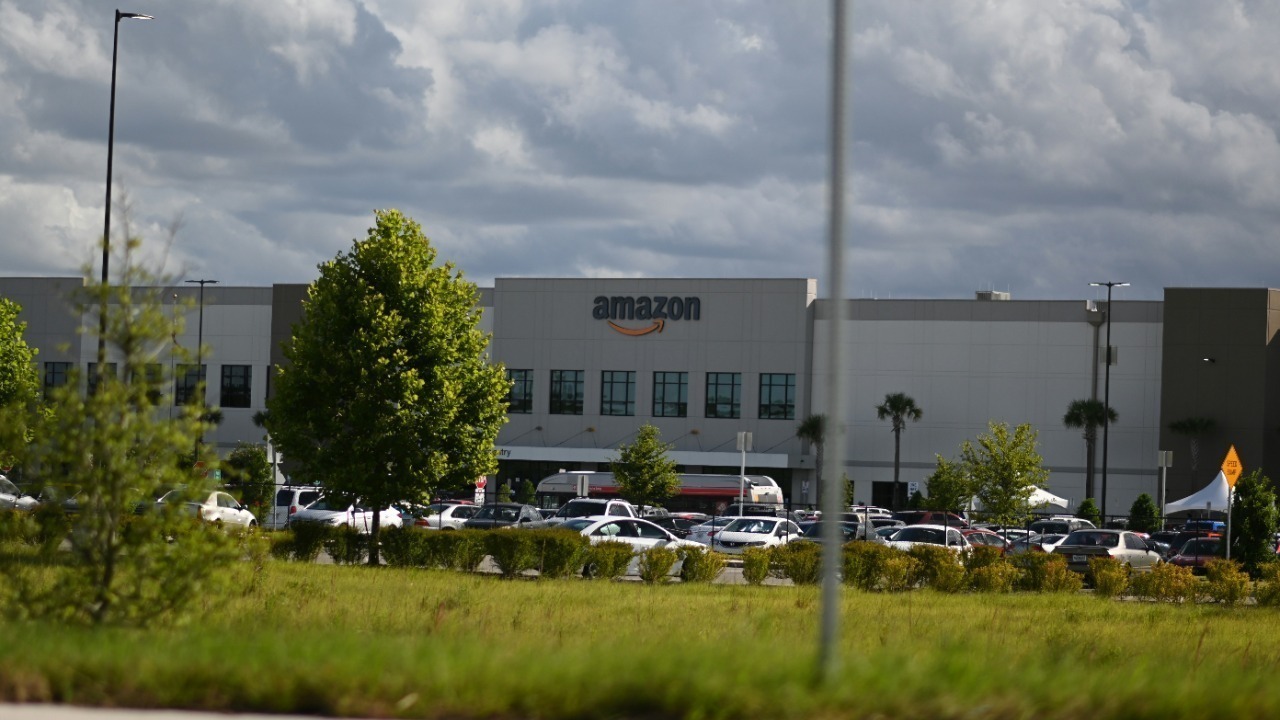
Amazon is cutting thousands of corporate jobs, with human resources among the hardest-hit departments, as the company redirects spending toward artificial intelligence and tries to flatten its management structure. The layoffs, which began in late 2025 and accelerated in January 2026, have already triggered billions of dollars in severance costs and formal job-loss notices across Washington state. The scale of the reductions signals a deliberate shift in how the company values white-collar work, relative to its AI ambitions.
Two Waves of Cuts Total Roughly 30,000 Corporate Roles
Amazon’s restructuring has unfolded in two distinct rounds. The first, announced in late 2025, eliminated approximately 14,000 corporate jobs as the company ramped up AI spending. A second wave followed in January 2026, when the company initiated a broader restructuring that, according to the Associated Press, cut about 16,000 additional corporate roles. Reporting from Reuters stressed that the combined total of roughly 30,000 positions still represents a small fraction of Amazon’s global workforce, the vast majority of which is concentrated in fulfillment centers and warehouses rather than corporate offices.
The exact count remains contested. Senior Vice President Beth Galetti, in a public memo on Amazon’s newsroom, confirmed an overall reduction of approximately 14,000 roles, describing the goal as “reducing bureaucracy” and “removing layers.” That figure aligns with the first round but does not appear to account for the January 2026 cuts that AP and Reuters independently tallied at 16,000. Amazon did not publicly release a detailed breakdown by unit or location for either round, leaving outside observers to piece together the full picture from regulatory filings, state records, and scattered internal communications that have surfaced through employees.
$2.7 Billion in Severance Costs Buried in the 10-K
The financial weight of these layoffs became clearer when Amazon filed its Form 10-K for the fiscal year ended December 31, 2025. In that annual report to the SEC, the company disclosed that it recorded approximately $2.7 billion in estimated severance and related costs tied to planned role eliminations during 2025, a figure detailed in the restructuring and employee benefits notes of the 10-K filing. That charge covers only the expenses booked through year-end and does not reflect the January 2026 wave, meaning the total cost of Amazon’s restructuring is likely to rise once the next quarterly report captures additional payouts and associated expenses.
The same filing pegged Amazon’s total workforce at approximately 1,576,000 employees as of December 31, 2025. Even if the combined corporate cuts reach 30,000 roles, the reduction amounts to less than 2 percent of the overall headcount. Yet the $2.7 billion severance bill is large enough to rival the annual revenue of mid-cap public companies, underlining how aggressively Amazon is willing to spend to reset its organizational structure. The company is signaling that it prefers to absorb steep, one-time charges in exchange for a leaner overhead model in areas like HR, recruiting, and internal operations (where automation and AI tools can increasingly handle routine tasks such as benefits administration, onboarding workflows, and compliance documentation).
Washington State WARN Filings Pin Down Local Impact
While Amazon has withheld a public breakdown of affected departments and locations, government records provide a partial window into the geographic footprint of the cuts. Under U.S. labor law, large employers must submit advance layoff notices under the Worker Adjustment and Retraining Notification (WARN) Act, and the Washington state WARN database shows Amazon filing multiple notices covering its Seattle and Bellevue offices. According to those records, the company reported 2,198 affected jobs in Washington alone, with separations beginning on April 28, 2026, and extending into June, a timeline that aligns with local coverage from Axios Seattle describing a steady drumbeat of tech layoffs across the region.
The WARN data is significant because it offers independently verifiable, location-specific evidence of where Amazon’s corporate cuts are landing, at least within its home state. HR, legal, and administrative teams have historically been concentrated in the Puget Sound region, making the Seattle and Bellevue filings a reasonable proxy for the types of white-collar roles being eliminated. The staggered schedule, with end dates spread over several weeks, also suggests that Amazon is phasing departures rather than executing a single mass termination, consistent with Galetti’s memo describing a 90-day internal job-search window, redeployment opportunities, and transition support for employees who cannot find new roles within the company.
AI Investment and the $340 Billion Counternarrative
Amazon has worked to frame the layoffs as one side of a broader rebalancing rather than a simple retreat. In a 2025 economic impact report, the company said it invested a record $340 billion in U.S. infrastructure, jobs, and communities, encompassing everything from fulfillment centers and transportation hubs to data centers and cloud infrastructure. In that report, David Zapolsky, Amazon’s chief global affairs and legal officer, emphasized that these investments support long-term job creation and economic growth, positioning the company as a net contributor to employment even as it trims corporate headcount.
That narrative, however, glosses over the changing mix of jobs inside the company. The $340 billion figure includes capital-intensive projects like warehouse construction and logistics network expansion that primarily employ hourly and operations workers, not the salaried corporate staff now facing redundancy. Amazon can simultaneously add tens of thousands of roles in fulfillment and logistics while cutting thousands of HR, finance, and middle-management jobs, because the two labor pools serve fundamentally different functions. The restructuring is less about shrinking Amazon than about redefining which kinds of work it values enough to keep in-house, and which tasks can be automated, outsourced, or consolidated using AI-driven systems that promise efficiency gains but reduce the need for traditional white-collar staff.
What the Earnings Call Signals About What Comes Next
Amazon’s latest quarterly earnings discussion offered additional clues about where the company is headed after this restructuring cycle. On the Q4 2025 earnings call, executives repeatedly highlighted rising capital expenditures for cloud infrastructure, generative AI services, and logistics automation, while also pointing to “productivity improvements” and “organizational simplification” on the cost side, according to the call transcript. Management framed the severance charges as largely front-loaded, suggesting that the bulk of the structural changes are being implemented now so that margins can benefit in 2026 and beyond as AI tools and streamlined reporting lines take hold.
For employees and policymakers, the call underscored a tension that will likely define Amazon’s next few years. The company is signaling that it will continue to hire aggressively in areas tied to AI, cloud, and logistics, even as it pares back in traditional corporate functions and flattens middle management. That approach may reassure investors focused on profitability and growth, but it raises difficult questions for local economies that have relied on high-paying corporate tech jobs and for workers whose skills are rooted in functions now deemed ripe for automation. As Amazon absorbs the immediate pain of billions in severance and thousands of disrupted careers, the longer-term test will be whether its AI-heavy strategy delivers the productivity and innovation gains executives have promised without permanently eroding the white-collar career paths that once defined its corporate culture.
More From The Daily Overview
*This article was researched with the help of AI, with human editors creating the final content.

Grant Mercer covers market dynamics, business trends, and the economic forces driving growth across industries. His analysis connects macro movements with real-world implications for investors, entrepreneurs, and professionals. Through his work at The Daily Overview, Grant helps readers understand how markets function and where opportunities may emerge.