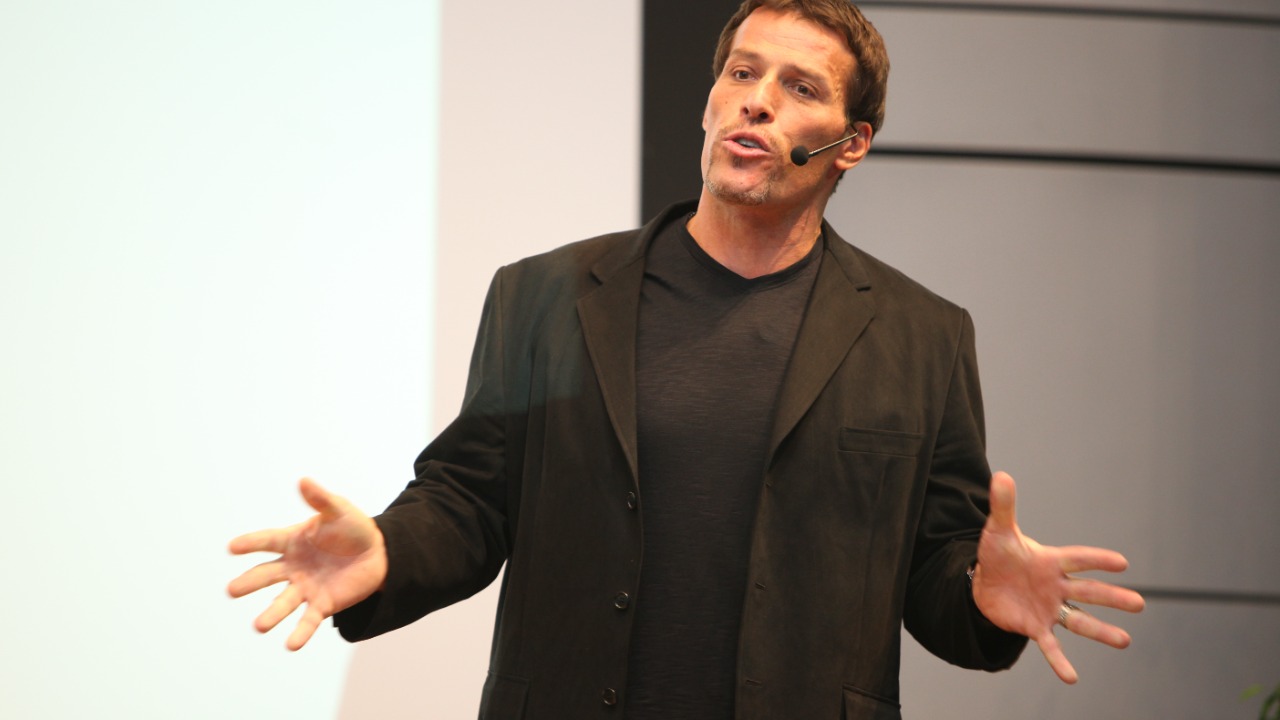
Tony Robbins is sounding an alarm about how Americans are using IRAs and 401(k)s, and his message is not about chasing the hottest stock. It is about hidden frictions inside the system that can quietly drain decades of savings and leave retirees with far less than they expected. His warnings focus on three pressure points that every worker can control: the type of account they choose, the fees they pay, and the default investments they accept without question.
At a time when traditional pensions are rare and Social Security’s long term outlook is uncertain, the stakes around these decisions are enormous. Robbins argues that Americans cannot afford to treat their workplace plans as autopilot vehicles, because the structure of an IRA or 401(k) can either amplify compounding or suffocate it. I see his message as a push to move from passive participation to active ownership of retirement planning.
Why Tony Robbins is pressing Americans to rethink IRAs and 401(k)s
Tony Robbins has spent years urging Americans to treat retirement planning as a central life priority, not a side project they revisit every few years. In his view, IRAs and 401(k)s are powerful tools only when people understand how they work and where they fall short. He has framed “Planning for” retirement as a multi step process that starts with choosing the right account type, continues with disciplined contributions, and then demands regular checkups on investment mix and costs. When those pieces are neglected, even diligent savers can end up with a nest egg that looks impressive on paper but fails to support a stable lifestyle.
Robbins has been especially vocal about how Americans rely on tax advantaged accounts without fully grasping the trade offs built into each one. In his recent warning to Americans on IRAs and 401(k)s, he highlighted how the tax treatment of contributions and withdrawals can dramatically change the real value of a portfolio over time. By contrasting traditional accounts with Roth style options, he has tried to show that the headline balance is not the full story, because the IRS effectively owns a slice of every pre tax dollar. His broader message is that Americans need to look past the surface of their IRAs and 401(k)s and evaluate what they will actually keep after taxes and inflation, not just what they see on a quarterly statement.
The Roth 401(k) push and what it means for your taxes
One of Robbins’s clearest positions is his support for Roth style workplace plans, especially the Roth 401(k). He has argued that many Americans are better off paying taxes now, while they may be in a relatively lower bracket, in exchange for tax free withdrawals later. In his message to Americans on IRAs and 401(k)s, Tony Robbins champions Roth 401(k) accounts as a way to lock in future flexibility and reduce the risk that higher tax rates will erode retirement income. By shifting the tax burden to the contribution phase, he believes savers can build a pool of money that is easier to plan around in their 60s and 70s.
That stance reflects a broader concern about how unpredictable future tax policy can be for Americans who are concentrating their savings in traditional pre tax accounts. Robbins has warned that retirees who only use traditional IRAs and 401(k)s may find themselves forced to take required minimum distributions that push them into higher brackets just when they are trying to live on a fixed income. By contrast, he sees Roth 401(k) balances as a strategic buffer that can be tapped without triggering extra tax surprises. His emphasis on Roth options is not a blanket rule, but a call for Americans to weigh the long term tax math of their accounts instead of defaulting to whatever their employer plan highlights first, a point he has underlined in his broader guidance on Planning for retirement.
The quiet threat of 401(k) fees
Beyond taxes, Robbins has zeroed in on the drag created by fees inside 401(k) plans. He has described the issue in blunt terms, warning that high costs can siphon off a large share of retirement income over a working lifetime. In his own materials on the subject, he opens with the line “Let me be crystal clear” to stress that the difference between a low cost index fund and an expensive actively managed option is not a minor detail. Over 30 or 40 years, even a one percentage point gap in annual fees can translate into tens or hundreds of thousands of dollars that never reach the saver’s pocket.
Robbins’s concern is that many Americans never see these costs clearly, because they are buried in plan documents or expressed as small percentages that feel trivial. He has argued that this opacity allows “outrageous fees” to quietly erode balances, especially in plans that steer workers into high cost mutual funds or managed accounts. His advice is straightforward: log in, find the expense ratios on every fund, and favor the cheapest broadly diversified options available. By doing that, he believes Americans can reclaim a meaningful slice of their future retirement income that would otherwise be lost to intermediaries, a point he underscores in his detailed breakdown of why 401(k) fees matter so much.
Target date funds: convenient default or hidden risk?
Another focal point of Robbins’s warning is the widespread use of target date funds inside 401(k) plans. These funds promise a one stop solution by automatically shifting from stocks to bonds as a worker approaches retirement, and they have become the default choice for millions of Americans. Robbins has expressed skepticism about relying on them blindly, arguing that the one size fits all glide path may not match an individual’s risk tolerance, savings rate, or retirement age. He has recalled cases where Americans who trusted these products ended up with far less income than they had expected because the underlying assumptions did not fit their real lives.
In his comments on 401(k) investing, Robbins has pointed to target date funds as a prime example of how convenience can mask complexity. He has warned that some versions carry higher fees than a simple mix of index funds, and that their asset allocation may become too conservative too early for workers who plan to keep working or investing beyond the nominal retirement year on the label. His broader message is not that target date funds are inherently bad, but that Americans should treat them as one option among many, not an automatic answer. That caution is reflected in his detailed remarks on how target date funds can leave savers short of the retirement they envisioned.
One 401(k) investment Robbins thinks Americans should scrutinize
Robbins has gone further by singling out at least one type of 401(k) investment that he believes deserves extra scrutiny from Americans. While he has not told workers to abandon their plans, he has urged them to look closely at any product that promises simplicity while layering on complex strategies or opaque pricing. In his view, these structures can create a false sense of security, encouraging people to disengage from their own decision making just when they should be paying the most attention. That disengagement, he argues, is what allows subpar investments to persist inside retirement plans for years.
His warning is aimed at the tendency to accept whatever the plan menu highlights as a “recommended” or “managed” choice without asking basic questions about performance, risk, and cost. Robbins has suggested that Americans compare these options with straightforward index funds and consider whether the extra complexity is really delivering better results. He has tied this advice to a broader critique of how the retirement industry markets products to workers who may not have the time or expertise to evaluate them. In his recent comments on 401(k)s, Tony Robbins has framed this as a call for Americans to reclaim control over their own accounts and to be wary of any one 401(k) investment that seems to prioritize the provider’s interests over the saver’s, a theme he has reinforced in his detailed warning to Americans about how they use their plans.
More From The Daily Overview

Nathaniel Cross focuses on retirement planning, employer benefits, and long-term income security. His writing covers pensions, social programs, investment vehicles, and strategies designed to protect financial independence later in life. At The Daily Overview, Nathaniel provides practical insight to help readers plan with confidence and foresight.

