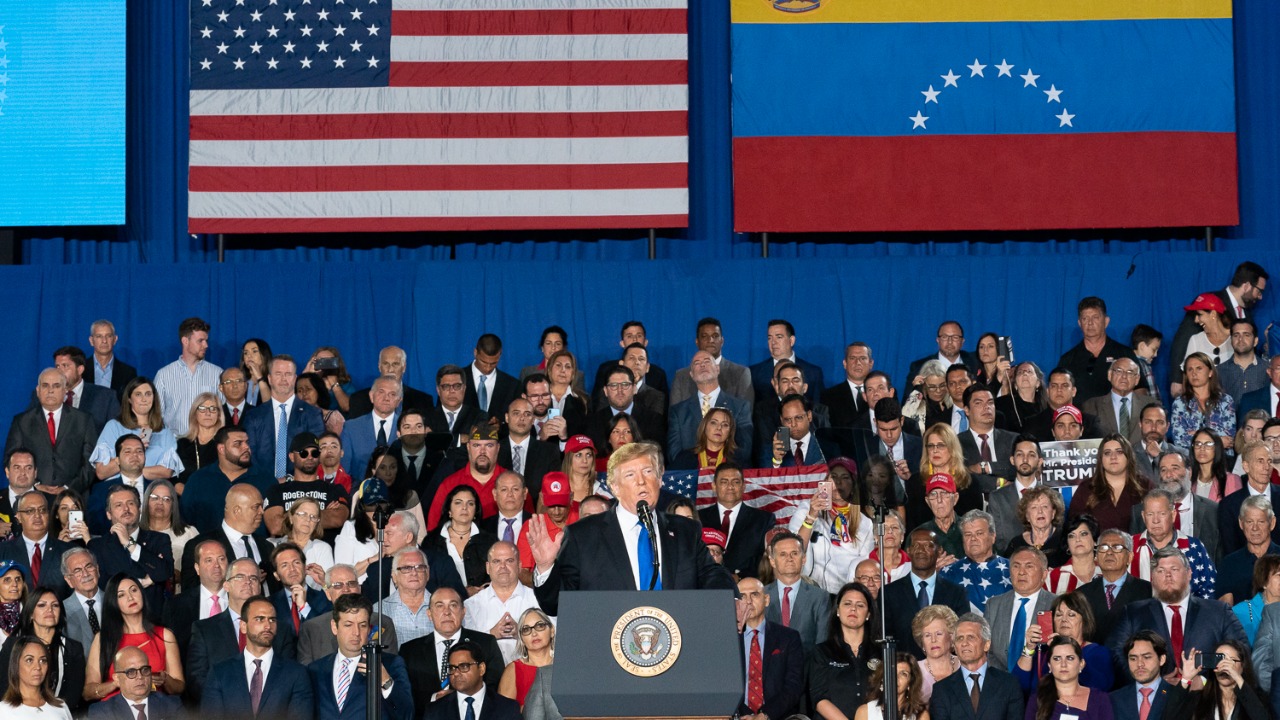
President Donald Trump has opened a new front in his Venezuela policy, telling television audiences that U.S. taxpayers might eventually repay American oil companies that help rebuild the country’s shattered energy sector. The idea, framed as a way to jump-start investment after the capture of Venezuelan President Nicolás Maduro, would effectively socialize part of the risk for private firms while tying Venezuela’s future oil output more tightly to Washington. I see it as a striking blend of foreign policy, energy strategy, and domestic politics, with enormous implications for both Big Oil and U.S. taxpayers.
The reimbursement idea and its political shock value
Trump has been explicit that he wants U.S. companies to move quickly into Venezuela and that the federal government could later make them whole for what they spend on pipelines, refineries, and fields. In an interview with NBC, he said the U.S. government may reimburse oil companies for rebuilding Venezuela’s infrastructure, a formulation that would turn public funds into a backstop for corporate risk in a politically unstable country, as highlighted in his comments that Trump says the U.S. government may reimburse oil companies. He has floated the same concept in other appearances, suggesting that the United States could repay firms that help restore Venezuela’s energy industry, a notion that immediately raised questions about who ultimately bears the cost of rebuilding a foreign oil sector, as reflected when he floats reimbursing US oil companies to rebuild Venezuela’s energy industry.
Critics have seized on the taxpayer angle, warning that Trump is effectively offering a blank check to Big Oil. Commentators noted that he is asking Americans to shoulder the downside of investments in a country that has just seen its longtime leader removed, a point underscored in coverage that After the U.S. military’s capture of Venezuelan President Nicol, Maduro, Trump told NBC he believed taxpayers could be on the hook. I see the political risk here as obvious: any future reimbursement bill would arrive in Congress as a high-profile test of whether Washington is willing to prioritize corporate balance sheets over domestic spending, especially if oil prices have already stabilized by then.
Oil-for-reconstruction: barrels, billions, and timelines
To justify the reimbursement concept, Trump has paired it with promises of Venezuelan crude flowing to the United States as a kind of collateral. He has said Venezuela will be “turning over” up to 50m barrels of oil to the U.S., framing that transfer as a tangible benefit for American consumers and a symbol of a new relationship between Venezuela and the United States, a pledge captured when Trump says Venezuela will be ‘turning over’ up to 50m barrels of oil to US. He has gone further by asserting that Venezuela will send oil worth up to $2.8 Billion to the U.S., presenting that figure as evidence that the deal will pay off financially and strategically, as detailed when Trump Says Venezuela to Send Oil Worth Up to $2.8 Billion to US. In parallel, he has claimed that rebuilding Venezuela’s energy infrastructure will take less than 18 months, projecting a rapid turnaround that would see new production and export flows on a tight political timetable, as he laid out when President Trump projects it will take less than 18 months for companies to rebuild Venezuela’s energy infrastructure.
From my perspective, those numbers are doing heavy political lifting. Promising up to 50 m barrels and oil shipments valued at $2.8 Billion allows Trump to argue that Americans are not simply bailing out corporations, they are securing physical barrels and dollar-denominated value in return, a framing echoed when Venezuela to release 30 to 50 million barrels of oil to US, Trump claims. Yet the promise that it will all be rebuilt in less than 18 months sits uneasily with the scale of Venezuela’s decay, which has left refineries, pipelines, and fields in disrepair after years of mismanagement at The Petroleos de Venezuela Bajo the Maduro era, a deterioration described in analysis of how Trump says US is taking control of Venezuela’s oil reserves. Here is what it means for the national oil company.
Big Oil’s hesitation and the safety question
For all the talk of reimbursements and barrels, the major U.S. oil companies have been notably cautious. Executives and analysts have stressed that Big Oil will not rush back into Venezuela without clarity on contracts, security, and the durability of any new government, a skepticism captured in the assessment that 5 things need to happen for Big Oil to return to Venezuela and that companies need to know they are going to be safe. Some firms have kept their public comments tightly focused on existing assets and staff, with Chevron, for example, emphasizing that “Chevron remains focused on the safety and well-being of our employees, as well as the integrity of our assets,” a stance laid out when US oil giants mum after Trump says they’ll spend billions in Venezuela.
Trump’s own advisers are trying to bridge that gap between political ambition and corporate caution. He has directed his energy secretary, Chris Wright, to execute the plan “immediately,” signaling that the administration wants to move from rhetoric to contracts as quickly as possible, a directive reported when Trump added that he had directed his energy secretary, Chris Wright, to execute the plan. At the same time, Trump has told NBC that U.S. oil giants may receive reimbursements if they help rebuild Venezuelan infrastructure, a message aimed squarely at boardrooms that are wary of pouring capital into a country that has burned investors before, as he reiterated when President Trump told NBC News on Monday that U.S. oil giants may receive reimbursements if they help rebuild Venezuelan facilities.
Taxpayers, Congress, and the 05.45 warning
The most explosive part of Trump’s proposal is not the oil itself but who ultimately pays for the rebuild. He has suggested that U.S. taxpayers could reimburse energy companies for their investments in Venezuela, effectively turning the Treasury into a guarantor for US-led energy operations there, a prospect that drew sharp scrutiny when Donald Trump has suggested US taxpayers could reimburse energy companies in coverage that noted the time of 05.45 EST on Tue as the plan ricocheted through political circles. Lawmakers are already being warned that “the bill would be vast,” and that any future administration could balk at honoring Trump’s promises, a concern captured in the reminder that You have “also got to protect a different US administration in two years” that might refuse to pay companies back, as spelled out when You have also got to protect a different US administration in two years.
I see a clear tension here between Trump’s desire to move fast and the slower, more skeptical instincts of Congress. Any reimbursement scheme would likely require legislation, detailed oversight, and a transparent accounting of how much public money is at stake, especially if Venezuela’s new leadership is still consolidating power. Analysts have already noted that when the U.S. began seizing Venezuelan assets and talking about sending Big Oil back in, the reality on the ground was messy and would remain so for many years, a cautionary note that surfaced when When the U.S. began seizing Venezuelan assets and talking about Big Oil the long-term complexity became clear. That history suggests any attempt to write a reimbursement guarantee into law will collide with memories of past foreign entanglements and a public wary of underwriting another distant reconstruction.
Strategic control and the long game in Venezuela
Behind the reimbursement debate lies a broader strategic shift: Trump has signaled that the United States is taking control of Venezuela’s oil reserves, positioning Washington as the key external player in the country’s energy future. Analysts have framed this as an attempt to reshape global supply by bringing a major OPEC producer back into the Western orbit, a move that could influence prices and rival producers if it succeeds, as explored in reporting that Trump Tells NBC He May Reimburse Venezuela Oil Investments while asserting U.S. leverage over future output. Trump has also framed the new Venezuelan leadership as a close partner that will cooperate on oil and security, a narrative that dovetails with his claim that the U.S. is now steering the country’s reserves, as described when President Donald Trump told NBC News the U.S. government may reimburse oil companies while presenting Venezuela as a future source of secure supply after the removal of deposed leader Nicolás Maduro.
In that context, the reimbursement promise looks less like a one-off concession to Big Oil and more like a tool in a larger strategy to lock in U.S. influence over Venezuela’s comeback. Trump has already signaled that he stands ready to send U.S. Big Oil into Venezuela, even as experts warn that the reality on the ground will be messy and could take many years to stabilize, a tension captured when President Trump stands ready to send U.S. Big Oil into Venezuela but faces a reality that is messy and long term. I read his willingness to put taxpayer money on the line as a signal that he sees Venezuela not just as a humanitarian or ideological project, but as a cornerstone of his energy agenda, one where U.S. companies, backed by Washington, rebuild a critical oil state in America’s image and, in the process, reshape the global market for years to come.
More From The Daily Overview

Grant Mercer covers market dynamics, business trends, and the economic forces driving growth across industries. His analysis connects macro movements with real-world implications for investors, entrepreneurs, and professionals. Through his work at The Daily Overview, Grant helps readers understand how markets function and where opportunities may emerge.

