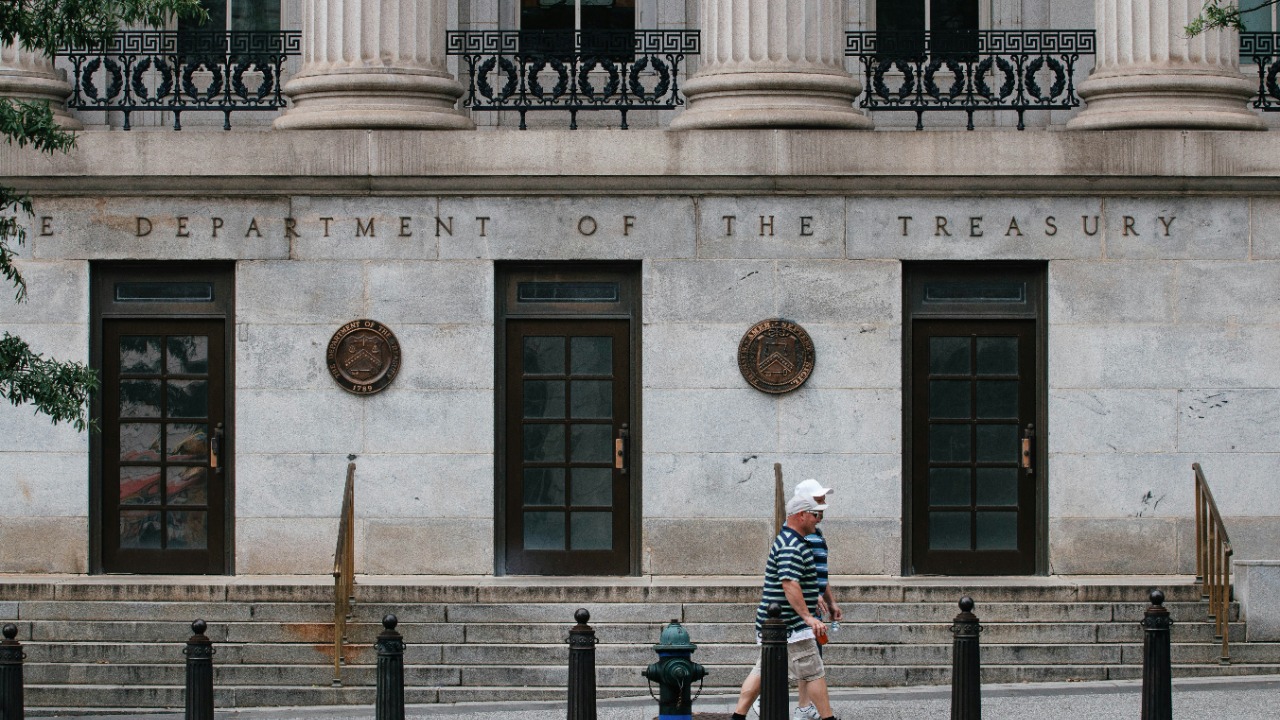
HM Treasury has acknowledged that many companies will see their business rates rise after the latest budget changes, with industry estimates suggesting that around 7,000 firms could face bills that effectively double over the coming rating period. The admission appears in an official technical paper rather than a ministerial speech, yet the effect on retail, hospitality and leisure businesses is likely to feel very real to owners dealing with fragile high streets and tight margins.
The key to the controversy lies in the detail of the new multipliers that will apply from 1 April 2026, and in which firms are moved out of the “small business” category into a higher band. Once those thresholds shift, some operators may find that what looks like a technical change on paper turns into a sharp jump in cash terms. That is why the Treasury’s own modelling, rather than opposition rhetoric, has become central to criticism of what some commentators describe as a budget fiasco.
What the Treasury’s paper actually says
The starting point is an official document titled Treasury paper, released as part of the budget package. It is an HM Treasury publication, not outside analysis, and it sets out the scope of the changes and the new multipliers that will apply to different types of property. As primary policy evidence, this paper carries more weight than political soundbites about “supporting the high street.”
In that document, HM Treasury confirms that the national small business multiplier is set at 43.2p per pound of rateable value for qualifying properties, with the change scheduled to take effect on 1 April 2026, according to the official modelling. The same paper explains that the new structure includes a high-value multiplier that applies to properties above a specified threshold, and it notes that this threshold is used to identify a relatively small set of high-value sites out of a wider tax base of about 698 comparable properties in the modelling period. Taken together, these figures show that the Treasury has mapped out in detail how the new rates will work long before bills actually change.
How a 43.2p multiplier can double bills
On its own, a national small business multiplier of 43.2p might sound like a modest technical setting, but in practice it is the lever that turns a property’s rateable value into a tax bill each financial year. When a firm is moved from a lower multiplier into a higher one, the jump in liability can be steep enough to feel like a doubling, especially for operators on tight margins in hospitality and leisure. The Treasury’s decision to publish a worked example in which a notional rateable value of £965,612 is used to illustrate how liabilities change under different multipliers shows that officials understand how sensitive bills are to even small shifts in these rates.
The same Treasury paper sets the timetable by stating that the revised multipliers start on 1 April 2026, which is presented as the beginning of the next rating year in the official tables. That date matters because it turns an abstract debate about “rebalancing” business taxation into a countdown for roughly 7,000 firms that industry groups say will see their bills jump sharply once transitional protections unwind. When those bills arrive, many owners are likely to argue that the warning was buried in a technical annex rather than set out clearly in the main budget speech.
Why retail, hospitality and leisure feel singled out
The Treasury document is explicit that it covers “retail, hospitality and leisure multipliers and high-value multiplier,” which signals that these sectors sit at the core of the change in the 2026–27 rating year. In practice, that means bricks-and-mortar shops, pubs, restaurants, cinemas and gyms are being treated as a distinct group for business rates purposes. Supporters of the policy argue that tailoring multipliers to specific sectors allows relief to be targeted where it is most needed, but the same mechanism can also concentrate higher bills on a relatively narrow slice of the economy.
Because the publication is primary policy evidence produced by HM Treasury, its focus carries political meaning as well as technical detail. When a document that runs to more than 04 pages of modelling shows clear winners and losers across retail, hospitality and leisure, it signals that officials have chosen these sectors as the testing ground for the new structure. For businesses that have already absorbed higher wage costs and energy bills since the last revaluation, the sense of being used as a fiscal shock absorber reinforces concerns from trade bodies that the budget did not match the scale of high-street pressures.
The budget fiasco narrative
The phrase “budget fiasco” has been used by some critics because the Treasury’s own numbers appear to clash with the government’s public messaging about helping small firms at the time of the budget announcement. Ministers can point to the national small business multiplier of 43.2p as evidence that they are keeping a lower rate for qualifying properties from 1 April 2026. Yet the same official paper shows that once the new structure starts, a significant group of businesses will be shifted into higher multipliers that leave them paying far more than they might have expected from headline statements alone.
That tension is sharpened by the way the policy was communicated when the budget documents were released. The core data sits in an HM Treasury PDF that many small business owners are unlikely to read, even though it is the primary policy evidence that explains how their bills will be calculated in the 2026–27 period. If owners later find that their rates have risen sharply, they are unlikely to blame “multipliers” or “revaluations”; they are more likely to argue that a budget which promised stability in public did not make the scale of tax rises clear in accessible language.
What this means for high streets and policy
The practical effect of the Treasury’s choices will be felt on high streets where rateable values are already out of step with trading conditions. A national small business multiplier of 43.2p, applied from 1 April 2026 as set out in the official modelling, might look reasonable on a spreadsheet, but it can still tip a marginal site into closure if footfall is weak and costs remain high. Because the HM Treasury publication is explicit about both the rate and the start date, there is limited scope for ministers to argue later that sharp increases in bills were an unintended outcome rather than a foreseeable result of the policy design.
There is also a wider policy question about whether business rates remain suitable for a service-heavy, digital economy in which many firms trade partly or wholly online. By concentrating detailed modelling in a document focused on retail, hospitality and leisure, the government has effectively accepted that the system needs constant adjustment to handle sector-specific pressures. Critics warn that the row over an estimated 7,000 firms facing much higher bills could be the start of a broader debate about how the Treasury should raise money from commercial property in the years after 2026, and whether a different approach would better support long-term high-street recovery.
More From The Daily Overview
*This article was researched with the help of AI, with human editors creating the final content.

Grant Mercer covers market dynamics, business trends, and the economic forces driving growth across industries. His analysis connects macro movements with real-world implications for investors, entrepreneurs, and professionals. Through his work at The Daily Overview, Grant helps readers understand how markets function and where opportunities may emerge.

