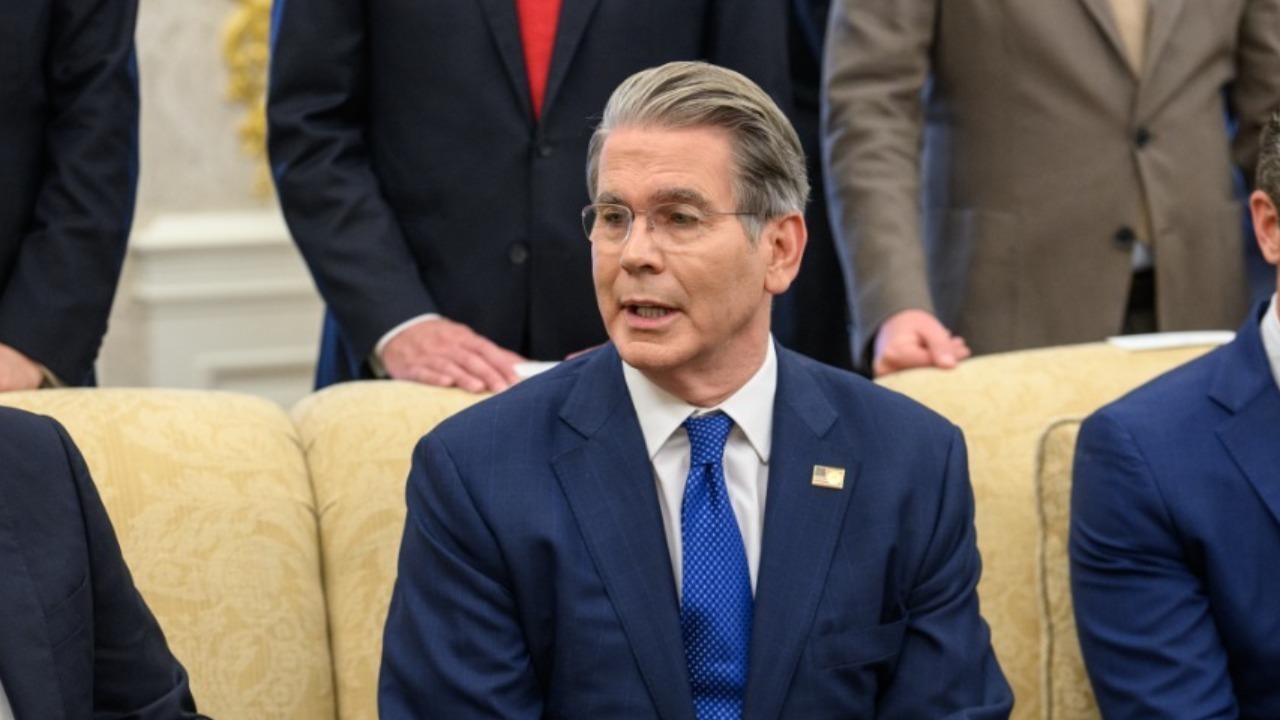
Treasury Secretary Scott Bessent has drawn a bright line between the government’s existing bitcoin holdings and the money it collects from taxpayers. In contentious testimony on Capitol Hill, he said he has no authority to deploy tax dollars to buy Bitcoin or to order banks to prop up the market, even as the administration defends a separate strategic Bitcoin reserve. The clash has turned a long running crypto culture war into a concrete fight over what counts as public money and who gets to decide how it is spent.
The stakes are not abstract. Bitcoin has been sliding, and some Republican lawmakers want the United States to lean harder into hard assets, from gold to digital tokens, while critics warn against turning federal coffers into a speculative trading account. Bessent’s answer, that he cannot touch taxpayer funds for Bitcoin, is as much a legal argument as it is a political signal about how far the Trump administration is willing to go.
The Capitol Hill clash that forced Bessent’s hand
The latest confrontation unfolded when Treasury Secretary Scott Bessent appeared before Congress and was pressed on whether he could use public money to stabilize the crypto market. According to one account, a Senat asked him directly if he could use tax dollars to purchase bitcoin, prompting Bessent to state that he simply does not have that authority. A separate summary of the same exchange notes that Treasury Secretary Scott, framing the issue as a matter of statutory limits rather than policy preference.
That testimony came as lawmakers were already locked in what one report described as a heated debate over whether a Bitcoin reserve should be treated as taxpayer money. In that same setting, Treasury Secretary Scott Bessent was also asked whether the Treasury could direct banks to step in and buy Bitcoin, a question that resurfaced later when he reiterated that the Treasury lacks authority to tell private institutions to bail out crypto markets. A separate recap of the hearing notes that Treasury Secretary Scott told Congress on Wednesday that the Treasury cannot direct banks to buy Bitcoin and has ruled out market intervention.
What counts as taxpayer money in the Bitcoin fight
At the core of the dispute is a deceptively simple question, what exactly is taxpayer money in a world where the federal government already holds Bitcoin seized from criminal cases. Earlier this year, Bessent explained that the government has retained some of that bitcoin and that those holdings have appreciated significantly, a point he elaborated on when discussing the emerging Strategic Bitcoin Reserve. In that context, he drew a line between assets the government already owns and new purchases that would require appropriated funds, arguing that the latter would implicate taxpayers in a way the former does not.
Lawmakers have not accepted that distinction unanimously. One detailed account of the hearing describes how Sherman pressed the Treasury on whether bitcoin held by the government should be considered part of the same pool as tax receipts, and whether the executive branch could act unilaterally to expand those holdings. Another summary of the same debate notes that Treasury Rules Out even as GOP lawmakers push for greater use of gold reserves, underscoring how the definition of taxpayer money is now entangled with a broader argument about what assets should back the federal balance sheet.
Bessent’s evolving stance on a strategic Bitcoin reserve
Scott Bessent’s refusal to spend tax dollars on Bitcoin sits alongside a more nuanced view of the government’s existing crypto trove. In a television interview in Aug, Treasury Secretary Scott said the United States would not be buying bitcoin for its strategic reserves, signaling caution about new purchases even as he acknowledged the asset’s growing role. Yet more recent analysis notes that the Treasury Secretary backs strategic Bitcoin holdings as a government asset, describing Bitcoin and BTC as part of a broader portfolio that can be managed without dipping into taxpayer funds.
That balancing act has drawn scrutiny. According to journalist and host Christine Lee, Bessent reaffirmed the administration’s commitment to a strategic Bitcoin reserve even as critics questioned whether he had given away too much of it during earlier market moves. Another report on the same theme notes that According to that account, the reserve’s performance was being measured against a market that had fallen to just 23% in early January, a reminder that even a “government asset” can be volatile. For Bessent, the message has been that managing those holdings is part of normal asset management, while buying more with tax receipts would cross a political and legal red line.
Market fallout and the “no bailout” message
Financial markets heard Bessent’s testimony as a clear signal that Washington would not ride to Bitcoin’s rescue. When he told lawmakers that the government cannot direct banks to buy Bitcoin or other crypto assets, traders quickly marked down prices. A market recap by Ines Ferr and Grace O Donnell noted that Bitcoin, tracked as BTC, broke below key levels after his comments, adding to the token’s recent rout. A separate flash update stressed that the Treasury has ruled out market intervention, reinforcing the idea that crypto investors are on their own.
Bessent has been equally blunt about the prospect of a direct rescue. In a regulatory-focused interview, he said the Government cannot “bail out Bitcoin,” a line that has since been repeated as shorthand for the administration’s stance. Another version of that exchange emphasizes that the government cannot bail out Bitcoin or any hypothetical “Trumpcoin,” underscoring that the principle applies to digital assets generally, not just the current market leader. For investors who had hoped for a crypto version of the bank rescues that followed the 2008 crisis, Bessent’s message is that such expectations are misplaced.
Politics, gold and the shadow of World Liberty Financial
The legal arguments around taxpayer money are unfolding against a charged political backdrop. One detailed report describes how Meeks grilled Bessent over potential conflicts involving World Liberty Financial, a Trump linked venture, and urged him to pause any bank charter connected to that entity until conflicts of interest are reviewed. In that same hearing, Bessent was also questioned about whether his refusal to bail out Bitcoin was influenced by the administration’s broader political interests, a suggestion he rejected by pointing back to the statutory limits he had already outlined.
Republican lawmakers have been pushing in a different direction, arguing that if the United States is going to hold alternative assets, it should consider expanding its gold reserves rather than its crypto stash. One summary notes that GOP Senators Push For Use Of Gold Reserves as part of the same debate in which the Treasury Rules Out BTC Buys, framing gold as a more traditional hedge. Another account of the exchange highlights how Senators Push For while questioning whether Bitcoin should ever be treated as taxpayer money, a contrast that shows how digital assets remain politically polarizing even among fiscal hawks.
More From The Daily Overview
*This article was researched with the help of AI, with human editors creating the final content.

Grant Mercer covers market dynamics, business trends, and the economic forces driving growth across industries. His analysis connects macro movements with real-world implications for investors, entrepreneurs, and professionals. Through his work at The Daily Overview, Grant helps readers understand how markets function and where opportunities may emerge.

