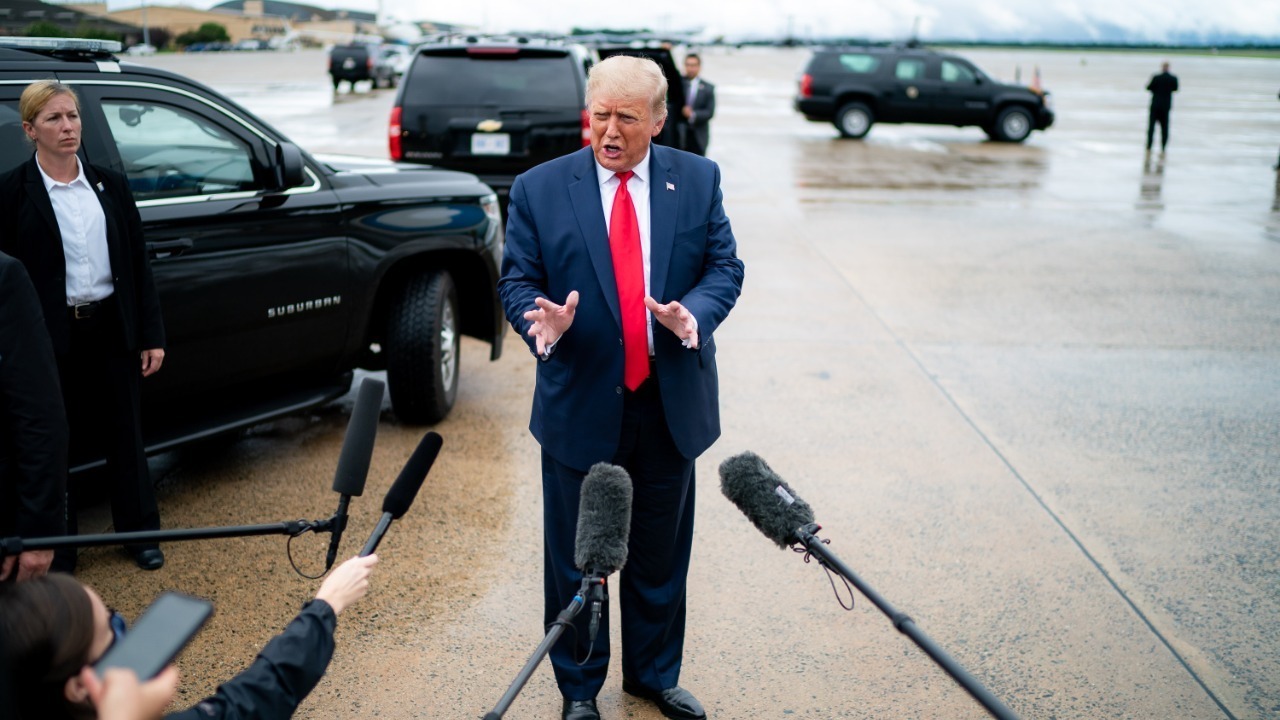
Treasury Secretary Scott Bessent warned of a “perfect storm” that could send ground beef prices soaring to $10 a pound, addressing a report in a statement dated November 16, 2025. The following day, on November 17, 2025, Bessent blamed immigrants for the high beef prices while making a bizarre diseased cow claim, sharpening political and economic tensions around a staple food item as households already struggle with broader cost-of-living pressures.
Bessent’s Initial Warning on Rising Beef Costs
When Treasury Secretary Scott Bessent publicly addressed a report projecting that ground beef is headed to $10 per pound, he framed the situation as an urgent and emerging threat to family budgets rather than a distant possibility. In his November 16, 2025, statement, he treated the price surge as a new development in November 2025, signaling that what had been a relatively stable category in grocery carts could soon become a flashpoint for consumer frustration and political scrutiny. By directly engaging with the report that ground beef could reach double-digit prices, Bessent elevated what might have remained a market forecast into a national economic concern, underscoring how quickly food inflation can become a kitchen-table crisis.
Bessent described the forces behind the projected spike as a “perfect storm,” language that suggested multiple pressures converging at once rather than a single, easily fixable problem, according to coverage of how the Trump official addresses report that ground beef is headed to $10 per pound. By invoking that phrase, he linked the looming jump in ground beef prices to a broader pattern of volatility in agricultural commodities, hinting at rising production costs, supply chain strains, and market uncertainty that have accelerated since earlier 2025 updates. His warning also marked a notable shift in federal attention, with a senior member of President Donald Trump’s economic team publicly acknowledging that food price instability is now central to the administration’s economic agenda and to the daily reality of U.S. consumers.
Key Elements of the ‘Perfect Storm’
In outlining the “perfect storm” behind the potential move to $10 ground beef, Bessent pointed to economic and supply chain pressures that have intensified over the course of 2025, even if he did not spell out every component in granular detail. His November 16, 2025, statement, as described in the reporting on his response to the projected price surge, implied that recent changes in production costs are a central driver, from higher feed and transportation expenses to the financial strain on ranchers and processors. By tying the warning to a specific price threshold, he effectively translated abstract cost pressures into a concrete number that shoppers can recognize on store shelves, highlighting how quickly a routine purchase like a pound of ground beef could become a luxury for lower income households.
The report Bessent addressed also referenced broader market dynamics that have been building throughout the year, including tighter supplies and heightened volatility in commodity markets, which have accelerated since earlier 2025 updates and now appear to be converging on the beef sector. As those dynamics filter through to retailers, supermarkets and smaller grocers alike face difficult choices about how much of the increase to absorb and how much to pass on, with the projected hike threatening to squeeze margins and reduce sales volumes. For U.S. consumers, particularly families who rely on ground beef as an affordable protein, the prospect of $10 per pound prices raises the stakes for food security and budgeting, turning what might once have been a flexible grocery category into a source of financial stress.
Blaming Immigrants for Beef Price Pressures
One day after his “perfect storm” warning, Bessent shifted his focus in a striking way, explicitly attributing high beef prices to immigrants in comments reported on November 17, 2025. Coverage of his remarks describes how he moved from discussing economic fundamentals to directly linking immigration to the cost of ground beef, a controversial stance captured in reporting that Scott Bessent blames immigrants for high beef prices with bizarre diseased cow claim. By framing immigrants as a primary factor behind rising prices, he departed from the more conventional explanations that emphasize supply chain disruptions, input costs, and market concentration, and instead placed immigration policy at the center of the debate over food inflation.
This attribution carries significant implications for both economic analysis and public discourse, because it redirects attention from structural issues in the beef industry to the political fight over border and labor policies. Bessent’s comments risk overshadowing the complex mix of factors that economists typically cite, such as feed prices, drought conditions, processing capacity, and corporate pricing strategies, and instead encourage a narrative that singles out immigrant communities as the cause of a nationwide cost problem. For immigrant workers and families, particularly those employed in meatpacking plants and agricultural jobs, his stance could intensify scrutiny and stigma at a moment when their labor remains deeply embedded in the U.S. food supply chain, raising concerns about scapegoating and the potential for policy responses that prioritize blame over practical solutions.
The Bizarre Diseased Cow Claim
In the same November 17, 2025, remarks where he blamed immigrants for high beef prices, Bessent also made what has been described as a bizarre diseased cow claim, tying it directly to his argument about immigration and the cost of ground beef. Reporting on his comments highlights that he did not simply reference health concerns in general terms, but instead invoked a specific diseased cow claim in connection with immigrants and high beef prices, a linkage that stands out for its unusual and inflammatory character. By presenting this assertion alongside his economic commentary, he blurred the line between public health rhetoric and price analysis, raising questions about how evidence based his explanation of the “perfect storm” really is.
The diseased cow claim is particularly striking when contrasted with standard health regulations in U.S. agriculture, which rely on veterinary inspections, federal oversight, and strict protocols to keep diseased animals out of the food supply. Established systems, from USDA inspection regimes to recall procedures, are designed to prevent exactly the kind of contamination scenario that Bessent’s comments imply, making his assertion an outlier compared with how regulators and industry experts typically discuss beef safety. By inserting this claim into the narrative about rising prices, he added a polarizing and emotionally charged element to the conversation, one that could deepen public anxiety about both food safety and immigration while doing little to clarify the actual economic drivers behind the projected jump to $10 ground beef.
More From TheDailyOverview
- Dave Ramsey warns to stop 401(k) contributions
- 11 night jobs you can do from home (not exciting but steady)
- Small U.S. cities ready to boom next
- 19 things boomers should never sell no matter what

Grant Mercer covers market dynamics, business trends, and the economic forces driving growth across industries. His analysis connects macro movements with real-world implications for investors, entrepreneurs, and professionals. Through his work at The Daily Overview, Grant helps readers understand how markets function and where opportunities may emerge.