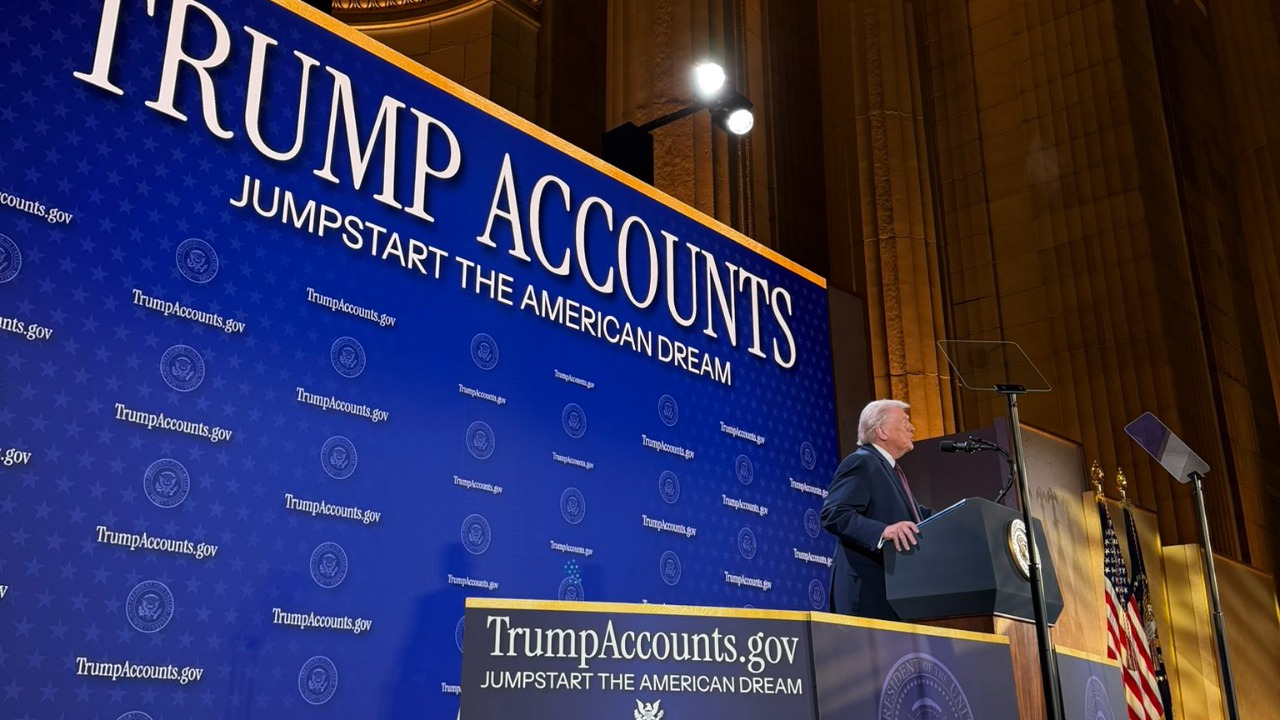
Big banks are racing to turn a new federal savings program for children into a marquee workplace benefit, dangling rich matches on so‑called “Trump accounts” as a way to attract and keep talent. For employees, the pitch is simple: put in money for a child’s future and the company will pile on top, potentially doubling the contribution and turning a niche policy into a lucrative perk.
Behind that pitch sits a complex mix of tax rules, political branding and corporate benefits strategy that is still taking shape. I see a clear tension emerging between the promise of free money for families and the practical questions about who qualifies, how the accounts work and what happens if the rules change in Washington.
How Trump Accounts Work For Kids
At the heart of these new perks is a federal program that created dedicated investment vehicles for children, branded as Trump Accounts. Treasury describes the initiative as a way for young Americans to start life with a nest egg, with the federal government seeding each eligible child’s account and limiting direct Treasury administration to newborns. The design is meant to push families toward long term investing rather than short term spending, with balances typically steered into diversified portfolios instead of simple savings.
Financial firms have rushed in to explain and package the benefit. One major asset manager notes that Trump Accounts are tax deferred vehicles for children, with contributions counting toward a $5,000 annual limit and invested in markets rather than sitting idle. Brokerages emphasize that the accounts function much like other custodial retirement products, with adults managing the money until the child comes of age, and the tax advantages encouraging families to keep funds invested for education, housing or other big life expenses.
The Policy Roots In The One Big Beautiful Bill
The political and legal foundation for these accounts sits inside President Donald Trump’s signature economic package, the One Big Beautiful Bill. Industry groups point out that One Big Beautiful introduced the Trump branded savings vehicle in Section 70204, defining a Trump account as a government backed savings and investment product for minors that can hold cash or other assets the Secretary of the Treasury deems appropriate. Banks that custody these accounts have echoed that framing, stressing that the program is statutory, not a marketing gimmick, even if the branding is unusually personal.
Retail banks have translated that law into consumer facing guidance. One online institution explains in plain language that What are Trump Accounts means understanding that they are government established savings accounts introduced under the One Big Beautiful Bil, with eligible children receiving a $1,000 seed contribution when the account is opened. Another large brokerage notes that What to Know includes the fact that the One Big Beautiful Bill Act, or The One Big Beautiful Bill Act (OBBBA), created a new tax advantaged savings and investment account that families can eventually tap for education, housing, health costs or any other purpose, not just college tuition.
From Federal Program To Workplace Perk
What began as a federal policy for children has quickly migrated into the world of corporate benefits, especially at large financial institutions. A detailed primer from one brokerage explains that Key Trump Accounts features include a custodial style traditional IRA structure for minors, owned by the child but administered by an adult, with traditional IRA rules applying to contributions and withdrawals. That familiar framework has made it easier for employers to plug the accounts into existing payroll and benefits systems, treating them much like 401(k) matches, only aimed at employees’ children instead of their own retirements.
Big banks have gone further, turning the accounts into headline perks. Reporting on workplace programs notes that Chase, Bank of America and Wells Fargo To Match are offering to match $1,000 Contributions that eligible Employee parents put into Trump Accounts for their kids, effectively doubling the first tranche of savings each year up to that cap. For workers at those institutions, the benefit functions like a targeted bonus that bypasses the paycheck and lands directly in a child’s long term investment account.
Big Banks Pile In With $1,000 Matches
The list of employers offering to supercharge these accounts is growing, and the biggest names in banking are now at the center of it. Coverage of the trend notes that Bank of America and its peers are joining a list of companies matching $1,000 contributions to employees’ Trump Accounts, with clear rules about which workers and dependents are eligible for the money. Separate reporting on internal announcements confirms that Chase and Bank told staff on a Wednesday that they would match Employees’ $1,000 Trump contributions for eligible employees, framing the move as part of a broader push to support families and future financial security.
Other large employers are following suit, turning the federal program into a competitive benefit across industries. One overview of corporate offerings notes that Major Employers Are Trump Accounts for Kids, with a new wave of employer perks that could double the value of a child’s account as companies like major banks and firms such as Schwab have made similar announcements. Another breakdown of the trend highlights that Trump Accounts for Kids are typically invested in low cost index funds, meaning that a matched contribution can compound over years in the market rather than sitting in cash.
Fine Print, Risks And The Politics Of A Branded Benefit
For all the enthusiasm, benefits lawyers and HR departments are already flagging complications. Legal analysis warns that Employers that plan to join Bank of America Corp, Intel Corp and others in making Trump Account contributions need to navigate tax rules, nondiscrimination requirements and questions about how matches interact with existing retirement plans. There are also operational issues, from verifying that a child’s account is properly established to ensuring that company money is not accidentally directed to ineligible relatives or misclassified for payroll purposes.
I also see a political wrinkle that is hard to ignore. The accounts are explicitly branded with the name Trump, and official materials from Treasury describe Origin of Trump as part of the administration’s vision for America’s 250th anniversary, tying the policy to President Trump’s broader economic agenda. That branding may appeal to some employees and alienate others, especially in politically diverse workplaces. Yet the underlying structure, which one brokerage summarizes in its What to Know About Trump Accounts guidance and another firm outlines in its IRA style Key takeaways, looks a lot like other long term savings tools that have survived changes in Washington before. For workers at big banks, the calculation may ultimately be less about politics and more about whether they can afford to leave free money for their kids on the table.
More From The Daily Overview
*This article was researched with the help of AI, with human editors creating the final content.

Grant Mercer covers market dynamics, business trends, and the economic forces driving growth across industries. His analysis connects macro movements with real-world implications for investors, entrepreneurs, and professionals. Through his work at The Daily Overview, Grant helps readers understand how markets function and where opportunities may emerge.

