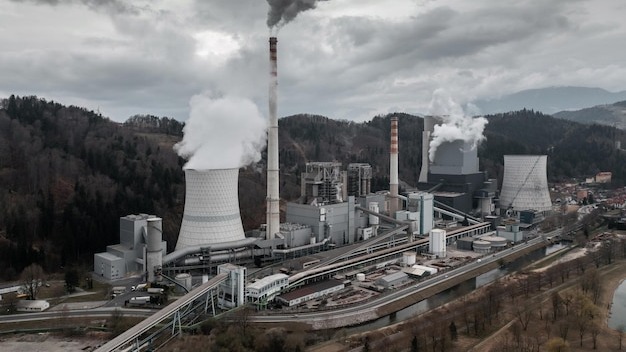
The U.S. Department of Energy has renewed an emergency order keeping Michigan’s J.H. Campbell coal plant running through May 18, 2026, marking the fourth consecutive directive blocking the facility’s planned retirement. The latest action, effective February 17, 2026, extends a chain of federal interventions that began last May and has drawn sharp legal pushback from Michigan Attorney General Dana Nessel. With disclosed compliance costs reaching $80 million and unresolved fights over who pays the bill, the quiet extension carries real financial stakes for ratepayers across the region.
Four Orders in Nine Months
The DOE issued the original emergency order for J.H. Campbell on May 23, 2025, invoking Section 202(c) of the Federal Power Act, a rarely used provision that allows the federal government to compel a power plant to keep generating electricity when grid reliability is at risk. Subsequent renewals followed on August 20, 2025, and November 18, 2025, each extending the plant’s forced operation by roughly 90 days. The February 2026 renewal cited the plant’s role during a severe winter storm as justification, framing continued operation as essential to protecting Michigan households and businesses from outages.
The formal docket for the latest directive, designated Order No. 202-25-9, shows a contested administrative record. Multiple parties have filed motions to intervene and requests for rehearing, and DOE has issued a rehearing disposition notice in response. The rapid cadence of renewals raises a practical question: whether a tool designed for short-term emergencies is being used to sustain a coal plant that its owner, Consumers Energy, had already scheduled for retirement. Michigan has lost significant coal-fired capacity since 2020, and the closure of the Palisades nuclear plant further tightened the state’s generation mix, according to federal energy data and filings in the case. Those retirements form the backdrop DOE has relied on to justify each extension, but critics argue the department is substituting its judgment for state-level energy planning and undermining long-term transition strategies.
Legal Fights and the $80 Million Bill
Michigan Attorney General Nessel has mounted a sustained legal challenge. Her office intervened at FERC after Consumers Energy filed a complaint seeking to spread J.H. Campbell’s compliance costs across the Midcontinent Independent System Operator grid, a move that would shift expenses from Michigan ratepayers to electricity customers in a dozen other states. Nessel’s FERC filing not only opposed that cost allocation but also questioned whether DOE had met the statutory threshold for declaring an emergency. Her office followed up with a formal request for rehearing filed directly with DOE, targeting the third order in the series and arguing that repeated extensions effectively transform a temporary measure into a long-term federal mandate.
The financial burden is not abstract. CMS Energy Corp., the parent company of Consumers Energy, disclosed in its quarterly SEC filing that net expenses tied to J.H. Campbell compliance reached $80 million through September, as reported by the Associated Press. The utility’s strategy has been to seek FERC approval for a MISO tariff modification that would socialize those costs among regional customers, rather than leaving them solely with Consumers Energy’s own rate base. Consumer advocates warn that if FERC agrees, households and businesses far from the Lake Michigan shoreline could end up paying for a plant they never relied on, while Michigan officials argue that DOE’s orders should not become a vehicle for shifting private compliance expenses onto a broader public.
Reliability, Pollution and What Comes Next
Supporters of the emergency orders point to the winter storm cited in DOE’s latest justification as evidence that the grid remains fragile during extreme weather. They argue that until replacement generation and transmission projects are fully online, J.H. Campbell provides a buffer against blackouts in western Michigan and across part of the MISO footprint. Grid operators have echoed concerns about tight reserve margins during peak demand periods, and DOE’s own order notes that unexpected outages at other plants, combined with high load, could leave little room for error if Campbell were to shut down on schedule. For federal officials, the short-term calculus has tilted toward keeping legacy capacity available, even at a premium, while longer-term solutions are developed.
Opponents counter that continued reliance on an aging coal plant delays necessary investments in cleaner resources and leaves nearby communities exposed to additional years of air and water pollution. Public health and environmental groups have submitted docket comments pointing to federal emissions inventories and tools such as the EPA’s air data portal to document the plant’s contribution to regional pollution burdens. They argue that Michigan regulators and utilities had already planned for Campbell’s retirement and that federal intervention is distorting those plans, with little transparency about how long the “emergency” will last or how much more it will ultimately cost. With the latest order now stretching into mid-2026 and legal challenges still pending, the fight over J.H. Campbell has become a test case for how far Washington can go in using emergency powers to keep fossil fuel plants online in the name of reliability, and who pays when it does.
More From The Daily Overview
*This article was researched with the help of AI, with human editors creating the final content.

Grant Mercer covers market dynamics, business trends, and the economic forces driving growth across industries. His analysis connects macro movements with real-world implications for investors, entrepreneurs, and professionals. Through his work at The Daily Overview, Grant helps readers understand how markets function and where opportunities may emerge.

