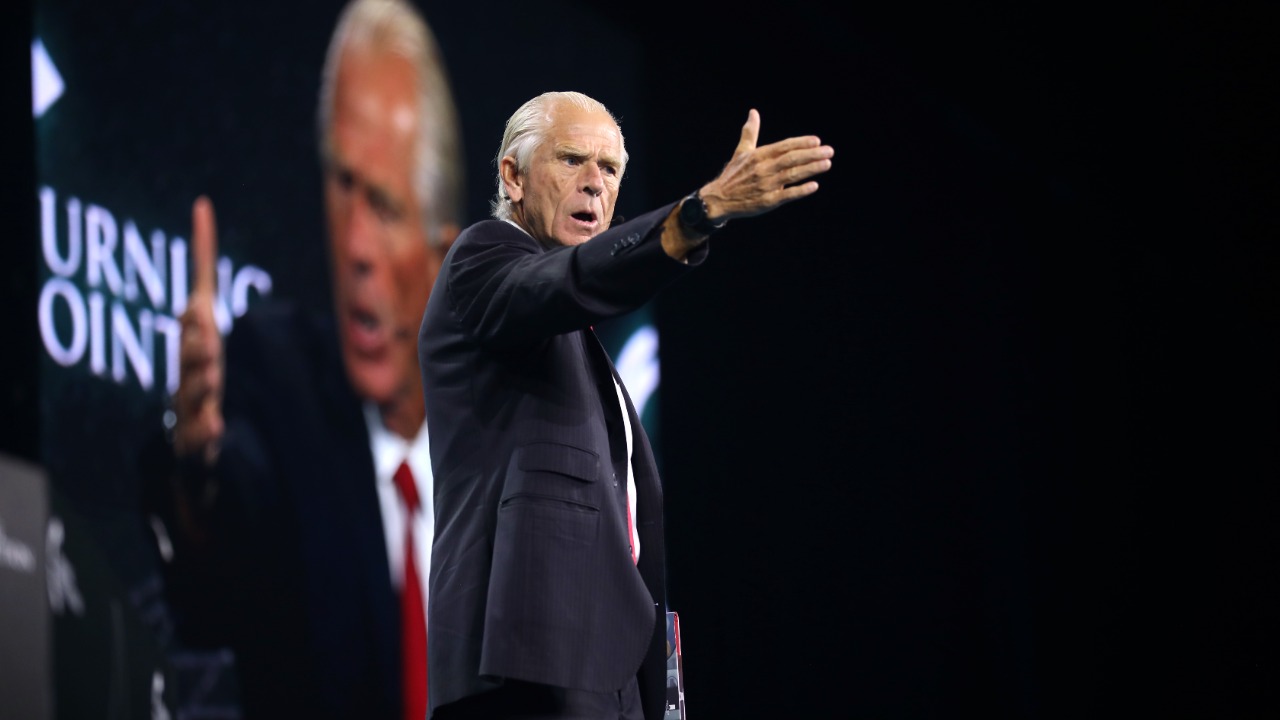
Peter Navarro, a senior adviser in the Trump White House, has publicly warned that tech companies like Meta may soon face pressure to absorb the full infrastructure costs of their sprawling data center operations rather than shifting those expenses onto residential electricity customers. The warning comes as Louisiana regulators have already approved major new power generation and transmission resources dedicated to a single Meta facility, and as federal inflation data shows electricity prices continuing to climb year over year. The core question is whether the current regulatory framework adequately protects households from bearing the cost of Big Tech’s accelerating energy appetite, or whether new rules will force companies to pay their own way.
Louisiana Greenlights Massive Grid Build for Meta
The scale of what a single data center project demands from the electrical grid is staggering, and the regulatory record in Louisiana lays it out in detail. The Louisiana Public Service Commission approved a settlement in Order No. U-37425 authorizing generation and transmission resources specifically to serve Meta’s data center project in Richland Parish. The customer on record is Meta’s subsidiary, Laidley LLC, and the utility tasked with building and operating the infrastructure is Entergy Louisiana. In regulatory terms, this is a “special load” case: a single, extremely large customer whose needs are so substantial that they effectively drive a bespoke buildout of the grid.
What makes this case notable is the sheer volume of new capacity involved. According to Entergy Louisiana’s Form 10-Q filed with the SEC for the quarter ended June 30, 2025, the company’s October 2024 application to the LPSC requested approval for three combined-cycle units totaling 2,262 MW, along with a new 500 kV transmission line and substation upgrades. For context, 2,262 MW is enough to power well over a million typical American homes under normal consumption patterns. That entire block of generation capacity is being built to serve one corporate customer. The same filing notes a “corporate sustainability rider” tied to roughly 1,500 MW of capacity, signaling that Meta would partially fund renewable or cleaner energy procurement associated with the project. But the difference between partial contributions and full cost absorption is precisely where the political debate now sits, because the remaining megawatts and network upgrades still need to be paid for through regulated rates.
Electricity Prices and the Household Squeeze
Navarro’s warning gains traction because it taps into a real and measurable trend: electricity is getting more expensive for ordinary consumers. The Bureau of Labor Statistics’ Consumer Price Index report for September 2025 documents year-over-year increases in electricity within the broader energy services category, underscoring that utility bills are rising faster than many other household expenses. When families see higher charges on their monthly statements, the political appetite for scrutinizing who benefits from new grid investment grows sharply. If billions of dollars in generation and transmission infrastructure are being built primarily to serve corporate data centers, voters and regulators alike will ask whether those costs are landing on the right balance sheets.
The traditional utility model in the United States socializes much of the cost of shared infrastructure across all ratepayers within a service territory. That means residential customers in northern Louisiana could, in theory, see rate impacts from infrastructure built to serve Meta’s Richland Parish facility, even though they derive no obvious, direct benefit from the data center’s operations. This is the dynamic Navarro appears to be targeting. His argument, stripped to its essentials, is that tech giants generating enormous profits from artificial intelligence and cloud workloads should not be subsidized by working families through higher electricity rates. Whether that argument translates into federal policy action or simply serves as political positioning is an open question, but the underlying cost structure is real and documented in public utility and securities filings that describe who is paying for which assets.
The Corporate Sustainability Rider as a Partial Fix
Entergy Louisiana’s SEC disclosure does indicate that the regulatory framework is not entirely blind to this problem. The corporate sustainability rider described in the filing contemplates that Meta, through Laidley LLC, would make direct customer contributions toward approximately 1,500 MW of the project’s capacity. That mechanism is designed to shift at least some of the cost burden away from general ratepayers and onto the corporate customer driving the demand. In principle, it represents a meaningful step toward “cost causation,” the long-standing regulatory concept that those whose demand triggers new investment should bear the associated expense rather than spreading it broadly across unrelated customers.
But a rider contemplating contributions is not the same as a mandate requiring full cost absorption. The language in the Entergy disclosure is forward-looking and conditional, reflecting the reality that final cost allocation will depend on future regulatory orders and contractual details. The difference between a voluntary corporate contribution structure and a binding requirement to cover all incremental costs is significant, both financially and politically. If Meta’s rider covers 1,500 MW of contributions but the total approved generation package is 2,262 MW of combined-cycle turbines plus a new 500 kV line and substation upgrades, the remaining costs still need to land somewhere. The LPSC settlement approved in Order No. U-37425 governs how those costs are allocated among customer classes, and it is precisely those allocation decisions that consumer advocates and political figures like Navarro are now scrutinizing as potential examples of hidden subsidies for Big Tech.
Federal Pressure and the Broader Policy Fight
Navarro’s comments reflect a broader tension within the Trump administration’s economic agenda. On one hand, the White House has encouraged rapid AI and cloud infrastructure buildout as a matter of national competitiveness and digital resilience. On the other, advisers like Navarro have consistently argued that American workers and consumers should not bear hidden costs to benefit large corporations. These two goals are not easily reconciled. Building data centers at the scale Meta is pursuing in Louisiana requires enormous new power generation, and someone has to pay for it. The policy question is whether federal intervention, through executive action, regulatory guidance to agencies that interact with state commissions, or legislative pressure on cost recovery rules, could force a different allocation than what state utility regulators have historically permitted.
State public service commissions like Louisiana’s have broad authority over utility rate structures, and any attempt at federal preemption of those decisions would be legally and politically complex. Nevertheless, the combination of rising electricity prices documented in federal CPI data and the visible scale of corporate data center buildouts creates a potent political narrative. If electricity inflation continues to outpace general inflation, the argument that tech companies should fully fund their own grid expansions will only grow stronger. The Louisiana case, with its detailed public record of approved generation resources, transmission upgrades, and corporate rider structures, offers one of the clearest windows into how these costs are actually being divided today, and into how much discretion regulators have to either protect or expose residential customers when they approve similar projects elsewhere.
What Comes Next for Data Center Cost Allocation
The fundamental challenge is that the U.S. power grid was not designed for a world in which a single data center campus can demand as much electricity as a mid-sized city. Traditional planning assumed relatively steady, incremental growth across a broad base of customers. By contrast, hyperscale data centers arrive as concentrated, time-sensitive loads that can require multi-gigawatt additions to generation and transmission capacity within a few years. That mismatch strains not only physical infrastructure but also the regulatory doctrines that determine who pays. When commissions treat these projects as just another large industrial customer, the default outcome is that much of the cost is spread across the entire rate base, with only partial make-whole payments from the corporate sponsor.
Going forward, regulators and policymakers face a menu of imperfect options. One approach is to tighten the link between cost causation and cost recovery by requiring data center developers to sign long-term contracts that explicitly backstop all incremental generation and network upgrades attributable to their load. Another is to refine riders like the one Entergy describes so that they automatically scale with actual usage and capital spending, rather than relying on negotiated contribution levels that may fall short of full cost coverage. A third path is to encourage or require more on-site or dedicated generation (such as behind-the-meter renewables or contracted plants) so that fewer systemwide upgrades are needed. Each of these strategies carries trade-offs: higher corporate costs could slow AI investment or push projects to other states, while continued socialization of costs risks deepening public resentment as household bills rise. The Louisiana Meta project, and the political backlash it has sparked, suggests that regulators will not be able to avoid these choices much longer.
More From The Daily Overview
*This article was researched with the help of AI, with human editors creating the final content.

Grant Mercer covers market dynamics, business trends, and the economic forces driving growth across industries. His analysis connects macro movements with real-world implications for investors, entrepreneurs, and professionals. Through his work at The Daily Overview, Grant helps readers understand how markets function and where opportunities may emerge.

