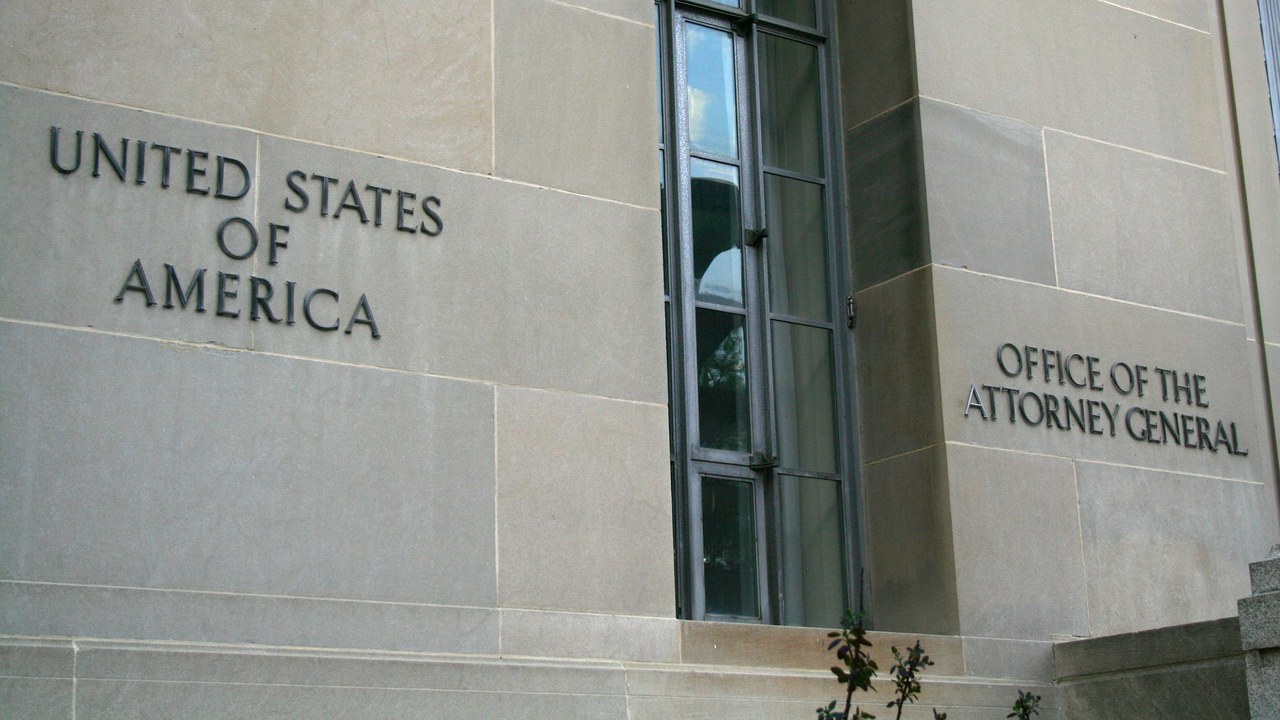
The Trump administration went over the heads of every judge who has tried to slow construction of the president’s new White House ballroom and asked the Supreme Court to let the cranes keep running. The application reached Chief Justice John Roberts on Thursday, one week after a divided federal appeals court panel ruled that Congress, not the president, decides what gets torn down and built at the White House. By Friday the Chief Justice had ordered the preservation group behind the lawsuit to answer by noon on Tuesday.
What the justices are being asked to protect is the largest physical alteration of the White House complex in living memory. The East Wing is gone. In its place stands a 90,000-square-foot structure the administration describes as an integrated military complex with a secure ballroom inside it. The government’s own filing says the project is 65 percent complete, that a crew of 250 people is working 20 hours a day, seven days a week, and that the concrete already poured is the kind used in nuclear power plants. Trump’s lawyers are not really asking for permission. They are telling the Court the building has passed the point where any judge can undo it.
The order the administration wants frozen
The lawsuit was brought by the National Trust for Historic Preservation, a private nonprofit that describes itself as having led the movement to save America’s historic places for more than 75 years. It sued in federal court in Washington after the administration demolished the East Wing in October 2025, the wing that had housed, among other things, the offices of the first lady and her staff.
Senior U.S. District Judge Richard Leon sided with the Trust in part. His order temporarily blocked construction of the ballroom above ground while the case proceeded, but expressly allowed underground work, including bomb shelters and bunkers, to continue, along with any above-ground work necessary for safety and security. That order never actually took effect. The U.S. Court of Appeals for the District of Columbia Circuit issued an administrative stay while the government appealed, as SCOTUSblog reported, so the demolition and construction continued uninterrupted through the entire litigation.
Millett and Garcia hand the White House to Congress
On Friday, August 7, a divided three-judge panel of the D.C. Circuit upheld Leon’s ruling. Judges Patricia Millett and Bradley Garcia concluded that Congress, rather than the president, holds exclusive authority to regulate the construction and demolition of White House structures, and that Congress has not appropriated a dollar for the ballroom. They agreed with the Trust that letting the building go up would inflict permanent injury on its members through irreversible historical-preservation, architectural and visual damage.
Judge Neomi Rao dissented, and her dissent is the argument the administration is now pressing at the Supreme Court. Rao contended that the National Trust had no legal right to sue in the first place, and that the president has the power to make improvements to his own residence, a power that almost certainly covers a ballroom. Millett and Garcia then did something that guaranteed this fight would land at the Supreme Court within two weeks: they put their own order on hold for 14 days to give the government time to appeal. That clock is now most of the way run out.
Sauer calls the injunction extraordinary and unlawful
Solicitor General D. John Sauer filed the stay application on August 13, docketed as National Park Service v. National Trust for Historic Preservation, No. 26A203. He asked the justices to put Leon’s order on hold while the government prepares a petition for review, and asked for an immediate administrative stay to freeze the order in the meantime.
Sauer called Leon’s order extraordinary and unlawful, and framed the stakes in national security terms, writing that it would halt ongoing construction of the integrated military complex, including a totally secure ballroom space, at the East Wing of the White House, which he described as vitally required by national security. On standing, he argued the Trust’s case collapses to a single member’s dislike of the new construction, and that a subjective preference of that kind is not the sort of injury that lets a lawsuit go forward at all. On the merits, he argued Congress authorized the project twice over, both by authorizing presidents to make alterations and improvements to the White House and by broadly authorizing the executive branch to construct buildings in national parks.
The declaration about the concrete
The most consequential document in the filing is not the legal brief. It is a sworn declaration from Joshua Fisher, the director for White House Management and Administration, attached to the government’s appendix. Fisher’s declaration is what converts a legal dispute into a physical fact.
Because Leon’s order never went into effect, Fisher recounts, construction has run continuously with a 250-person crew working 20 hours a day, seven days a week, keeping the project ahead of schedule and under budget, and the project now stands at 65 percent complete. Then comes the line the justices will not be able to unsee. If the building were ordered taken down, or even altered, by the court, Fisher wrote, there would be no way to do so. The concrete used in the project, he explained, is the type used in nuclear power plants, and is virtually impossible to deconstruct. Fisher also volunteered that the building is already being adjudged one of the most beautiful of its kind anywhere in the country, an aesthetic judgment the government offered as a direct answer to the Trust member whose objection anchors the case.
The practical argument underneath all of it is blunt. A federal district judge issued an order that has never been in force for a single day. The building went up anyway. Ordering it stopped now, the government says, does not preserve anything. It leaves a half-finished, hardened structure attached to the White House and no lawful way to remove it.
Noon on Tuesday
The Chief Justice moved quickly. On August 14 he requested a response from the National Trust for Historic Preservation, due by 12 p.m. Eastern on August 18, according to the docket for 26A203. That timing is not incidental. The D.C. Circuit’s 14-day hold expires days later, which means the justices have given themselves a narrow window to act before the injunction would take hold and the crews would have to stop.
The question in front of the Court is framed as a technical one about a stay pending review. It is not. Millett and Garcia wrote a rule that reaches well past one ballroom: that the president cannot alter or demolish structures at the White House without an appropriation from Congress, and that a private preservation organization can go to court to enforce that limit. If that stands, every future renovation of the executive mansion runs through a nonprofit’s standing to sue and a district judge’s willingness to grant an injunction. If the administration wins its stay, the practical answer is the one Fisher’s declaration already supplies, that the building is going up regardless of what any court says afterward.
The Trust’s response is due Tuesday at noon. Roberts can grant an administrative stay at any point before then.
This article was produced with AI assistance and reviewed by an editor.

Grant Mercer covers market dynamics, business trends, and the economic forces driving growth across industries. His analysis connects macro movements with real-world implications for investors, entrepreneurs, and professionals. Through his work at The Daily Overview, Grant helps readers understand how markets function and where opportunities may emerge.