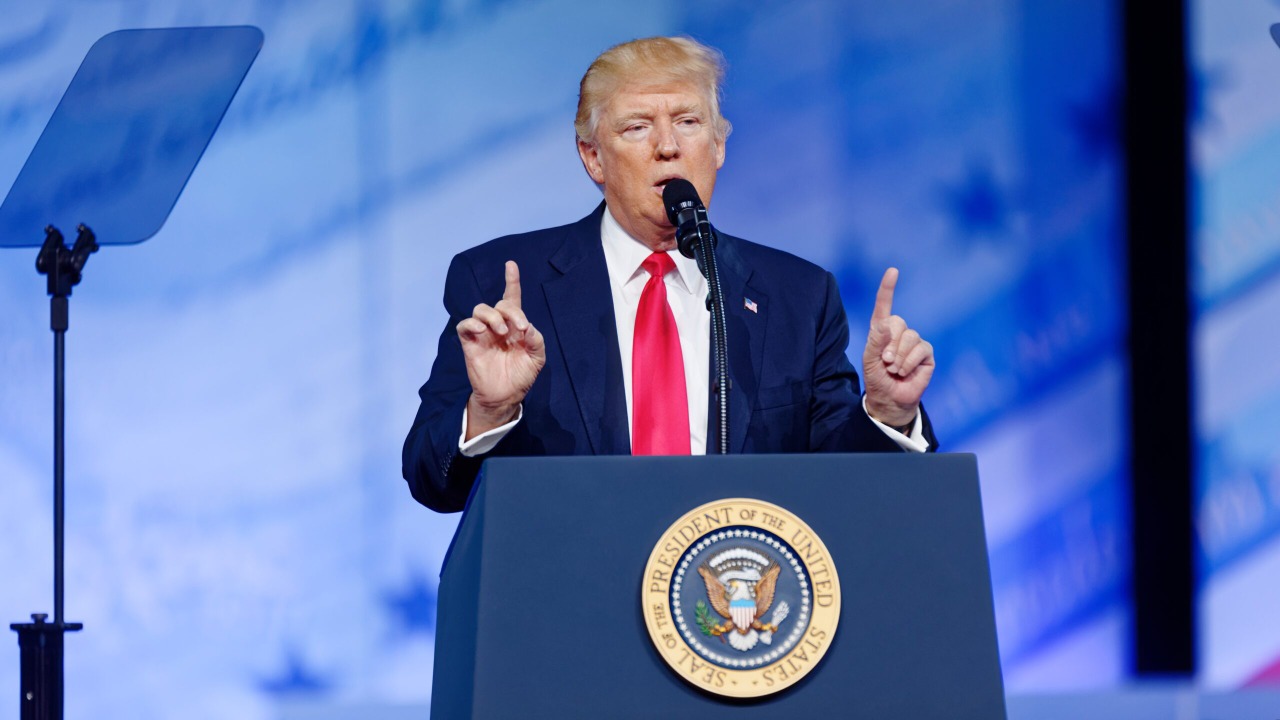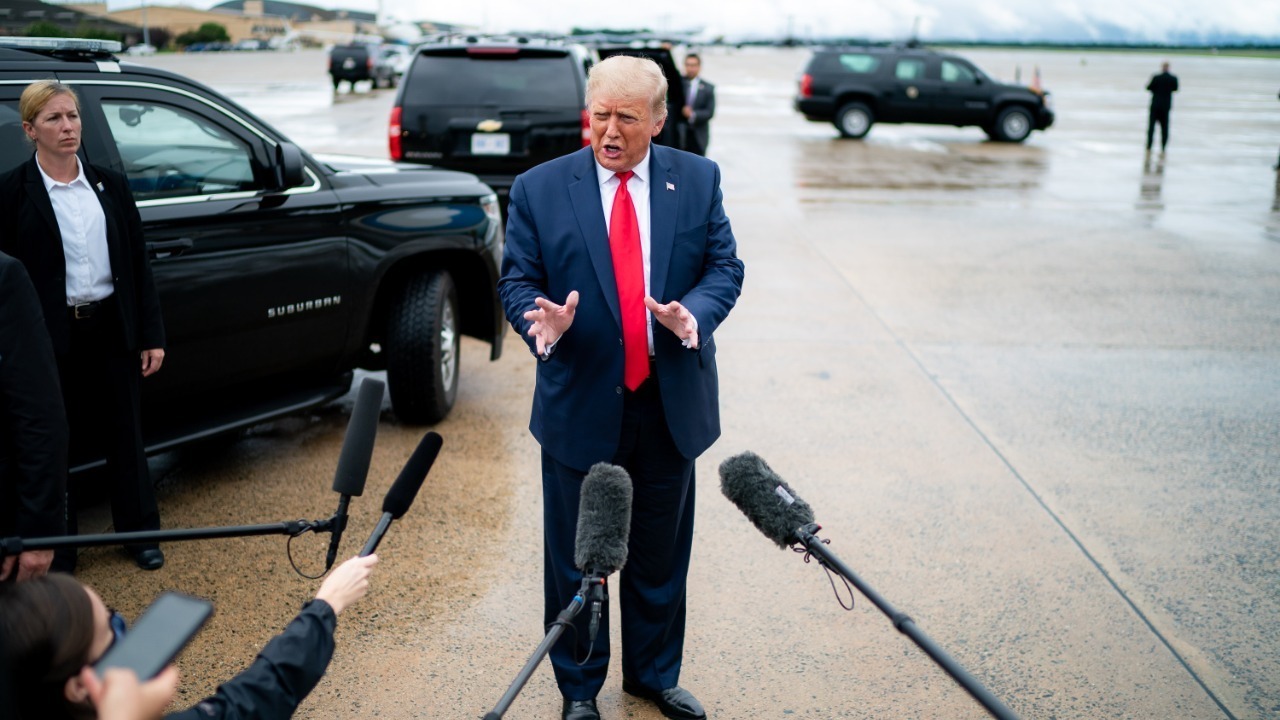
President Donald Trump has agreed to start spending his own political money on the Republicans trying to hold Congress in November, CNN reported Saturday, citing two people familiar with the plans. The decision lands after months in which lawmakers and operatives privately agonized over his refusal to move any of it, and after some of his own senior campaign advisers began conceding, in private, that the House and Senate majorities are slipping out of reach.
Federal Election Commission records show exactly what that argument has been about. Trump’s leadership PAC finished June sitting on $60,884,495.66 in cash. Over the same eighteen months in which it accumulated that money, the committee reported giving other political committees a combined $665,000. The gap between those two numbers is the reason Republican candidates in Michigan, Ohio and North Carolina have spent this summer asking where the president’s money is.
What Trump’s own committee reported to the FEC
The committee is Never Surrender, Inc., registered with the FEC as a qualified PAC and designated a leadership PAC whose sponsor is listed as Donald J. Trump, with Bradley T. Crate as treasurer. Its current statement of organization was filed in December 2025.
The financial picture, covering January 1, 2025 through June 30, 2026, is not close to ambiguous. The committee took in $70,016,891.78 in total receipts, including $19.1 million in individual contributions and $42,190,186.56 transferred in from affiliated committees. It spent $36,504,916.70, of which $21,811,033.65 went to operating expenditures and $10,798,532.25 was booked as other disbursements. Contributions to other committees, the line that records money actually handed to other campaigns and party committees, came to $665,000. The committee began the period with $27,372,520.58 on hand and ended it with $60,884,495.66, meaning it more than doubled its balance during the eighteen months leading into a midterm the party is at real risk of losing.
The super PAC that carried 2024 no longer exists
There is no reserve force parked somewhere else. Make America Great Again Inc., the super PAC that ran the outside air war for Trump’s 2024 campaign, is terminated. Its FEC coverage stops on May 5, 2025. It ended with zero dollars on hand, having shipped $10,562,090.31 to other committees on its way out the door.
That matters for how the fall actually gets financed. There is no separate, idling Trump war chest for the party committees to draw down. The money that carries the president’s name sits in a leadership PAC he personally sponsors, and leadership PACs give in relatively small, capped increments to individual candidates rather than dumping unlimited sums into a race. Moving serious money into November means routing it, deliberately, through structures that can spend it, and it means Trump choosing to do that instead of banking it.
The Iran war and the price of gas
The urgency comes from a political environment that has turned hard against the party in power. CNN reported Saturday that Republican anxiety is being driven by headwinds from the Iran war and high gas prices, and that officials fear both will suppress the turnout Republicans need. One adviser reduced the entire diagnosis to a sentence: it is higher prices, and that is what voters are upset about.
Some advisers have pressed the point directly with Trump, arguing that even voters who support his objectives in Iran will not tolerate a drawn-out war that raises costs at home. The shift is visible in what his own people now say in public. Vice President JD Vance and departing press secretary Karoline Leavitt both began emphasizing this week that holding gas prices down matters as much to the president as stopping Iran from obtaining a nuclear weapon, a notable adjustment from Trump’s repeated insistence that Tehran’s nuclear program is the only thing that counts. Leavitt put it to reporters aboard Air Force One on Friday as two goals of equal weight. Trump himself has continued to say publicly that he is willing to prolong the war as long as it takes to win it.
The president’s own reluctance
The reluctance the filings document is not a secret inside the building. Trump told Punchbowl News last week that he does not have to support all the people running, citing a busy schedule, and recounted telling someone that he won and is not campaigning. Advisers describe a president who is protective of his endorsement record and unwilling to spend on races he does not think are winnable, with one saying flatly that he does not want to carry dead carcasses across the finish line and will not endorse a loser and damage his own brand.
They also insist he understands the consequences. Losing either chamber would hand subpoena power to Democrats and turn the last two years of the term into the investigations and confrontations that defined his first, and people around him say he knows it. The White House rejects the framing entirely. Spokeswoman Olivia Wales called Trump the unequivocal leader of the Republican Party and said he is committed to maintaining the congressional majority, pointing to the border, the tax cuts and the murder rate as the record he intends to run on against congressional Democrats.
Beyond the money, the plan is to put the president back on the road, with advisers describing an intent to travel at least once a week for rallies in battleground districts. That promise has been made before and has repeatedly given way to the war and to domestic crises, and even the aides describing it are hedging on how long his enthusiasm will hold.
Michigan, Ohio, North Carolina
The targeting reflects the map. Republican leaders believe the majority runs through states where Trump has already demonstrated he can drive turnout, with Michigan, Ohio and North Carolina carrying the House and Senate races most likely to decide control in January, alongside defensive fights for a pivotal Senate seat in Maine and House seats in New York and California. One person familiar with the discussions floated $30 million as a first tranche, though another official cautioned that the final figures have not been settled, and the infusion is expected in the coming weeks.
The operation spending it is the 2024 band reassembled: James Blair, until recently the White House deputy chief of staff for legislative, political and public affairs, running a group that includes 2024 co-campaign manager Chris LaCivita, former MAGA Inc. chief Taylor Budowich, data operative Timothy Saylor and longtime pollster Tony Fabrizio, with chief of staff Susie Wiles involved in strategy throughout. That team lost one of its most effective public voices this week when Leavitt announced she is leaving at the end of August, two months before the election.
Their case for optimism rests on turnout mechanics and on maps. Republicans point to an aggressive multi-state redistricting push, driven by Trump himself, that has already moved a handful of seats and shrunk the number of genuinely competitive races, and to a Supreme Court decision striking down limits on what official party committees may spend on individual candidates, which they argue lets a party with more money in PACs and outside groups press its advantage. None of that changes the arithmetic in the FEC filings. The largest single pot of Republican money with Trump’s name on it has been sitting still, and it is now three months to the election.
This article was produced with AI assistance and reviewed by an editor.

Cole Whitaker focuses on the fundamentals of money management, helping readers make smarter decisions around income, spending, saving, and long-term financial stability. His writing emphasizes clarity, discipline, and practical systems that work in real life. At The Daily Overview, Cole breaks down personal finance topics into straightforward guidance readers can apply immediately.