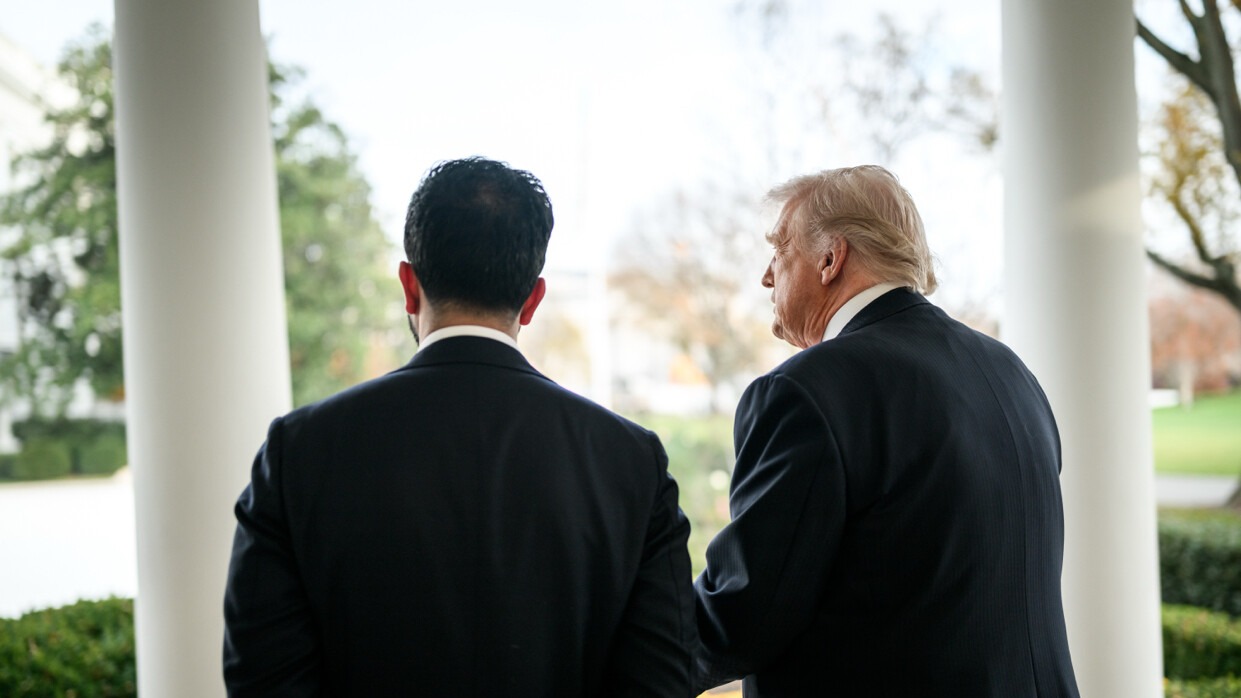
President Donald Trump has turned the New York Stock Exchange’s push into Dallas into a political stress test for New York’s new mayor, Zohran Mamdani, casting the move as a verdict on the city’s economic direction. By framing the Dallas expansion as a “big test” for Mamdani’s future, he is tying Wall Street’s geographic shift directly to City Hall’s ability to keep capital, companies, and high earners from heading south.
At stake is more than one trading floor. Trump is using the NYSE’s Texas strategy, and the broader rise of rival markets in the South, to argue that New York risks losing its status as the country’s financial capital if Mamdani cannot quickly change the city’s business climate. The clash blends economic anxiety, partisan rivalry, and a very specific question: who gets to define the next era of American finance, New York or Texas.
Trump’s Dallas broadside and the “test” for Mamdani
Trump has seized on the New York Stock Exchange plan to expand operations in Dallas as proof that New York is slipping, calling the project “an unbelievably bad thing for New York” and warning that it reflects deeper structural problems in the city’s economy. In his telling, the decision to build out a major presence in Texas is less about technology or diversification and more about companies fleeing high taxes and heavy regulation in New York for a friendlier environment in Dallas. By tying the move to policy choices, he is setting up a clear political contrast between his own pro-business brand and what he portrays as Mamdani’s more progressive instincts.
In a post on his social platform, Trump argued that “Building a ‘New York Stock Exchange’ in Dallas is an unbelievably bad thing for New York,” insisting that firms are being lured by fewer regulations and lower taxes in Texas rather than any loss of confidence in markets themselves. He has used that line to hammer home the idea that the expansion is a referendum on New York’s leadership, singling out the city’s new mayor by name and warning that the shift could accelerate if nothing changes in New York. By casting the Dallas buildout as a litmus test for Mamdani, Trump is effectively telling Wall Street to vote with its feet.
Wall Street’s southern drift and the Texas Stock Exchange factor
Trump’s critique is landing at a moment when the financial map of the United States is already shifting, with Texas positioning itself as a full-fledged competitor to New York rather than a mere satellite. The launch of NYSE operations in Texas has been framed as part of a broader trend in which trading, technology, and back-office jobs follow population and capital flows into the Sun Belt, a pattern some analysts describe as “Wall Street moves south” in the nation’s economic geography. That narrative has only strengthened as the NYSE’s Texas presence grows alongside other financial hubs, reinforcing the sense that the center of gravity is tilting toward Wall Street Moves.
At the same time, Texas is not just hosting an NYSE outpost, it is nurturing its own challenger in the form of the Texas Stock Exchange, which has secured approval from the SEC and is preparing to begin trading. The backers of the Texas Stock Exchange, known as TXSE, are pitching it as a home for companies that want a different regulatory and cultural environment than New York, and the regulatory nod keeps Texas Stock Exchange on track to open its doors in 2026. For Trump, the combination of NYSE’s Dallas expansion and the rise of TXSE is evidence that the market is already voting for Texas, and that New York’s leaders ignore that signal at their peril.
Population, capital flight, and Trump’s pressure campaign
Trump’s argument is not just rhetorical, it leans heavily on migration and investment data that show people and money moving from high-cost coastal states to the South. He has pointed to figures showing that Texas absorbed assets worth $21 billion along with 360,000 residents who moved in from California, using those numbers to claim that the economic center of gravity is shifting regardless of what New York’s leaders prefer. In his view, the NYSE’s Dallas expansion is simply the latest chapter in a longer story in which Texas, and particularly Texas likewise absorbed, has become a magnet for both households and corporations.
Experts who follow the NYSE’s strategy say Trump is using the Dallas move as leverage to force a policy response from New York’s new leadership, particularly on taxes, regulation, and crime. They note that he has repeatedly invoked the New York Stock Exchange in the context of capital outflows, arguing that Mamdani must show he can stem the tide or risk presiding over a diminished financial capital. Those analysts describe Trump’s comments as a deliberate attempt to box in Experts said President, turning a corporate site-selection decision into a referendum on the mayor’s first months in office.
Mamdani’s affordability agenda collides with Wall Street anxiety
Zohran Mamdani entered City Hall promising to tackle affordability in NYC, arguing that the city’s long-term health depends on keeping housing, transit, and basic services within reach for working and middle class residents. His rise in city politics has been described as part of a broader shift in which concerns about inequality and cost of living mirror the economic flight to the South, with some voters embracing a more interventionist approach even as businesses weigh their options. That tension is now front and center as Trump insists that the NYSE’s Dallas expansion is a direct response to policies that prioritize redistribution over growth in MAMDANI’S RISE IN.
Trump’s allies argue that Mamdani must now prove he can balance his affordability agenda with a credible plan to keep high-paying finance jobs in New York, warning that symbolic losses like an NYSE trading floor in Dallas could snowball into real declines in tax revenue and philanthropy. Supporters of the mayor counter that the NYSE move predates his term and reflects long-running trends in technology and remote work, not a sudden loss of confidence in his leadership. Even so, Trump’s framing of the Dallas project as a “big test” for Mamdani ensures that every new announcement about the exchange’s Texas footprint will be read as a scorecard on the mayor’s ability to reassure NEW YORK business leaders.
“Y’all Street,” Truth Social, and the symbolism of Dallas
Trump has leaned heavily into the symbolism of Dallas as a rival to Wall Street, embracing the local nickname “Y’all Street” to dramatize the shift in financial power. Speaking in DALLAS, he warned that the move from Wall Street to what he called “Y’all Street” reflects a broader realignment in which North Texas is becoming a showcase for a different kind of capitalism climate, one that he says rewards investors and entrepreneurs more than New York’s model. His comments, amplified on social media, have helped turn the NYSE’s Dallas expansion into a cultural flashpoint as much as a business story in DALLAS.
On Truth Social, Trump has repeated his warning that building out NYSE operations in Dallas is “an unbelievably bad thing for New York,” arguing that the city is effectively subsidizing its own competition by pushing firms to seek friendlier conditions elsewhere. He has contrasted what he calls the burdens of New York with the promise of Texas, pointing to lower taxes and lighter regulation as the core reasons executives are looking south. In his view, the question is not whether Dallas will grow, but whether New York’s leaders, starting with Mamdani, will change course fast enough to keep Wall Street from becoming a historical brand rather than a living place, a challenge he sharpened in Trump took to.
More From TheDailyOverview

Elias Broderick specializes in residential and commercial real estate, with a focus on market cycles, property fundamentals, and investment strategy. His writing translates complex housing and development trends into clear insights for both new and experienced investors. At The Daily Overview, Elias explores how real estate fits into long-term wealth planning.

