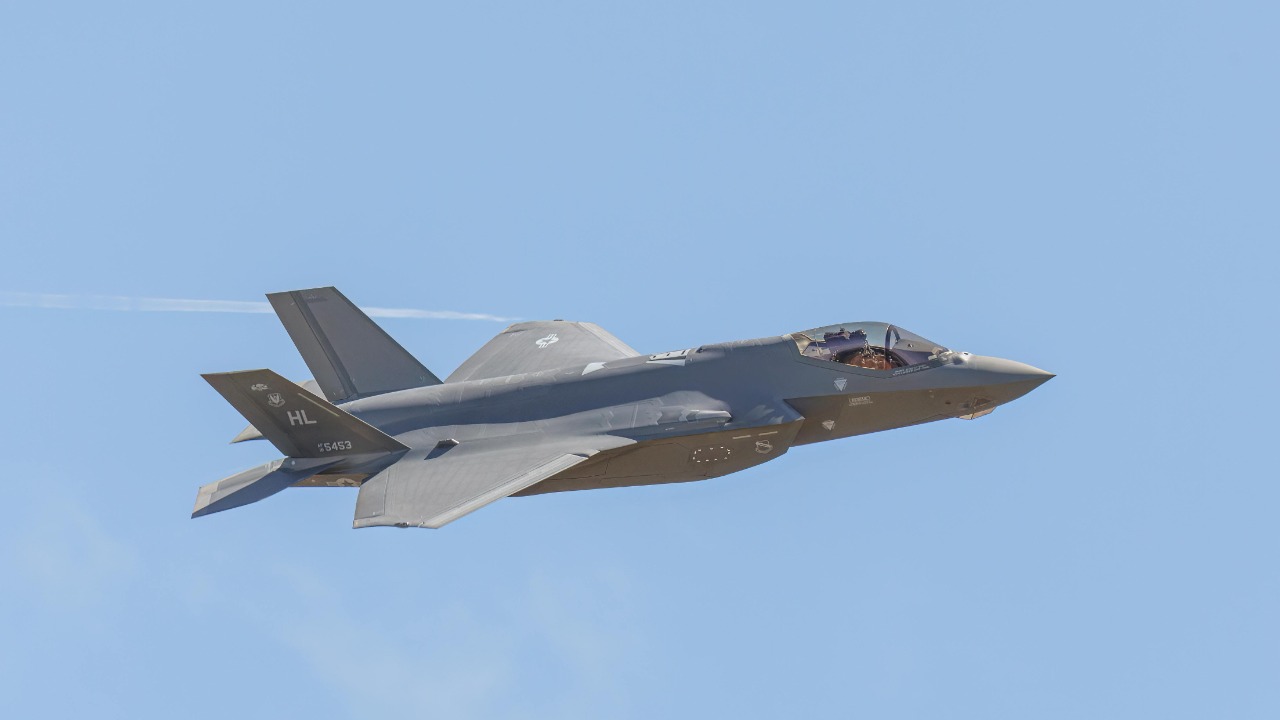
President Donald Trump has now publicly confirmed that the United States will move ahead with a sale of advanced F-35 fighter jets to Saudi Arabia, locking in one of the most consequential arms deals of his presidency. The decision elevates the kingdom’s air power, deepens its security ties with Washington, and raises fresh questions about how far the White House is willing to go to arm a controversial partner.
The announcement caps months of speculation over whether Riyadh would be allowed to join the small club of nations flying the F-35, the Pentagon’s most sophisticated stealth aircraft. It also signals that Trump is prepared to override internal misgivings about technology security and regional stability in order to cement a broader strategic pact with Saudi Arabia.
The Oval Office confirmation and a no‑strings message
Trump’s clearest signal came when he told reporters in the Oval Office that the United States “Will Sell” F-35s to the Saudis, even “Despite Pentagon Concerns,” framing the move as a sovereign presidential call rather than a technocratic procurement decision. In that exchange, described as taking place in the Oval Office, he brushed aside warnings that exporting the jet could expose sensitive systems or complicate existing security guarantees to other allies. By casting the sale as a done deal, Trump effectively put the weight of the presidency behind Riyadh’s long-running campaign to acquire the aircraft.
That message was reinforced when Trump suggested that the F-35 package for Saudi Arabia would come with “no strings,” signaling that Washington would not impose unusual political conditions or strict limitations beyond standard end-use rules. In remarks reported on Nov 17, 2025, President Trump indicated that the United States would allow Saudi Arabia to purchase top-of-the-line F-35 fighter jets without additional constraints tied to human rights or regional diplomacy. That stance marks a sharp contrast with past debates over preserving Israel’s so‑called Qualitative Military Edge, where Washington often calibrated arms sales to avoid eroding a close ally’s technological advantage.
From defense pact to major non‑NATO ally
The F-35 decision does not stand alone, it is part of a broader realignment that has seen Washington and Riyadh tighten their security partnership on multiple fronts. During high-profile meetings with Crown Prince Mohammed bin Salman at the White House, Trump confirmed to reporters that he was prepared to move ahead with the stealth jet sale even as he dismissed concerns about Salman’s alleged role in the murder of journalist Jamal Khashoggi. That encounter, detailed in coverage of how Trump confirmed the deal while brushing off human rights advocates, underscored the administration’s willingness to prioritize strategic cooperation over accountability.
Those meetings also dovetailed with a formal upgrade of Saudi Arabia’s status in the American alliance system. Trump hailed the kingdom’s elevation to “major non‑NATO ally,” a designation that opens the door to deeper defense industrial cooperation and advanced weapons transfers. Reporting on how Saudi Arabia was designated a major non‑NATO ally on Nov 18, 2025, makes clear that the F-35 warplanes deal is intertwined with that status upgrade, not a standalone transaction. In effect, Washington is signaling that it sees the kingdom as a long-term pillar of its regional security architecture, even if that means sharing capabilities once reserved for treaty allies.
What Saudi Arabia is buying and why it matters
At the heart of the deal is the F-35 itself, a fifth‑generation stealth fighter that has become the centerpiece of American air power. The aircraft is the most expensive Pentagon spending program ever, with individual jets costing up to $77 m, and the program itself plagued by cost overruns and delays. Yet the platform’s combination of low observability, advanced sensors, and networked warfare capabilities has made it one of the most coveted military assets in the world, with a growing list of countries signing agreements to buy it.
Saudi Arabia is reportedly looking to buy up to 48 F-35s as part of a larger defense package that also includes other aircraft and long-term cooperation. Earlier reporting noted that President Donald Trump had agreed to proceed with the sale of the United States’ most advanced fighter jet, the F-35, after nearly 20 years of development for the Air Force, Navy, and Marines, a point underscored in coverage of how President Donald Trump moved the program into the export phase. For Riyadh, acquiring such a fleet would dramatically enhance its ability to project power, conduct precision strikes, and integrate with U.S. and allied forces in any future conflict.
Regional balance and Pentagon unease
Trump’s decision lands in a Middle East already crowded with advanced aircraft and simmering rivalries. U.S. officials have long used arms sales to shape the regional balance, ensuring that partners like Israel retain a technological edge while Gulf states receive enough firepower to deter Iran but not to destabilize neighbors. By agreeing to sell F-35s to Saudi Arabia, Trump is effectively betting that the benefits of a more capable Saudi air force outweigh the risks to that carefully managed equilibrium. Reporting that the deal “could alter the balance of power in the Middle East,” including coverage that President Donald Trump has struck such a deal, captures the scale of the shift.
Inside the U.S. government, however, the move has not been universally embraced. Defense officials have voiced worries about protecting the sensitive technology used in the planes and about how the jets might be employed in future conflicts. Accounts of how Trump said he would proceed “Despite Pentagon Concerns” highlight that the president is consciously overriding those reservations, as reflected in the detailed description of how President Donald Trump announced on Nov 16, 2025, that he would sell F-35 advanced jets to the UAE and Saudi Arabia. The tension between the White House and the Pentagon is not just bureaucratic friction, it reflects a deeper debate over how widely the United States should spread its most advanced weapons.
MBS, human rights pressure, and Trump’s strategic bet
The politics of the deal are inseparable from the figure of Mohammed bin Salman, the Saudi crown prince who has become the kingdom’s de facto ruler. During his visit to Washington, Trump hosted MBS at the White House and used the occasion to affirm his willingness to sell the Kingdom the F-35 as part of a broader defense pact. An analysis noting that, “Related to the defense pact, Trump affirmed during his meetings with MBS that he would be willing to sell the Kingdom the F-35,” captures how the jet sale is woven into a larger strategic bargain, as detailed in an intelbrief that also stresses Riyadh may not necessarily buy the jet in the end. Trump’s posture suggests he sees MBS as a long-term partner whose military modernization is central to U.S. plans in the region.
Human rights advocates, by contrast, have urged Washington to use the F-35 as leverage to press for accountability over Khashoggi’s killing and other abuses. Yet Trump has repeatedly dismissed those calls, with one account noting that, “But ignoring the urgings of human rights advocates, Trump dismissed concerns about bin Salman’s alleged role in the murder,” even as he confirmed the stealth jet sale. That dynamic is evident in reporting on how Trump handled questions about Salman during their White House meeting. The result is a deal that ties America’s most advanced fighter to one of its most controversial partners, with little sign that human rights concerns will slow the transfer.
How the F‑35 sale fits into Trump’s global arms strategy
Trump’s embrace of the Saudi F-35 sale is consistent with a broader pattern of using high‑end weapons exports as tools of diplomacy and economic policy. He has repeatedly touted the jet’s capabilities and the jobs associated with its production, while pushing to expand the circle of countries allowed to buy it. Coverage explaining that President Donald Trump said he would sell F-35 advanced jets to both the UAE and Saudi Arabia on Nov 16, 2025 shows how he has treated the aircraft as a diplomatic sweetener in multiple relationships. In that sense, the Saudi deal is not an outlier but a centerpiece of his approach to alliance management.
The F-35’s global footprint also helps explain why Riyadh pushed so hard to secure access. Many U.S. partners already have agreements to buy it, a point emphasized in reporting that many allies have signed on to the program. For Saudi leaders, being left out would have signaled second‑tier status at a time when they are seeking to position the kingdom as a leading regional power. By confirming the sale, Trump has effectively endorsed that ambition, even as he accepts the strategic and ethical trade‑offs that come with it.
Geopolitics, geography, and the symbolism of the jet
Beyond the immediate military implications, the F-35 sale carries symbolic weight in how it links American power to Saudi territory and regional geography. The jets will operate from bases that sit near critical maritime chokepoints and energy infrastructure, tying U.S. technology to the defense of shipping lanes and oil facilities. The significance of place is underscored by references to key Saudi locations such as Riyadh and Jeddah, cities that anchor the kingdom’s political and economic life. Stationing F-35s in or near these hubs would further intertwine U.S. security commitments with the stability of Saudi territory.
For Trump, that symbolism is part of the point. By confirming that the United States will sell F-35s to Saudi Arabia, he is not only transferring hardware but also signaling that Washington is prepared to underwrite the kingdom’s defense for years to come. Reports that Saudi Arabia is now a major non‑NATO ally, that it is seeking up to 48 jets, and that the aircraft cost up to $77 per unit all feed into a narrative of deepening, high‑stakes interdependence. Whether that bet pays off in greater stability or backfires by fueling new arms races will depend on choices made in Riyadh, Washington, and across the Middle East long after the first F-35 touches down on Saudi soil.
More From TheDailyOverview
- Dave Ramsey warns to stop 401(k) contributions
- 11 night jobs you can do from home (not exciting but steady)
- Small U.S. cities ready to boom next
- 19 things boomers should never sell no matter what

Grant Mercer covers market dynamics, business trends, and the economic forces driving growth across industries. His analysis connects macro movements with real-world implications for investors, entrepreneurs, and professionals. Through his work at The Daily Overview, Grant helps readers understand how markets function and where opportunities may emerge.


