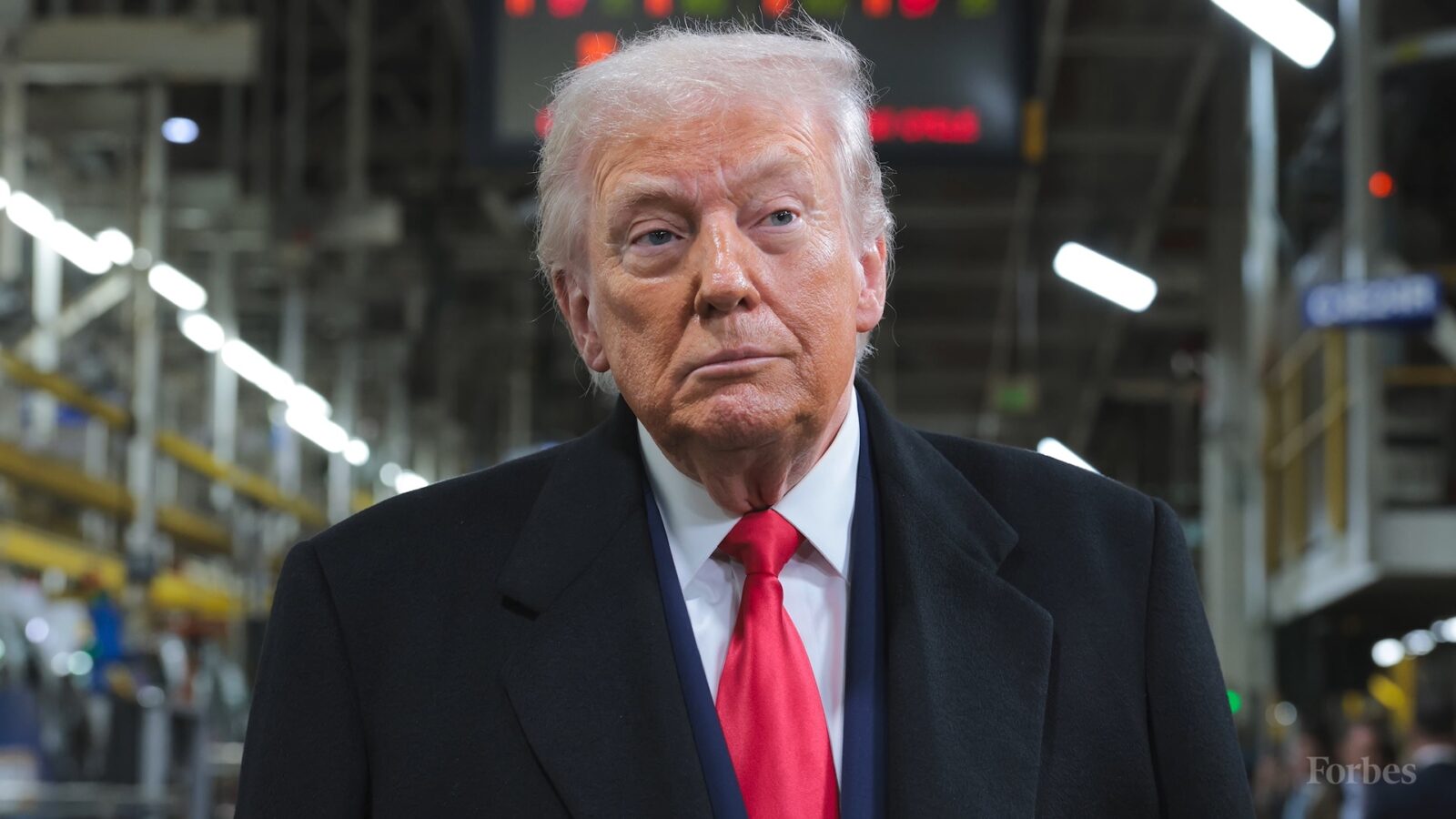
President Donald Trump is trying to pull mortgage costs down with one hand while potentially pushing them up with the other. He has ordered Fanny May and Freddy Mack to buy $200 billion in mortgage bonds to ease borrowing costs for homebuyers, even as he nominates a Federal Reserve chair who has spent years arguing that the central bank should unwind the very policies that kept long-term rates low. The clash between these two strategies could define what homebuyers face in 2026: a market that looks friendlier on paper, but feels more volatile in practice.
The core tension is simple. Trump wants cheaper mortgages to ease the political and economic pain of high home prices, especially for first-time buyers. Kevin Warsh, his pick to lead the Fed, has long warned that the central bank’s $6.6 trillion balance sheet is distorting markets and inflating asset prices, and he has signaled that Shrinking it should be a priority. If both agendas move ahead, the result is likely to be choppy, not calm, mortgage markets.
The $200 billion mortgage push, explained
Trump’s directive for Fanny May and Freddy Mack to buy $200 billion in mortgage bonds is designed to work like a targeted version of quantitative easing. By having the government-sponsored giants absorb a large block of mortgage-backed securities, the administration is trying to push up bond prices and pull down yields, which in turn should lower the rates lenders charge on new home loans. It is a politically attractive move, because it lets the White House claim it is attacking affordability problems directly after years of skyrocketing home prices.
Economists, however, are already warning that this $200 billion push could backfire by juicing demand more than supply in a housing market that is still short on inventory. Some analysts argue that a large, one-off buying program risks lifting home prices further, especially in tight markets, even if it trims monthly payments at the margin. That concern is at the heart of warnings that Trump’s plan to cut mortgage rates could, paradoxically, make ownership even less attainable for many buyers, a point raised in coverage of the $200 billion directive and echoed by Economists who fear it will lift prices after years of strain.
Kevin Warsh’s hawkish playbook
Into this already complicated picture steps Kevin Warsh, the former Fed governor Trump has tapped to be the next central bank chief. Warsh, 55, is not a mystery to markets. He has spent years criticizing the Fed’s post-crisis toolkit, arguing that a $6.6 trillion balance sheet keeps interest rates artificially low, distorts the level of risk in financial markets, and inflates asset prices beyond what fundamentals justify. In his view, Shrinking that balance sheet is not just a technical clean-up, it is a necessary reset to restore what he sees as a more normal relationship between savings, investment, and borrowing costs, as detailed in analyses of Kevin Warsh.
Warsh’s broader stance on inflation and interest rates has been described as hawkish, meaning he tends to favor higher rates to keep prices in check rather than leaning quickly into cuts when growth slows. Reporting on his nomination notes that, after years of a “hawkish” stance on inflation, he has argued that the Fed should be quicker to remove emergency support once the economy is on firmer footing. That perspective is central to recent discussions of what a new Fed chair could mean for the economy, including the way Warsh has framed debates about interest rates in coverage that begins with a prominent Return to more traditional policy settings.
A nomination that collides with Trump’s rate rhetoric
Trump’s decision to nominate Warsh for Fed Chair formalizes this collision between his political desire for cheaper mortgages and his choice of a central banker who is skeptical of easy money. The White House announcement that the President Picks Kevin Warsh For Fed Chair underscored that the pick still has to move through the Senate, where Democrats are likely to press him on how aggressively he would shrink the balance sheet and how much weight he would give to employment and wage growth when setting policy. The nomination process, described in detail in the “Breadcrumb, Home, President Picks Kevin Warsh For Fed Chair” release, makes clear that Warsh will have to explain how his views fit with Trump’s public calls for lower borrowing costs, especially for households.
Warsh’s age and background are part of the sales pitch. At 55, he is presented as experienced but not entrenched, someone who has worked inside the Fed and in markets. Supporters argue that his skepticism about unconventional tools could give the central bank more room to cut in a future downturn, because it would not be stuck with an ever-expanding portfolio of bonds. Critics counter that moving too quickly to unwind those holdings now could push up long-term yields just as the administration is trying to nudge mortgage rates lower. That tension is already visible in commentary from housing-focused analysts, including those asking what Warsh means for home loans in pieces that note his nomination and emphasize that Warsh must first clear the Senate.
How the Fed and mortgage markets actually connect
Part of the confusion in the public debate is structural. The Fed does not set mortgage rates directly. Instead, it controls a short-term benchmark, the federal funds rate, which influences the cost of money across the financial system. Mortgage rates are more tightly linked to long-term Treasury yields and to the prices investors are willing to pay for mortgage-backed securities. When the Fed buys Treasurys and mortgage bonds, it tends to push those yields lower, which filters into cheaper home loans. When it lets its holdings run off or sells them, yields can rise, pulling mortgage rates up even if the policy rate is unchanged.
Analysts have been at pains to remind borrowers that The Fed does not control mortgage rates in a mechanical way, but its decisions about its balance sheet and short-term rates still matter a great deal. One recent explainer on Trump’s pick for Fed chair notes that Mortgage rates respond to expectations about growth and inflation as much as to any single Fed move, and that the central bank’s past bond buying gave it less space to lower interest rates in a future downturn. That logic is central to the argument in coverage of Trump’s pick that highlights how The Fed shapes Mortgage markets indirectly rather than by fiat.
Forecasts for 2026: modest relief, big uncertainty
Before Trump’s latest moves, many forecasters expected mortgage rates in 2026 to drift slightly lower from their recent peaks, but not to return to the ultra-cheap levels of the pandemic era. One widely cited Mortgage Rates Outlook suggested that there might be some good news on the real estate horizon, with projections that rates could ease enough to deliver more than some minor savings for borrowers who had been locked out by the spike in costs. Those forecasts assumed a gradual cooling of inflation, a cautious Fed, and no major policy shocks that would jolt bond markets.
Other analysts have stressed that mortgage rates in 2026 could still move in either direction depending on how investors read the economic outlook. When concerns about a slowing economy rise, long-term rates often fall as money flows into safer assets, even if the Fed is not cutting. When growth and inflation fears dominate, yields can climb. A recent overview of what to watch after the Fed’s latest decision emphasized that mortgage rates in 2026 could swing based on shifts in sentiment, according to Bankrate’s annual forecast, and that the central bank’s decision not to cut yet left room for markets to adjust on their own. That nuance is captured in reporting that begins with the word But and notes how Concerns about growth can pull long-term rates lower.
Global Trump 2.0 risks and the balance sheet squeeze
Layered on top of domestic policy is the broader uncertainty around Trump 2.0 and its impact on the global economy. Investors are still trying to map out how new tariffs, tax changes, and regulatory shifts will affect trade flows, corporate profits, and capital movements. One assessment of the international outlook under the President argues that the precise contours of the coming policy shifts under President-elect Donald Trump remain uncertain, but that Nonetheles, markets should brace for a mix of fiscal stimulus and trade friction that could lift US gross domestic product in the short run while also stoking volatility. That kind of environment tends to push Treasury yields around as investors constantly reassess growth and inflation risks, a dynamic that feeds directly into mortgage pricing, as seen in analyses of Donald Trump and his second-term agenda.
If Warsh follows through on his desire to shrink the Fed’s $6.6 trillion balance sheet while Trump leans into aggressive fiscal and trade moves, the result could be a tug-of-war in bond markets. On one side, reduced Fed demand for Treasurys and mortgage bonds would tend to push yields higher. On the other, bouts of risk aversion triggered by tariff fights or geopolitical shocks could send investors rushing into US debt, pulling yields down. For homebuyers, that means the path of mortgage rates in 2026 may be less a smooth glide and more a roller coaster, with weekly moves of half a percentage point or more entirely plausible as markets digest conflicting signals from Washington and abroad.
What this means for borrowers and politics
For a family in Pennsylvania or Arizona trying to buy a starter home, the interplay between Trump’s mortgage directive and Warsh’s potential tightening agenda will not show up as an abstract debate about balance sheets. It will show up as a preapproval letter that suddenly looks stale when rates jump in a week, or as a monthly payment that swings by hundreds of dollars depending on when they lock. If the $200 billion bond purchase program succeeds in nudging rates a bit lower in the near term, it could spur a rush of buyers into an already constrained market, bidding up prices and eroding much of the benefit. If Warsh then accelerates balance sheet runoff, the resulting rise in yields could leave those same buyers facing higher payments on top of higher prices.
Politically, Trump is betting that voters will remember the headline promise of cheaper mortgages more than the fine print of Fed policy. Yet history suggests that sustained affordability, not one-off rate dips, shapes how households feel about the economy. If mortgage rates end up oscillating between, say, the mid 6 percent range and the high 7s through the first half of 2026, that volatility could undermine confidence even if the average level is slightly lower than in 2025. Analysts who have sketched out the Mortgage Rates Outlook for 2026, including those who wrote that There might be some good news in the form of modest savings, are already cautioning that policy uncertainty could limit how much relief actually reaches borrowers, a point underscored in projections anchored by Mortgage Rates Outlook.
More From The Daily Overview
*This article was researched with the help of AI, with human editors creating the final content.

Grant Mercer covers market dynamics, business trends, and the economic forces driving growth across industries. His analysis connects macro movements with real-world implications for investors, entrepreneurs, and professionals. Through his work at The Daily Overview, Grant helps readers understand how markets function and where opportunities may emerge.

