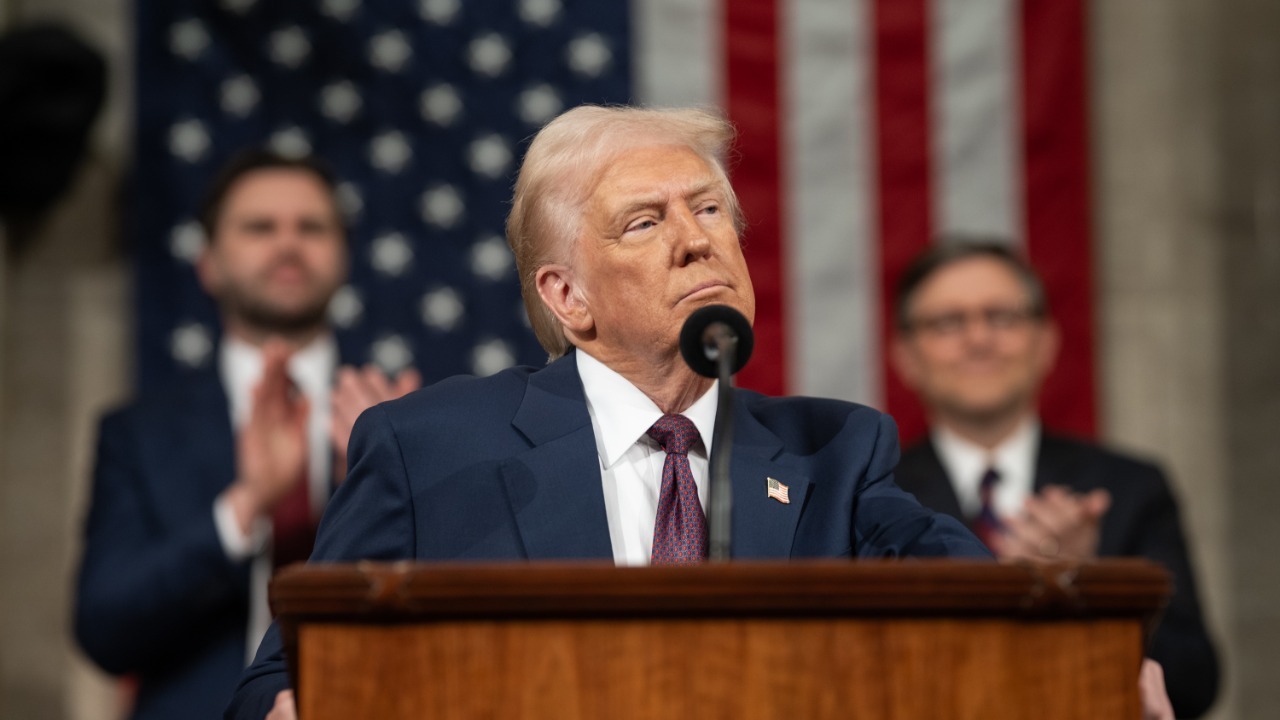
President Donald Trump is preparing to use federal power to seize control of how artificial intelligence is regulated in the United States, positioning the White House to override a fast-growing patchwork of state rules. The move would mark one of the most aggressive attempts yet to centralize AI policy in Washington, with sweeping implications for tech companies, civil rights advocates, and state lawmakers who have spent the past two years writing their own safeguards.
At the center of the effort is a draft executive order that would direct federal agencies to challenge or preempt state AI laws, paired with a push for Congress to enshrine a single national standard. If Trump follows through, the fight over AI governance will shift from state capitols to a high-stakes clash between the presidency, Silicon Valley, and states that argue they are on the front lines of algorithmic harms.
The push for a single federal AI standard
Trump has been steadily building the case that only Washington should set the rules for artificial intelligence, arguing that a mosaic of state laws threatens both innovation and economic growth. In recent remarks, he warned that aggressive AI rules could strangle emerging industries and insisted that the United States “needs to have one federal standard” for how companies build and deploy advanced systems, a message that has been reinforced in his public comments about avoiding AI “overregulation” while still addressing safety and security risks linked to powerful models and automated decision tools at the national level.
That argument has been echoed in Trump’s outreach to business leaders and Republican lawmakers, where he has framed AI as a strategic technology race that the United States cannot afford to slow down. Advisers have pointed to concerns from large technology firms and financial institutions that face conflicting compliance obligations across states, and Trump has repeatedly described state-by-state rules as a “patchwork” that could deter investment and push AI development offshore, a theme that has surfaced in his calls for federal AI standards and in follow-on coverage of his economic message to voters and industry.
Inside the draft executive order targeting state laws
The clearest window into how Trump intends to translate that rhetoric into policy comes from a draft executive order circulating inside the administration, which lays out a roadmap for curbing state authority over AI. According to a detailed description of the document, the order would instruct federal agencies to review existing and pending state AI statutes, identify provisions that conflict with federal priorities, and prepare legal challenges or preemption arguments that could be deployed in court or through regulatory guidance, effectively putting states on notice that their rules may not survive a federal push for uniformity under the draft order.
The same draft envisions a central role for the White House in coordinating AI oversight, with directives for agencies to align their enforcement strategies and data requirements so companies face a single, harmonized framework rather than a maze of state mandates. Reporting on the internal deliberations describes senior aides debating how far to go in asserting federal supremacy, including whether to lean on existing consumer protection and interstate commerce authorities or to signal that the administration is prepared to test new theories of preemption in court, a strategy that would be reinforced by a parallel effort to secure a statutory federal AI standard from Congress that explicitly limits state experimentation.
How the White House plans to rein in state AI experiments
Even before the executive order is finalized, the White House has begun quietly mapping the state laws it wants to constrain, focusing on measures that impose strict transparency, audit, or liability requirements on AI systems used in hiring, lending, health care, and consumer services. Internal discussions described in policy circles indicate that officials are particularly concerned about rules that require companies to disclose training data, open their models to independent testing, or provide detailed explanations for algorithmic decisions, which industry groups argue are difficult to implement consistently across multiple jurisdictions and could expose proprietary information, a concern that has surfaced in coverage of how the administration is circulating the draft order to stakeholders.
To translate those concerns into action, the draft order would reportedly direct agencies such as the Federal Trade Commission and the Department of Justice to scrutinize state AI rules for conflicts with federal consumer protection and civil rights frameworks, then use formal opinions, enforcement discretion, or litigation to limit their reach. The strategy mirrors past efforts to preempt state rules in areas like financial regulation and telecommunications, but it is more ambitious in scope, since it targets a broad category of emerging laws rather than a single statute, and it would be reinforced by Trump’s public calls for Congress to step in and block state-level AI legislation that he and his allies describe as hostile to innovation.
Industry backing and the economic stakes
Trump’s drive for a national AI rulebook has found a receptive audience among large technology companies, cloud providers, and enterprise software vendors that operate across all fifty states and see uniform regulation as a way to reduce compliance costs. Executives have privately warned that divergent state rules on issues like AI-generated content, automated employment screening, and credit scoring could force them to redesign products for each jurisdiction or pull services from stricter markets, a concern that has been reflected in coverage of Trump’s meetings with business leaders and his argument that a single federal framework is needed to protect economic growth tied to AI.
Supporters of the federal-first approach also point to the global race to develop advanced AI models, arguing that if the United States does not streamline its rules, companies may shift research and deployment to countries with more predictable regulatory environments. Industry advocates have highlighted examples such as generative AI tools embedded in productivity suites like Microsoft 365 Copilot and customer service platforms that rely on large language models, warning that inconsistent state rules on data retention, bias audits, or disclosure labels could slow or fragment their rollout, a message that has resonated with Trump as he frames AI as a pillar of national competitiveness and seeks to align his regulatory agenda with business concerns about a patchwork of state mandates.
Backlash from states and public interest groups
The prospect of a sweeping federal order that sidelines state AI laws has triggered sharp criticism from consumer advocates, civil rights organizations, and some state officials who argue that local experimentation is essential to protecting residents from algorithmic harms. Public interest groups have warned that the expected order would tilt the balance of power toward large technology companies, describing it as a blueprint that “does the bidding of Big Tech” by weakening hard-won state protections on issues like biometric surveillance, automated tenant screening, and AI-driven hiring tools, language that has appeared in their response to the anticipated Trump AI order.
State lawmakers who have championed AI accountability measures, including rules that require impact assessments for high-risk systems and clear disclosures when chatbots or automated decision tools are used, see the White House move as an attempt to roll back their work before it has a chance to take effect. Reporting on the administration’s plans indicates that several of those laws are likely to be targeted for legal challenges or administrative preemption once the order is signed, setting up a confrontation in which states will argue that they retain broad police powers to protect consumers and workers even in areas that affect interstate commerce, a clash that is expected to intensify as the federal government begins to challenge state AI laws in court.
The coming legal and political fight over AI preemption
Beyond the immediate policy stakes, Trump’s move to preempt state AI rules will test the boundaries of federal authority in a domain where Congress has yet to pass comprehensive legislation. Legal scholars are already parsing how the administration might rely on existing statutes, such as federal consumer protection and civil rights laws, to argue that state AI regulations are either inconsistent with national standards or impose undue burdens on interstate commerce, a theory that would likely face swift challenges from states that have invested heavily in their own AI governance frameworks and from advocacy groups that see preemption as a rollback of hard-fought protections, a dynamic that has been flagged in early analysis of the White House’s preemption strategy.
Politically, the executive order would crystallize AI regulation as a partisan flashpoint heading into the next phase of Trump’s presidency, with Republicans largely rallying around the promise of a single national standard and Democrats divided between those who favor strong federal rules and those who want to preserve state innovation. Some lawmakers are already drafting bills that would codify a federal AI framework while explicitly limiting state authority, while others are preparing counterproposals that set a national floor but allow states to go further, a split that has surfaced in coverage of Trump’s push for Congress to adopt legislation curbing state AI bans and in reporting on how his allies on Capitol Hill are working to translate the executive order into lasting statutory preemption.
More From TheDailyOverview
- Dave Ramsey says these two simple questions show whether you’re rich or poor
- Retired But Want To Work? Try These 18 Jobs for Seniors That Pay Weekly
- IRS raises capital gains thresholds for 2026 and what’s new
- 12 ways to make $5,000 fast that actually work

Grant Mercer covers market dynamics, business trends, and the economic forces driving growth across industries. His analysis connects macro movements with real-world implications for investors, entrepreneurs, and professionals. Through his work at The Daily Overview, Grant helps readers understand how markets function and where opportunities may emerge.

