President Donald Trump is openly weighing whether Australia’s compulsory retirement savings system could be a template for a sweeping overhaul of how Americans fund life after work. The idea is simple but disruptive: move from largely voluntary savings to a structure where employers must put money into dedicated retirement accounts for nearly every worker.
That prospect has set off a debate that stretches from Wall Street to kitchen tables, because importing Australia’s “superannuation” model would touch paychecks, business costs, and the future of Social Security itself. I see a genuine policy opening here, but also a collision with the political and cultural realities that define how the United States handles retirement today.
Trump’s new fascination with Australia’s “super” system
Trump has signaled that he is looking “very seriously” at an Australian-style plan as a way to shore up retirement security and respond to concerns about the country’s long term demographic outlook. According to reporting on his comments, he has praised the structure as “a good plan” and framed it as part of a broader push to encourage families and address the nation’s declining birthrate, positioning mandatory savings as a tool to make future retirement less precarious for younger workers. In that telling, the Australian model is not just a technocratic fix, it is a political answer to anxiety about aging and stagnation, which is why he has been willing to float the idea in front of voters and business leaders alike.
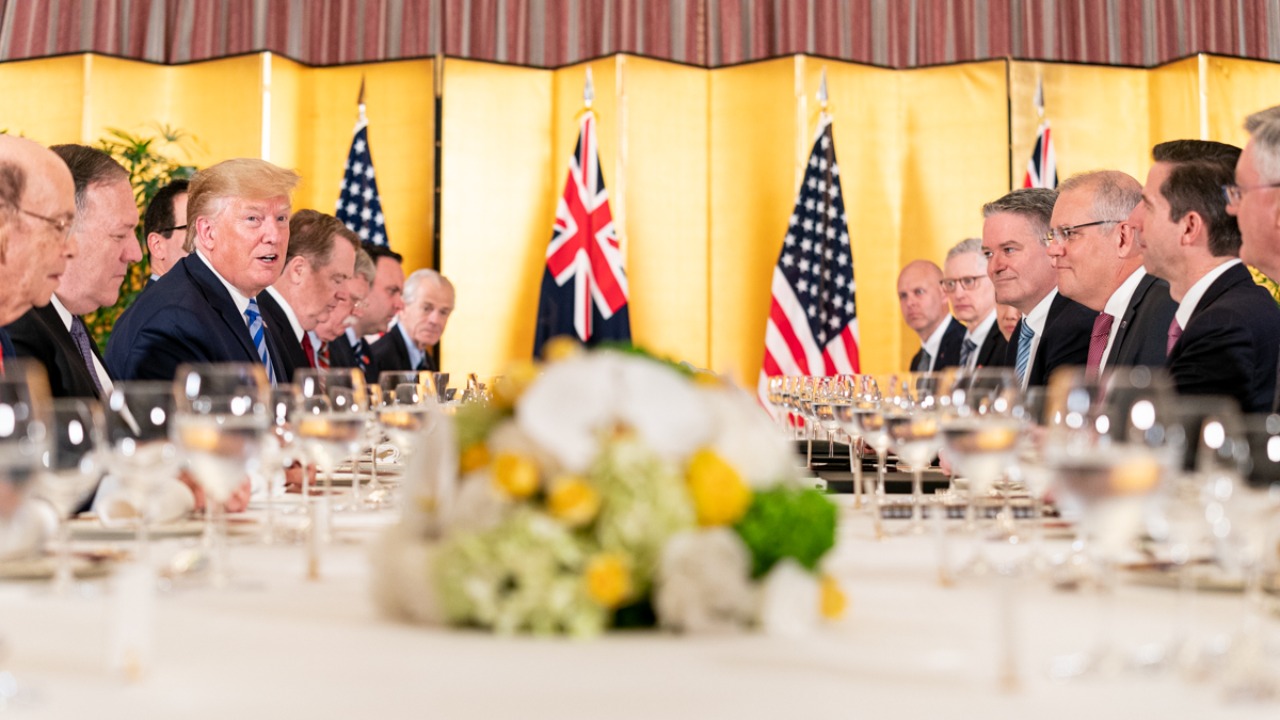
His interest has been sharpened by direct exposure to how the system works in practice. During a recent visit with Australian leaders, the Prime Minister highlighted a package of economic cooperation that included a $US8.5 billion ($13 billion) rare earths deal with Mr Trump at their lodge meeting, pitched as a way to create high paying jobs for Americans and deepen ties between the two economies. That same trip gave Trump a high profile stage to praise what he described as a retirement framework that is “working well” in Australia, and to hint that a similar approach could be adapted for the United States, even as he acknowledged that any such move would be politically sensitive.
How Australia’s compulsory “super” compares with the U.S. 401(k)
Australia’s retirement architecture is built around compulsory employer contributions into individual accounts, a system that has been in place for more than three decades. The system, established with 3% contributions in 1992, has grown into the world’s fourth largest retirement savings pool, a scale that reflects both the power of mandatory saving and the investment returns generated over time. Those contributions are made on top of regular wages, so workers receive their normal pay while employers are legally required to divert a slice of payroll into superannuation accounts that are then invested across assets ranging from stocks to private equity.
In the United States, by contrast, the backbone of private retirement saving is the 401(k), which is typically optional and heavily dependent on individual initiative. Adopting a similar structure in the US would mean a major shift from the current model, where 401(k) plans are optional and participation often hinges on whether employers choose to offer them and workers choose to enroll. One detailed comparison notes that the primary difference between 401(k) and Australian super is that 401(k) is not mandatory, and that in the United States participation is voluntary rather than enforced by law, while Australia does not have a Social Security style public pension in the same form and instead leans on compulsory superannuation, or “super.”
Inside the Australian model Trump wants to emulate
To understand what Trump is eyeing, it helps to look closely at how money actually moves through Australia’s system. Employer funded contributions are made on top of paying employees their regular income, which means workers do not see a line item deduction for super in the same way they see income tax withheld. Employees can also contribute extra from their own pay, and the pooled funds are invested across diversified portfolios that can include everything from stocks to private equity, with the goal of building a sizable nest egg by the time people reach retirement age. Over time, that structure has created a culture where super balances are a central part of household wealth planning.
The scale of the system is what has caught Trump’s attention. The system, established with 3% contributions in 1992, has grown into the world’s fourth largest retirement savings pool, a result that supporters say proves the power of compulsion combined with investment growth. While the Australian model is often praised for ensuring long term retirement savings, analysts caution that transplanting it to the United States would require a wholesale redesign of how employers and workers think about benefits, and would likely face resistance from employers and workers alike who are wary of new mandates or skeptical that Washington would manage the transition smoothly.
Could a “super” style mandate really work in the United States?
Even Trump’s allies concede that building an Australian style system on American soil would be a heavy legislative lift. Any U.S. version would require a major legislative overhaul and face political hurdles in a country more than 12 times the population of Australia, with a far more fragmented retirement landscape and a deep tradition of employer discretion. It is unclear whether the United States would be able to implement a similar program to the superannuation model, especially given the existing role of Social Security and the patchwork of tax advantaged accounts that already exist, a point that has been underscored in coverage of Trump’s remarks as he touted the program’s success abroad.
There are also practical questions about how a mandate would interact with existing plans and cross border savings. One guide for expatriates notes that the primary difference between 401(k) and Australian super is that 401(k) is not mandatory, and that in the United States participation is voluntary, which complicates any effort to simply “flip a switch” and require employers to contribute for every worker. It also explains that Australia does not have a Social Security style system in the same way and instead relies on compulsory superannuation, or “super,” which means that copying the model would force U.S. lawmakers to decide whether a new mandate would sit on top of Social Security, replace part of it, or eventually reshape it, a choice that would define the politics of any Trump backed proposal.
The political and economic stakes of Trump’s retirement gamble
Trump’s flirtation with the Australian model is not happening in a vacuum, it is unfolding alongside a broader economic and geopolitical agenda. During the trip, the Prime Minister unveiled a $US8.5 billion ($13 billion) rare earths deal with Mr Trump at their lodge meeting, framed as a way to secure supply chains and create high paying jobs for Americans, and that same visit became a showcase for the Australian system as a symbol of economic stability. By tying retirement reform to a narrative of national strength and job creation, Trump is signaling that he sees compulsory savings not just as a social policy, but as part of a larger strategy to boost investment and growth.
At the same time, the politics at home are fraught. Adopting a similar structure in the US would mean a major shift from the current model, where 401(k) plans are optional, and any move to require employer contributions in addition to regular wages would immediately raise questions about labor costs, small business margins, and wage growth. Trump has described the Australian style approach as “a good plan” and said he is looking at it “very seriously,” but even sympathetic analysts note that any such proposal would have to navigate a Congress wary of new mandates and a public that is deeply attached to the existing mix of Social Security, personal savings, and voluntary employer plans. Whether his interest in Australia’s “super” system becomes a concrete bill or remains a talking point, the debate he has sparked is already forcing the United States to confront how fragile its current retirement patchwork has become.
More From TheDailyOverview
- Tennessee loses $2.6B megafactory and faces major layoffs
- Retired But Want To Work? Try These 18 Jobs for Seniors That Pay Weekly
- What to do with your pennies after the U.S. stops minting them
- Home Depot CEO warns of a troubling customer trend in stores

Nathaniel Cross focuses on retirement planning, employer benefits, and long-term income security. His writing covers pensions, social programs, investment vehicles, and strategies designed to protect financial independence later in life. At The Daily Overview, Nathaniel provides practical insight to help readers plan with confidence and foresight.

