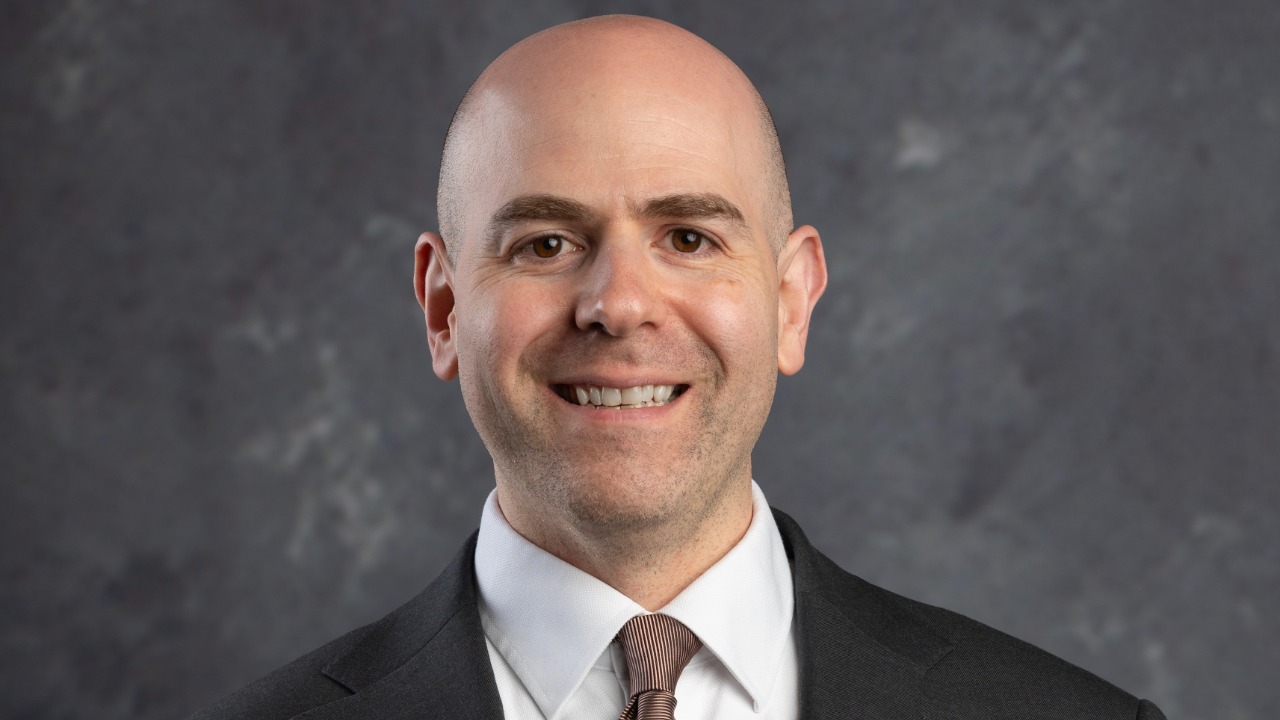
Financial markets are no longer just gaming out the next move from the Federal Reserve, they are gaming out the next move from Federal Reserve Governor Stephen Miran. As President Donald Trump’s newest pick settles into his role, his push for faster and deeper rate cuts is turning him into a potential swing voice on a committee that is already edging toward easier policy.
The stakes are clear: if Miran can pull colleagues toward his more aggressive path, the next rate decision could mark a sharper pivot that reshapes borrowing costs for mortgages, auto loans, and corporate debt, and potentially redraws the trajectory of the United States economy over the next year.
Miran’s rapid rise from Trump pick to policy driver
When I look at Miran’s trajectory, what stands out is how quickly he has gone from nominee to central figure in the rate debate. Stephen Miran, who joined the central bank in Sep after being selected by President Trump, laid down an early marker on Sep 22, 2025, arguing that interest rates should be closer to 2.5 percent, roughly half the prevailing level at the time. That initial call signaled not just a preference for easing, but a belief that the Fed had already gone too far in restraining the economy.
His stance is all the more striking given how his views have evolved. Reporting on Sep 25, 2025, noted that in his new position Miran has been arguing that shifting economic conditions justify a lower real, inflation adjusted, neutral rate, even though last year he had worried that policy was too loose and had cited an r* of 1%. That turnabout underscores how central he now sees the risk of overtightening, and it helps explain why investors are watching his comments for clues about where the committee might go next.
A Fed already in motion toward easier policy
Miran is not pushing on a closed door. The Fed has already started to ease, and that context matters for judging how much sway he might have. At its October meeting, The Fed cut its policy rate by 25 basis points to a range of 3.75 to 4.00%, and Chair Jerome Powel has already had to manage market expectations that the central bank might deliver a “sugar rush” of cuts in 2026. That move followed months of signaling that the inflation fight was progressing and that the balance of risks was shifting away from price pressures and toward growth.
Even as it eases, the Federal Open Market Committee has been careful to restate its core mandate. In its late October policy statement, The Committee reiterated that it seeks to achieve maximum employment and inflation at the rate of 2 percent over the longer run, and it flagged ongoing Uncertainty around the outlook. That language leaves room for debate about how quickly to move, which is exactly the space where Miran’s arguments could become decisive.
Why Miran thinks policy is already too tight
Miran has been explicit that he believes the Fed is behind the curve on easing, and that conviction is rooted in both labor market data and his reading of the neutral rate. In a Nov 24, 2025 appearance, he tied a rise in unemployment to the current setting of monetary policy, pointing out that the most recent jobs data for September showed payroll gains that were larger than expected even as the jobless rate ticked higher, a combination he linked directly to the Fed’s stance in that interview. For Miran, that divergence is a warning sign that the central bank is leaning too hard on the brakes.
He has repeated that message in other venues. On Nov 24, 2025, coverage of his remarks highlighted how the Fed official framed rising unemployment as a consequence of the current policy setting, with Miran stressing that the Fed should not ignore the labor side of its mandate even as inflation cools, a view he shared in a conversation carried by Fox Business. Taken together, those comments show a policymaker who sees the costs of tight money showing up in real time, and who is prepared to argue that the Fed has room, and responsibility, to respond.
From “no point in going slowly” to a potential marginal vote
What makes Miran especially consequential for the next decision is not just his diagnosis, but his preferred prescription. Earlier in the autumn, he made clear that he favors moving more quickly toward what he sees as a neutral stance, saying there is “no point in getting to neutral slowly” and describing monetary policy as still too restrictive relative to the economy’s needs, a point he drove home as Federal Reserve Gov Stephen Miran on Nov 19, 2025. That line encapsulates his impatience with incrementalism and his belief that delay risks unnecessary damage to growth and jobs.
He has also been explicit about how he would act if his vote were decisive. On Nov 20, 2025, Miran said he would “absolutely” back a 25 basis point rate cut if he were the marginal vote, arguing that to do otherwise would cause “real harm to the economy for purposes of vanity,” a stance he outlined while discussing how he would behave if he were the swing decision maker and that was captured in a television interview. That comment matters because it signals not only his preference for cuts, but his willingness to break from a cautious consensus if he believes the data justify it.
How far he wants to go, and how fast
Miran’s vision for the path ahead goes well beyond a single quarter point move. In early autumn, he argued that the Fed should lower rates more aggressively, calling for a reduction of 50 basis points at an upcoming meeting and repeating his view that policy remains too restrictive. In that same period, he framed the risk not as cutting too much, but as failing to cut enough, warning that the central bank could otherwise keep real borrowing costs elevated even as inflation falls.
He has also downplayed concerns about acting before every data point is in. On Oct 2, 2025, Miran said he was not worried about missing some incoming figures before the next meeting, arguing that the central bank still had time to adjust and that the bigger danger was waiting too long while tariffs and other headwinds surge through the economy, a view he laid out while explaining why he wanted aggressive rate cuts. That willingness to move on the basis of trend rather than perfection in the data could make him a catalyst for a bolder decision if others on the committee are wavering.
The recession risk argument and Miran’s broader framework
Behind Miran’s push is a broader fear that the Fed could tip the economy into recession if it does not move quickly enough. At the end of Oct, he was cited as warning that the central bank risks a downturn if it fails to cut rates rapidly, and he questioned whether the labor market can keep absorbing higher borrowing costs now that immigrant workers are no longer as abundant, a concern he raised while discussing how a tighter supply of labor changes the calculus for policy on Oct 31, 2025. That argument casts his preferred cuts not as a gift to markets, but as a defensive move to keep a cooling economy from stalling.
His framework also leans heavily on the idea that the neutral rate has fallen, which in his view means that a policy rate that once looked moderate is now biting harder. By tying rising unemployment to the current stance and by stressing that there is “no point” in inching toward neutral, Miran is effectively saying that the Fed’s own estimates of where policy stops being restrictive may be out of date, a point that resonates with his earlier shift from worrying that rates were too low to insisting that they are now too high. If that view gains traction among colleagues who are already uneasy about labor market softening, his vote could help tip the next meeting toward a deeper cut than markets currently price in.
What Miran’s influence means for the next rate call
All of this leaves Miran positioned as a potential fulcrum in the coming debate. The Fed has already taken a first step with its October move to 3.75 to 4.00 percent, and The Committee has signaled that it is open to further easing as long as inflation continues to drift toward 2 percent. Against that backdrop, a governor who is publicly arguing that policy is too tight, that unemployment is rising because of that stance, and that there is no value in moving slowly, has more leverage than his tenure alone might suggest.
Whether he ultimately sways the next decision will depend on how other policymakers weigh the same data, but his comments about backing a 25 basis point cut if he were the marginal vote, his advocacy for a 50 basis point move, and his warnings about recession risk all point in the same direction. For households shopping for a 2025 Honda CR‑V or a 2026 Ford F‑150 on credit, for startups deciding whether to raise another funding round, and for state and local governments planning bond issues, the difference between a cautious trim and a Miran style acceleration in cuts could be material. That is why, as the next meeting approaches, I expect markets to parse every word from Stephen Miran as a guide to how far and how fast the Fed might be pushed to go.
More From TheDailyOverview
- Dave Ramsey warns to stop 401(k) contributions
- 11 night jobs you can do from home (not exciting but steady)
- Small U.S. cities ready to boom next
- 19 things boomers should never sell no matter what

Grant Mercer covers market dynamics, business trends, and the economic forces driving growth across industries. His analysis connects macro movements with real-world implications for investors, entrepreneurs, and professionals. Through his work at The Daily Overview, Grant helps readers understand how markets function and where opportunities may emerge.

