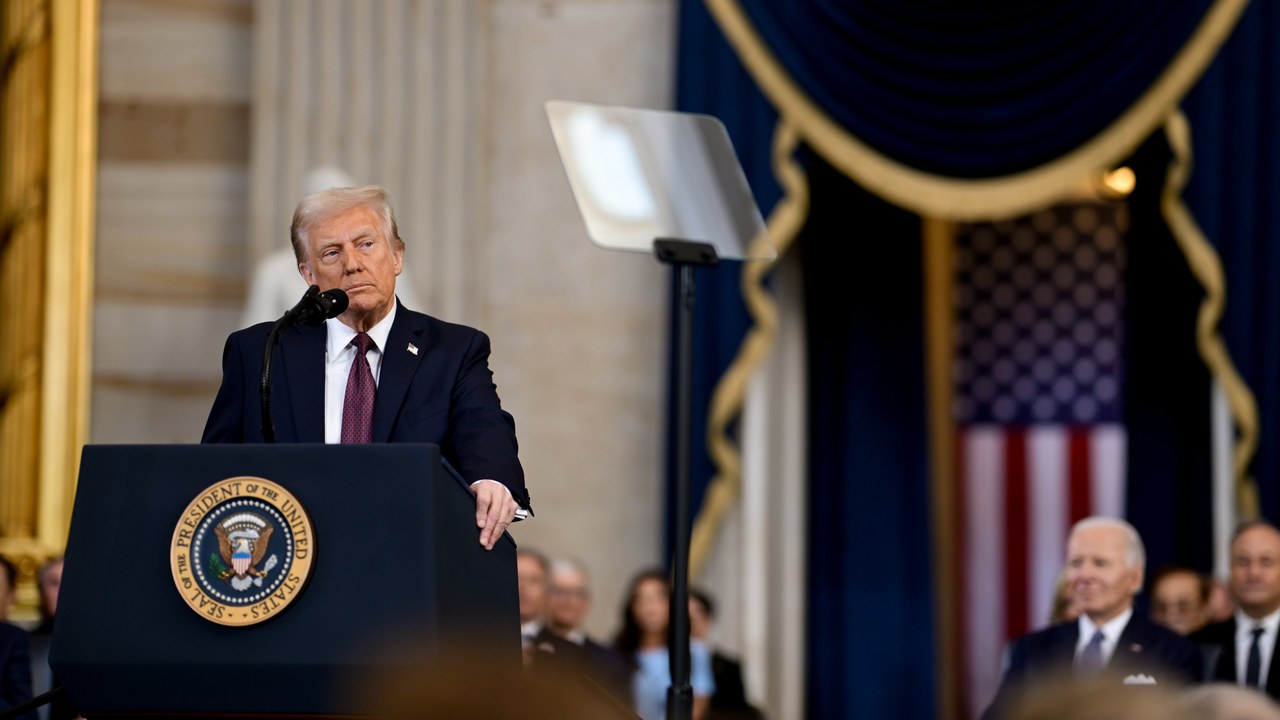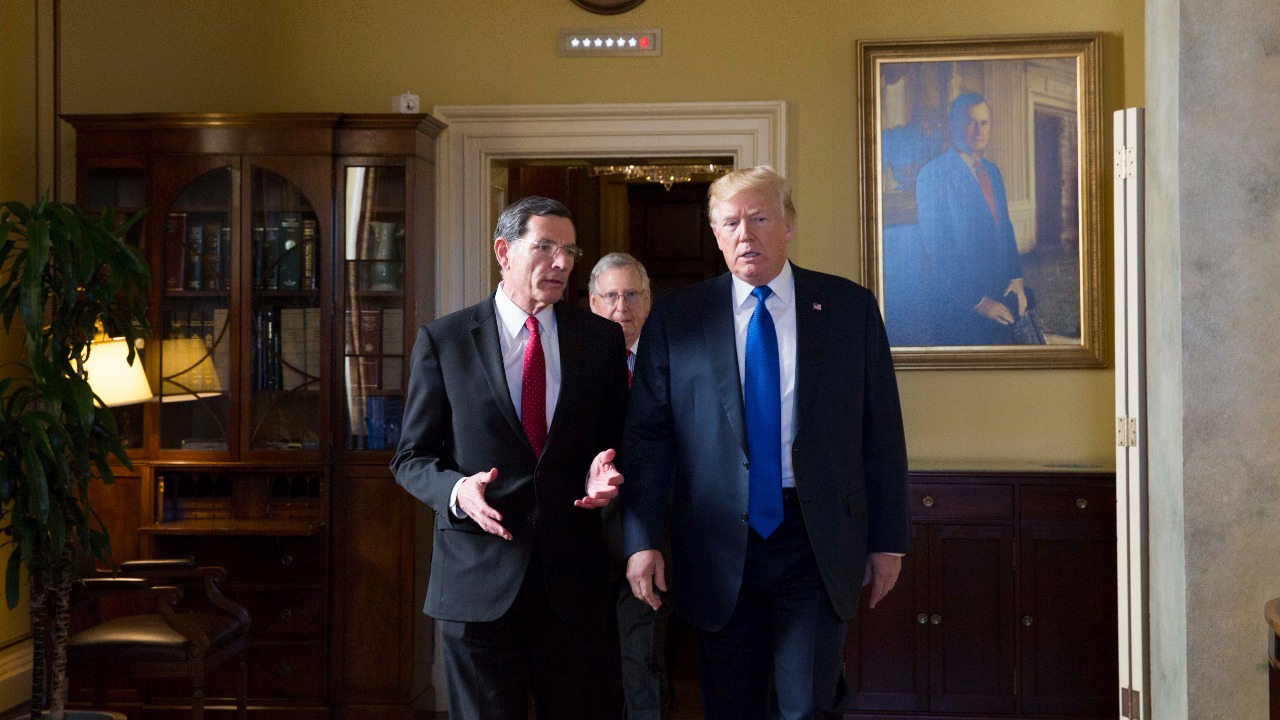
Senate Republicans are facing a rare and public break with President Donald Trump over his demand to more than triple the size of direct relief payments in the latest pandemic aid package. The clash over $2,000 checks has exposed deeper tensions inside the party about spending, political loyalty, and how to respond to economic pain that has lingered long after the first round of stimulus.
At the center of the dispute is a core question for the GOP: whether to follow Trump’s late push for larger checks or stick with a smaller, carefully negotiated compromise that many Republican senators say is already too expensive. The answer is shaping not only the fate of the relief bill, but also the party’s identity as it navigates Trump’s influence and prepares for the next election cycle.
Trump’s late demand upends a fragile relief deal
The fight over $2,000 checks began after congressional leaders had already locked in a bipartisan agreement pairing roughly $900 billion in pandemic relief with a broader government funding bill. That package included $600 direct payments to most Americans, a level Republican and Democratic negotiators had settled on after months of stalemate and internal bargaining. Trump, who had largely stayed on the sidelines of those talks, suddenly denounced the deal as inadequate and called for $2,000 checks instead, catching his own party’s senators off guard.
Trump’s intervention put Senate Republicans in a bind: either embrace a much larger price tag than they had just defended or publicly oppose a president from their own party on a popular cash benefit. House Democrats quickly seized on the opening, passing a measure to raise the checks to $2,000 and daring the Senate to block it. That move turned a closed-door budget compromise into a high-profile test of whether Republicans would align with Trump’s demand for bigger payments or stand by the original $600 structure that their negotiators had helped craft, a tension reflected in coverage of the relief negotiations and the subsequent push for larger direct checks.
McConnell and leadership resist the $2,000 push
Senate Republican leaders responded to Trump’s demand by signaling that they were not prepared to simply swap $600 checks for $2,000 payments without conditions. Senate Majority Leader Mitch McConnell framed the House-passed bill as rushed and incomplete, arguing that any move to increase direct payments needed to be paired with other Trump priorities such as changes to liability protections and a review of election-related issues. That approach effectively slowed the momentum behind the $2,000 proposal and gave Republicans cover to oppose it without directly rejecting the president’s stated goal.
McConnell’s strategy reflected a broader concern among senior Republicans about the overall cost of the relief package and the precedent of dramatically expanding direct federal payments. Several GOP senators voiced unease about adding hundreds of billions of dollars in new spending on top of the existing compromise, even as they acknowledged the political appeal of larger checks. Reporting on the internal debate highlighted how leadership used procedural tactics and bundled legislation to keep the $2,000 checks from getting a clean up-or-down vote, underscoring the leadership’s determination to contain the scope of the relief bill while still moving some form of aid forward for struggling households and small businesses, as detailed in accounts of the Senate’s handling of the $2,000 proposal.
Republican senators break ranks in favor of bigger checks
Despite leadership’s resistance, a notable group of Senate Republicans publicly sided with Trump’s call for larger payments, arguing that the economic and political case for $2,000 checks outweighed concerns about the deficit. Senators like Josh Hawley and Marco Rubio endorsed the higher amount, framing it as a direct way to help families cover rent, utilities, and other basic expenses after months of job losses and business closures. Their support gave Trump’s demand a foothold inside the Senate GOP conference and signaled that the party’s populist wing was willing to challenge traditional fiscal orthodoxy in the name of immediate relief.
These Republicans also made a pointed political argument: that opposing bigger checks risked alienating working-class voters who had backed Trump and were expecting tangible help from Washington. Some of them had already pushed for more generous direct payments earlier in the year and saw the $2,000 figure as a logical extension of that stance rather than a sudden shift. Coverage of the debate noted that their position put them at odds with colleagues who warned about long-term debt but aligned them with Trump’s public messaging and with House Democrats who had already voted for the higher amount, a dynamic captured in reporting on GOP senators who broke with leadership to support $2,000 checks.
Fiscal hawks and party traditionalists push back
On the other side of the split, a bloc of Republican senators argued that increasing the checks to $2,000 would push the relief package far beyond what they considered responsible, especially after years of warning about deficits and debt. Lawmakers like Pat Toomey and Ron Johnson raised alarms about the cumulative cost of multiple stimulus rounds and questioned whether sending larger checks to a broad swath of Americans was the most targeted way to support the economy. They pointed to existing unemployment benefits, small-business loans, and rental assistance as more focused tools, and warned that another surge of borrowing could complicate future efforts to rein in federal spending.
These fiscal hawks also worried about the political signal that a Republican-controlled Senate would send by embracing a dramatic expansion of direct payments so late in the legislative process. Some argued that the party risked blurring its contrast with Democrats on spending and undermining its credibility with voters who had backed the GOP on promises of budget discipline. Reporting on their stance emphasized that many of these senators had already been uneasy about the $600 checks and the broader relief bill, and saw the $2,000 push as a step too far, a view reflected in coverage of Republicans who opposed the larger payments on fiscal grounds.
What the split reveals about the GOP’s future
The clash over $2,000 checks is about more than one line item in a relief bill; it exposes a deeper struggle over what kind of party Republicans want to be in the Trump era and beyond. On one side are lawmakers who see direct cash payments as a powerful tool to connect with working-class voters and to show that the party is willing to use federal power aggressively in a crisis. On the other are those who still prioritize limited government and balanced budgets, and who fear that embracing large, universal checks will lock the GOP into a more expansive view of federal spending that is hard to reverse once the immediate emergency passes.
How this dispute is resolved will shape not only the final contours of the relief package but also the internal balance of power between populists and traditional conservatives in the Senate. If the faction aligned with Trump and the $2,000 checks gains ground, it could embolden similar pushes on issues like trade, industrial policy, and social benefits, where Trump’s instincts have often diverged from pre-2016 Republican orthodoxy. If leadership and fiscal hawks prevail, it will signal that, even after a tumultuous term, the party’s core economic philosophy remains closer to its pre-Trump roots, a tension that has been evident in reporting on the broader Republican debate over pandemic spending, direct relief, and the future of the party’s economic agenda.
More From TheDailyOverview
- Dave Ramsey warns to stop 401(k) contributions
- 11 night jobs you can do from home (not exciting but steady)
- Small U.S. cities ready to boom next
- 19 things boomers should never sell no matter what

Julian Harrow specializes in taxation, IRS rules, and compliance strategy. His work helps readers navigate complex tax codes, deadlines, and reporting requirements while identifying opportunities for efficiency and risk reduction. At The Daily Overview, Julian breaks down tax-related topics with precision and clarity, making a traditionally dense subject easier to understand.