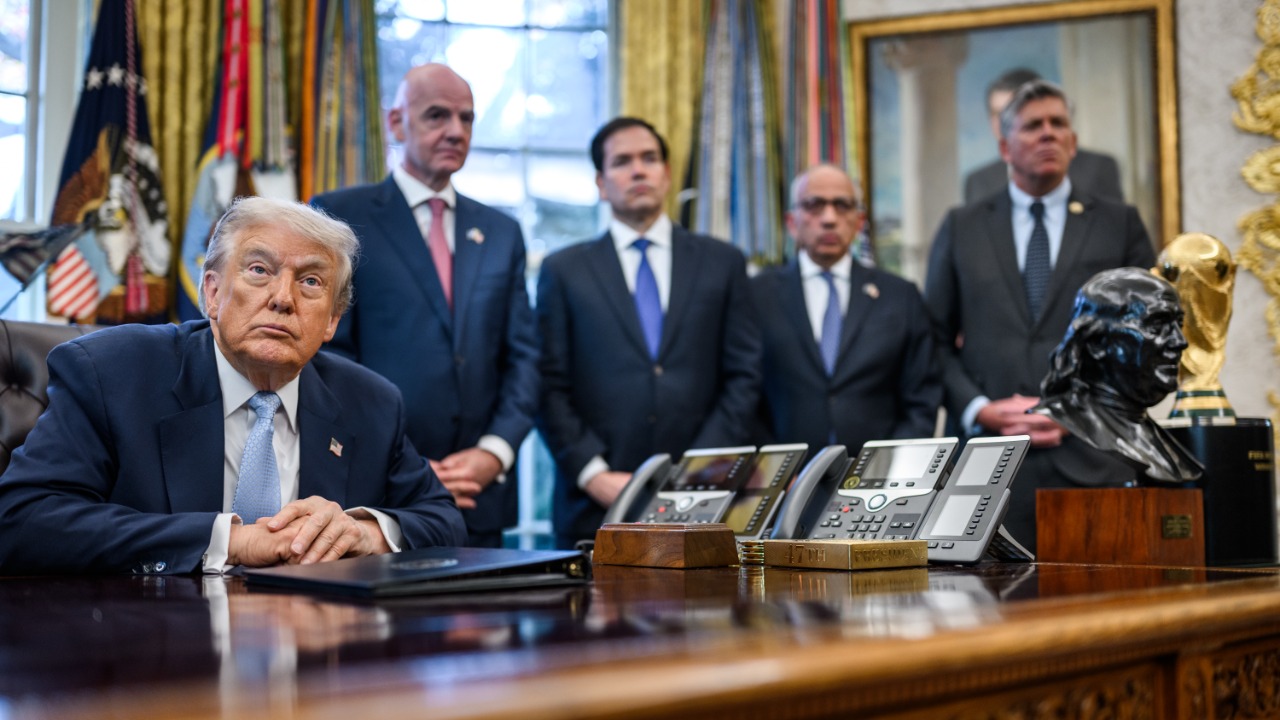
President Donald Trump is selling a story of an “economic boom” built on strong growth, new factory jobs and a promise that the worst of the inflation shock is over. Many Americans, however, still feel squeezed every time they pay for groceries, gas or a car loan, and they are telling pollsters that the recovery does not feel like a boom at all. The clash between Trump’s upbeat narrative and voters’ anger over prices is rapidly becoming the defining fault line of the 2026 political and economic debate.
Trump’s boom narrative meets sour public mood
Trump has made the economy the centerpiece of his message, repeatedly assuring voters that the United States is on the cusp of a historic upswing. In a national address, he vowed an “economic boom” and framed it as a payoff for his policies, even as he acknowledged that prices remain elevated. One survey by YouGov, cited in coverage of that speech, found that 52 percent of Americans said the economy was getting worse under Trump, a striking disconnect between the president’s rhetoric and public sentiment.
Another account of the same address noted that the YouGov poll showed 52% of Amer respondents taking a dim view of the trajectory, even as Trump promised that better days were imminent. In that same speech, he cast the coming years as a chance to reset the country’s fortunes and repeatedly contrasted his vision with what he described as the failures of Biden’s presidency. The result is a split-screen effect: a president touting progress, and a public that, by his own preferred metric, is still unconvinced.
Detroit speeches and the price reality
Trump has taken that message on the road, using high profile events in industrial cities to argue that the tide has already turned. In Detroit, he delivered a speech focused on jobs and growth, boasting of an “economic boom” even as he conceded that voters remain worried about the cost of living. Coverage of that appearance highlighted how Trump leaned on headline inflation data and cooling price indices while audiences continued to raise concerns about rent, car payments and food, underscoring that the political battle is less about charts than about how people feel when they check out at the store. One report on the Detroit event noted that he pressed the case for his agenda while inflation was described as holding near 2.7 percent, yet the crowd’s questions kept circling back to household budgets, a reminder that macro trends do not automatically translate into relief.
In another Detroit stop, President Donald Trump went further, claiming that prices were actually falling and using the moment to attack the Fed and Democrats for what he called years of mismanagement. That framing allowed him to argue that any remaining pain was the lingering result of Biden-era decisions rather than his own policies. Yet the insistence that prices are dropping sits awkwardly with the lived experience of many Americans who have seen only modest relief at the pump and in the supermarket aisles. The tension between Trump’s Detroit message and voter frustration is precisely what makes his economic optimism such a political gamble.
Tariffs, trade and the cost of Trump’s strategy
Central to Trump’s argument is that his trade and tariff strategy has delivered tangible wins, from a shrinking trade deficit to new revenue for the federal government. He has repeatedly celebrated the drop in the U.S. trade gap, with one recent account quoting him declaring that “these incredible numbers” and the country’s “unprecedented success” were a direct result of tariffs that he said had “rescued our economy.” In that telling, the levies are not a drag but a tool that forced trading partners to the table and helped domestic producers, a narrative that resonates with some manufacturing workers and business owners who see foreign competition as their main threat. Trump’s allies point to the trade deficit hitting a 17 year low as proof that his approach is working.
Independent analyses paint a more complicated picture. One detailed assessment of the tariff program found that, after factoring in slower growth and other negative economic effects, the revenue raised by the duties would total $1.7 trillion over the next decade, a large sum that still falls short of covering the full cost of the associated tax cuts. That same analysis, introduced with the phrase Accounting for negative economic effects, underscores that tariffs function as a tax on imports that can feed into higher prices for consumers and businesses. Trump, however, has framed the policy as a win win, insisting in a separate address that the billionaire president could fund new priorities with tariff revenue while sparing ordinary taxpayers, a claim he tied directly to his promise of an economic boom.
Factory-floor optimism and voter anger
Trump’s economic message is not just about charts and speeches, it is also about visuals from factory floors and construction sites. In Michigan, he toured industrial facilities and highlighted corporate announcements as proof that his policies are reviving American manufacturing. One such example came when Ford announced on a recent Monday that it was adding 1,200 jobs in Dearborn, Michigan, along with new production roles in Tennessee. Trump seized on that news to argue that productivity was “smashing expectations” and that his mix of tariffs, deregulation and tax policy was drawing investment back to the industrial heartland. For workers in Dearborn and Tennessee, the promise of a steady paycheck is a concrete sign that something is changing.
Yet even on those factory tours, the anger over prices is never far from the surface. During one recent visit, Trump gave a middle finger to a heckler, an unscripted moment that captured both his combative style and the raw emotions swirling around the economy. Reporting on that event noted that Trump largely sidestepped questions about the investigation into Powell, instead trying to shift attention back to his efforts to spur growth. The exchange underlined how, even in settings designed to showcase economic progress, frustration with the broader cost of living and political scandals can intrude, complicating the clean narrative the White House wants to project.
Inflation, perception and the politics of pain
At the heart of the disconnect between Trump’s message and public anger is inflation, both as an economic reality and as a psychological scar. Trump has at times insisted there is effectively “no inflation,” praising his own record and pointing to signs that price growth has slowed. In one widely shared social media thread, a commenter named Joshua Skidmore FYI described going into a Meijer store and finding that groceries were “noticeably cheaper,” adding a pointed “Sorry” to those who insisted things were only getting worse. That anecdote, set against references to a 2.9% inflation rate in December 2024 and detailed increases in categories like energy and trucks, captures how selective experiences can reinforce the president’s narrative for some supporters while leaving others unconvinced.
Trump himself has occasionally nodded to the persistence of high prices even as he blames his predecessor. In one account of his remarks, he was described as saying that, While casting blame on Biden’s presidency, Trump conceded that prices remain high but argued the nation was “poised” for an economic boom. In another televised address, President Donald Trump promised Americans an economic boom and insisted that prices of gas and groceries were coming down, even as he acknowledged that inflation had hit his popularity. He tied that promise to a broader agenda that included using tariff revenues to fund new initiatives and framed the coming 2026 midterm elections as a referendum on whether voters believed his story of recovery.
Supporting sources: Trump vows economic, Trump declares tariff, Trump litters Detroit.
More From The Daily Overview

Silas Redman writes about the structure of modern banking, financial regulations, and the rules that govern money movement. His work examines how institutions, policies, and compliance frameworks affect individuals and businesses alike. At The Daily Overview, Silas aims to help readers better understand the systems operating behind everyday financial decisions.

