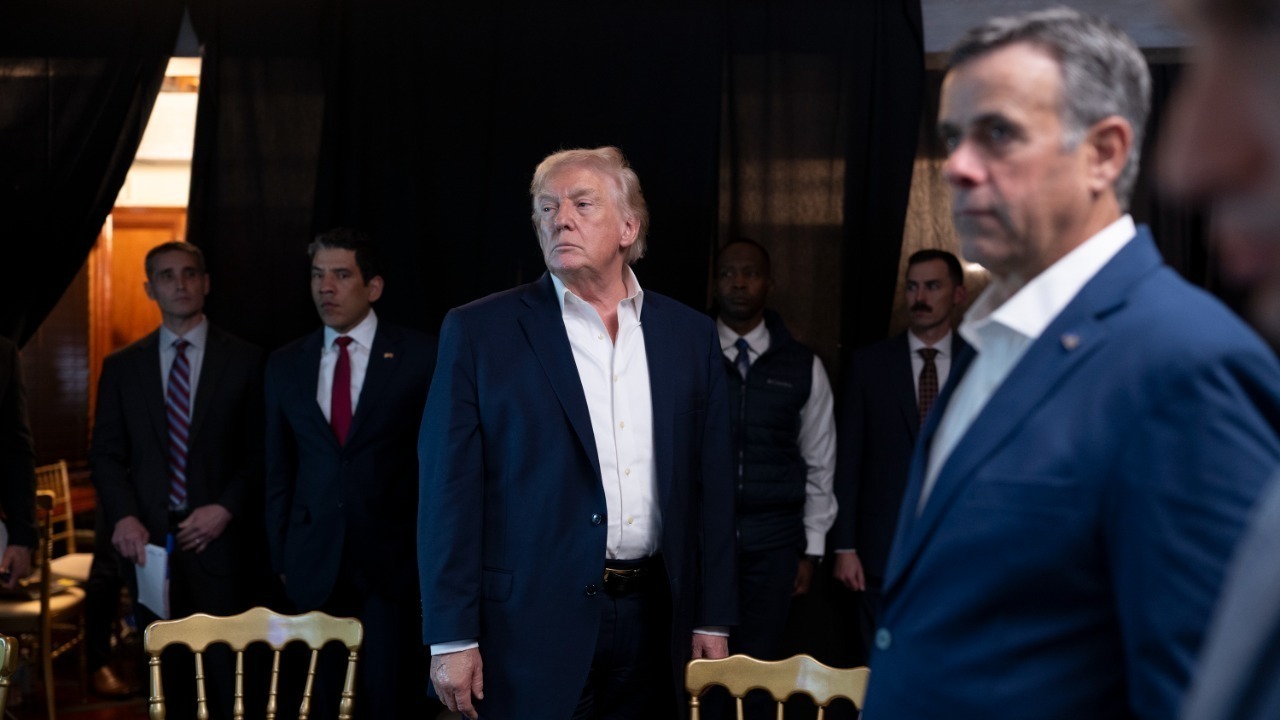
President Donald Trump is backing a hard ceiling on credit card interest, pitching a one year cap as a lifeline for households squeezed by record debt. The idea has electrified consumer advocates but also triggered stark warnings from Wall Street leaders who say the move could backfire into what one called an “economic disaster.” I see a clash emerging between the politics of relief and the mechanics of modern consumer finance, with millions of cardholders caught in the middle.
At stake is not just how much people pay on their Visa or Mastercard, but who gets access to revolving credit at all. If Trump’s plan advances in Congress, it could reshape how banks price risk, which borrowers they serve, and how quickly the broader economy slows or recovers in the year ahead.
What Trump’s 10% cap would actually do
Trump has urged Congress to impose a 10 percent annual cap on credit card interest rates, framed as a temporary, one year intervention to ease pressure on families. In his push, President Donald Trump has called on Congress to enact the ceiling, arguing that double digit rates far above that level are indefensible when households are already straining under high prices and record borrowing. The proposal would effectively override the current market, where many cards charge well above 20 percent, and would do so nationwide rather than leaving limits to state usury laws.
Trump’s support is tied to specific legislation that would lock in a 10 percent per annum cap on card interest for one year, a detail highlighted by Consumer Finance Monitor. I read that as a deliberate attempt to make the plan sound targeted and reversible, more like an emergency brake than a permanent redesign of consumer credit. Yet even as a one year measure, it would force banks to reprice trillions of dollars in revolving balances, and that is where the fiercest resistance is coming from.
Why bank chiefs are sounding the alarm
The sharpest warning has come from JPMorgan Chase, where CEO Jamie Dimon has labeled Trump’s proposed 10 percent cap an “economic disaster.” In comments reported by poll based report, Jamie Dimon argued that such a low ceiling would prompt banks to pull back from roughly 80 percent of Americans who currently qualify for credit cards, because the economics of serving higher risk borrowers would no longer work. From his perspective, the cap would not just trim profits, it would rip out a core piece of the consumer credit system that underpins everyday spending.
That message has been amplified in separate coverage where the boss of one of the world’s biggest banks warned that President Donald Trump’s proposal to cap card costs would be a “disaster” for the wider economy. In that reporting, the JPMorgan leader stressed that credit cards function as “their back up credit” for many households, a point echoed in a piece featuring Archie Mitchell and Getty Images. I read those comments as less about defending bank margins and more about a blunt threat: if returns are capped too tightly, lenders will simply cut off large swaths of borrowers rather than absorb the hit.
Recession fears and the Capital One warning
Concerns are not limited to JPMorgan. The head of Capital One has warned that capping credit card interest rates could tip the United States into recession, arguing that the shock to lending would ripple quickly through consumer spending. According to Takeaways compiled by Bloomberg AI, the Capital One CEO said that a strict ceiling would force issuers to pull back on approvals and reduce limits, especially for riskier customers, just as households are leaning on cards to bridge gaps in their budgets. That contraction in available credit, layered on top of already high borrowing costs elsewhere, is what he sees as the trigger for a downturn.
In that same analysis, the warning is explicit that capping rates for one year does not mean the impact would be short lived, because banks would adjust their models and product offerings in anticipation of future political interventions. I interpret this as a credibility problem: once Washington shows it is willing to dictate pricing on revolving credit, lenders may assume similar caps could return, and they will price that political risk into their decisions. That is why the Capital One chief framed the cap as a threat to the broader cycle, not just a temporary hit to Capital One itself.
The politics of relief versus access to credit
From Trump’s vantage point, the politics are straightforward: households are drowning in card balances, and a 10 percent cap looks like a direct cut to their monthly bills. His allies have framed the move as a way to give borrowers breathing room from record high household debt, a theme highlighted in Newsweek coverage that also noted the “economic disaster” warnings. I see a classic tension here: the immediate political reward of promising lower rates versus the harder to explain risk that some people will lose access to cards altogether.
Critics like Jamie Dimon and the Capital One CEO are effectively arguing that the cap would split consumers into winners and losers. Those with strong credit profiles might enjoy lower rates, while those on the edge could find their accounts closed or applications denied as banks retreat from higher risk segments. A separate report on Trump’s call for a 10 percent cap noted that bank stocks actually rose on the news, in part because investors judged the proposal as “at least threatening to the industry” but perhaps less likely to pass in its most aggressive form, according to CNBC. That market reaction suggests investors are betting on political theater more than a binding new rule, but the debate itself is already reshaping expectations about how far the White House is willing to go.
What cardholders can do while Washington argues
For individual borrowers, the fight in Washington is important, but it is not a plan. Regardless of what happens to the proposed cap, people with stronger credit scores will still qualify for better terms, lower rates, and richer rewards. As one consumer finance guide put it, “Regardless of what happens” in the policy arena, the best move is to improve your own profile so you can access cheaper credit, a point underscored in a piece that urged readers to work on their score now. I would translate that into concrete steps: paying more than the minimum on existing cards, keeping utilization well below 30 percent, and checking your reports for errors that might be dragging down your rating.
At the same time, it is worth understanding the stakes of the current debate in personal terms. If a 10 percent cap were enacted and banks responded by tightening standards, borrowers with thin files or past delinquencies could find that their “back up credit” disappears just when they need it most, a risk highlighted in coverage quoting JPMorgan’s chief and echoed in Yahoo Finance. That is why I see Trump’s plan as both a potential short term relief valve and a long term gamble: it could lower interest costs for some, but if the dire warnings prove right, it might also shrink the safety net of revolving credit that millions of Americans quietly rely on.
More From TheDailyOverview
*This article was researched with the help of AI, with human editors creating the final content.

Cole Whitaker focuses on the fundamentals of money management, helping readers make smarter decisions around income, spending, saving, and long-term financial stability. His writing emphasizes clarity, discipline, and practical systems that work in real life. At The Daily Overview, Cole breaks down personal finance topics into straightforward guidance readers can apply immediately.

