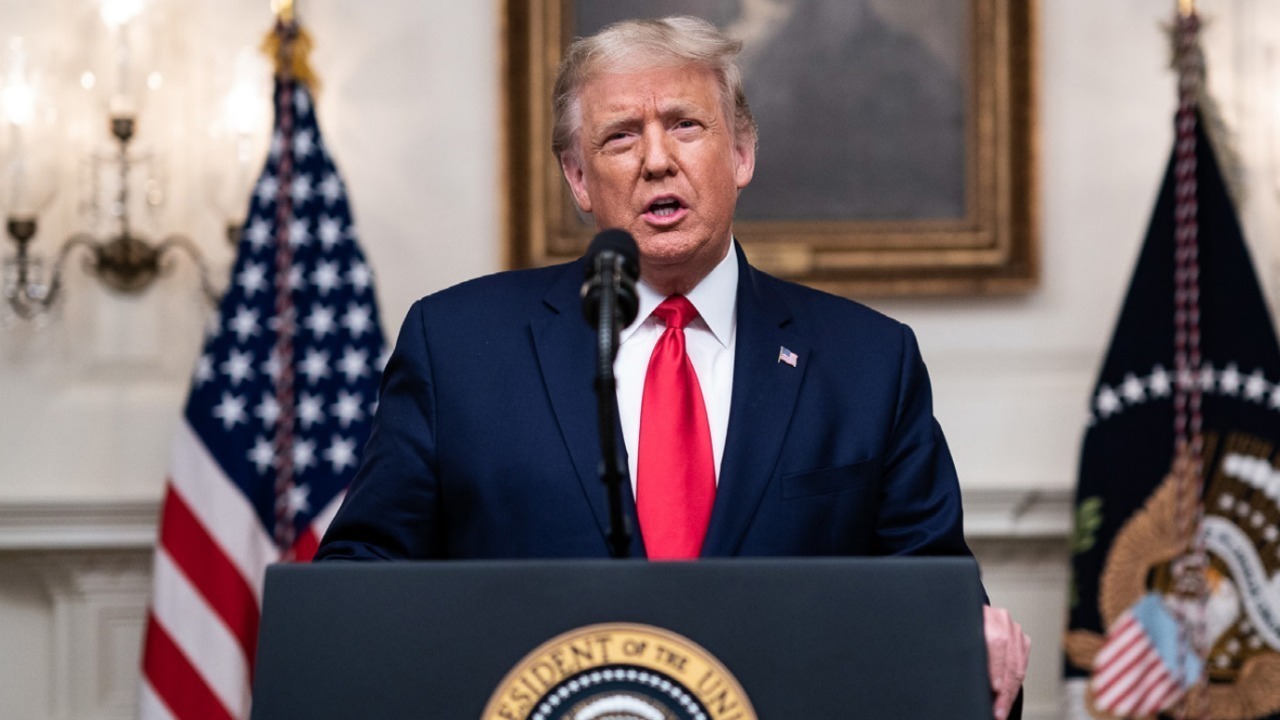
The global economic system that took shape after World War II is being rapidly rewritten as President Donald Trump leans into an aggressive America First agenda. Longstanding assumptions about open markets, shared security and predictable U.S. leadership are giving way to a more transactional order in which tariffs, threats and sudden policy shifts are tools of first resort. Allies are scrambling to protect their own economies, even as they brace for the shock waves of a United States that is no longer committed to anchoring the old rules.
What is emerging is not a neat alternative architecture but a fragmented landscape of competing blocs, emergency trade measures and improvised security arrangements. From Europe to Asia, governments are racing to build resilience into supply chains, defense planning and energy policy, even if that means sacrificing efficiency and growth. The result is a world that feels closer to a pre‑WW2 balance of power than the cooperative model that defined the late twentieth century.
America First as a deliberate break with the postwar playbook
At the core of this shift is a conscious decision by the United States to step back from its traditional role as steward of the global economy and to prioritize unilateral advantage. The Jan America First doctrine is no longer a campaign slogan but the organizing principle of U.S. trade and foreign policy, with Washington openly signaling that it is prepared to abandon the old bargain of market access in exchange for alliance loyalty. Analysts describe a U.S. that is abandoning its role as guarantor of an integrated global system and nudging the world toward an unruly new order.
This strategic turn is not ad hoc. It is rooted in a belief that decades of liberalization hollowed out U.S. industry and that only hard leverage can rebalance trade. The administration’s own framing of America First trade policy highlights “reciprocal tariffs” as a central tool, with Jan Liberation Day used to showcase a new willingness to match or exceed foreign barriers rather than negotiate them down. That approach is laid out in detail in the description of what is Trump’s, which underscores how tariff reciprocity, not multilateral compromise, is now seen as the path to rebalancing.
Tariffs as economic shock therapy
The most visible instrument of this new posture is a sweeping expansion of tariffs that has turned the United States from champion of free trade into one of its most aggressive disruptors. According to Jan Key Findings on the current trade war, President Trump has used the International Emergency Economic Powers Act, or IEEPA, to impose duties on a wide range of U.S. trading partners, lifting the average U.S. tariff rate to its highest level since 1946. Those IEEPA tariffs mark a decisive break with the low‑tariff consensus that underpinned global supply chains for decades.
The administration’s own economic advisers acknowledge that these measures are not cost free. Detailed modeling of the trade war concludes that Trump’s imposed tariffs will raise consumer prices, reduce employment and lower economic output, even as they are justified as leverage to extract concessions abroad. Those projected impacts are spelled out in the same Jan Key Findings, which warn that Trump’s imposed tariffs will weigh on growth at home while injecting uncertainty into global markets that had grown used to relatively predictable U.S. behavior.
From steel to semiconductors: weaponizing trade tools
Tariffs are no longer confined to symbolic sectors but are being deployed deep inside the industrial and technological base. A detailed chronology of measures in the second Trump term shows how, between January and March 2026, the White House leaned on existing authorities to expand duties under section 232 tariffs and to pressure partners including NATO Secretary‑General Mark Rutte over defense and trade commitments. That sequence, captured in the overview of tariffs in the, illustrates how trade tools are being fused with security demands in a way that blurs the line between economic and military policy.
The reach of these measures is especially clear in high‑tech sectors. On Jan 14, 2026, the President issued a Section 232 proclamation imposing a 25% tariff on imports of specified “semico” products, while also tightening export licensing rules for advanced chips that are later re‑exported. Legal analysis of those steps notes that the new Section 232 regime creates challenging cross‑currents for global semiconductor supply chains, forcing manufacturers in Asia and Europe to rethink where they source, assemble and ship their most sensitive components.
Allies on edge: Europe’s lowest moment and the Greenland shock
Nowhere are the political and economic tremors more visible than in Europe, where leaders speak openly of a historic low in transatlantic relations. Former European Commission president José Manuel Barroso has warned that Europe and U.S. relations are at their “lowest moment” since NATO was created, citing Trump’s goal of seizing Greenland and his broader America First stance as emblematic of a partnership turned adversarial. That assessment, detailed in coverage of how Europe and U.S. have deteriorated, underscores how economic disputes are bleeding into questions of territorial ambition and alliance trust.
The tariff front has been equally destabilizing. Trade trackers report that President Trump has threatened new duties on eight European allies he accuses of working against his goals, signaling that even close partners are not exempt from punitive measures. Those threats are catalogued in a Jan update on the Trump tariff tracker, which details how the prospect of sudden levies is forcing European governments to prepare contingency plans for industries from autos to agriculture.
Resilience over efficiency: how partners are rewiring their economies
Faced with a United States that is willing to weaponize interdependence, many countries are pivoting from efficiency to resilience, even at a significant economic cost. Analysts note that the new U.S. posture is driving governments to build up domestic production, diversify suppliers and hold larger inventories rather than rely on imports that could be cut off by the next proclamation. This shift from just‑in‑time to just‑in‑case is described as a subtle but pervasive imprint of Trump’s strategy, with one assessment warning that new U.S. posture is pushing allies to prioritize self‑reliance over the gains of open trade.
European officials have even embraced the language of “Shock therapy” to describe how Trump’s tactics are forcing them to accelerate long‑delayed reforms. At the recent Davos gathering, one senior European figure argued that the jolt of U.S. unpredictability is compelling Europe to convert its advanced market into greater geopolitical heft, investing in defense, energy security and industrial policy. That perspective is captured in an account of how this European official sees Trump’s shock therapy as both a danger and a catalyst, leaving Europe shaken but, in some respects, more strategically awake.
More From The Daily Overview
*This article was researched with the help of AI, with human editors creating the final content.

Grant Mercer covers market dynamics, business trends, and the economic forces driving growth across industries. His analysis connects macro movements with real-world implications for investors, entrepreneurs, and professionals. Through his work at The Daily Overview, Grant helps readers understand how markets function and where opportunities may emerge.

