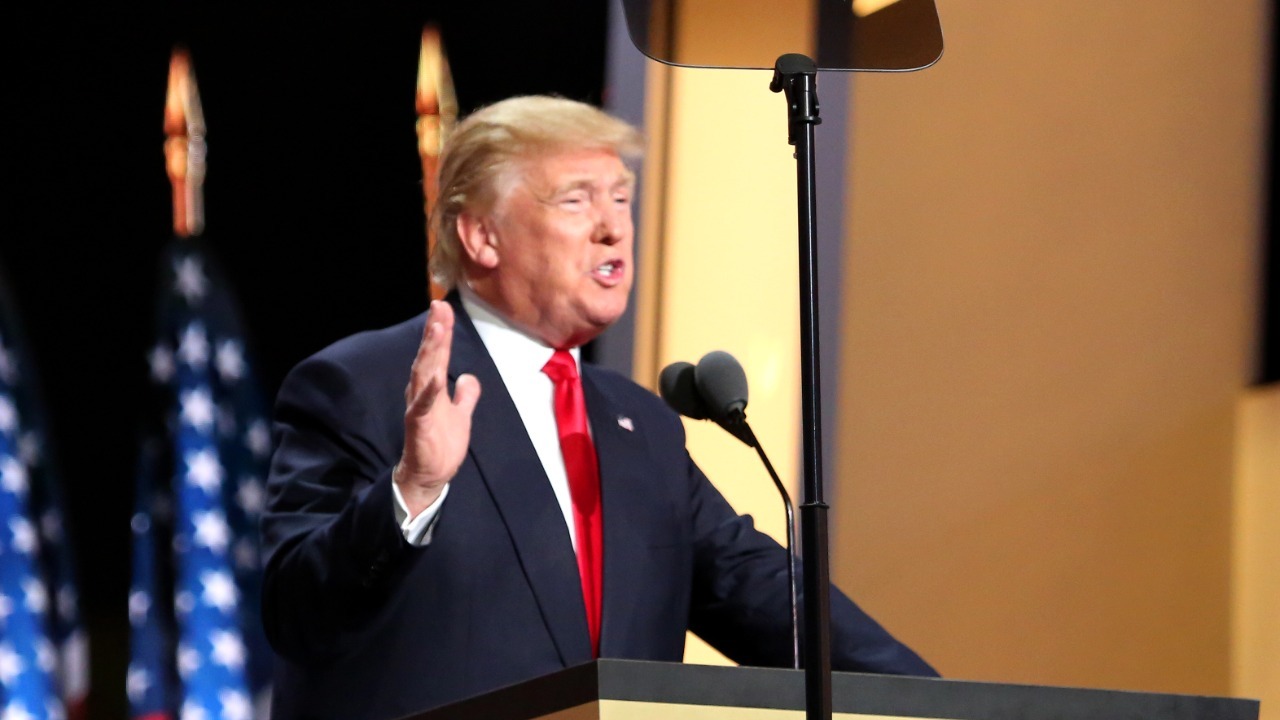
President Donald Trump is leaning directly into Hollywood’s business, pressing Paramount to revive the kind of hard-edged, crowd-pleasing action comedies that dominated multiplexes in the late 1980s and 1990s. At the center of that push is a reported demand to fast-track a new Rush Hour sequel and restore what he sees as a tougher, less filtered era of studio filmmaking. The result is an unusually explicit collision of presidential power, corporate strategy, and nostalgia for a grittier movie culture.
Trump’s reported lobbying comes as Paramount and its owners weigh how to compete in a streaming-fractured marketplace, and as the studio’s future is already being reshaped by a multibillion-dollar merger. His intervention is not just about one franchise, it is about using the bully pulpit to nudge a major studio back toward a specific style of “raucous” entertainment that he believes has been sidelined.
Trump’s Rush Hour fixation and the Paramount pressure campaign
The clearest expression of Trump’s Hollywood agenda is his reported insistence that Paramount move quickly on a new Rush Hour film. According to reporting dated Nov 23, 2025, Donald Trump has been described as wanting Rush Hour 4 “ASAP,” urging Paramount to accelerate development of the buddy-cop sequel rather than letting it languish in the kind of slow-turning studio pipeline that often stalls legacy franchises. That pressure, as described in those accounts, frames the president not as a passive fan but as an active participant in the studio’s decision-making orbit, treating the Rush Hour brand as a cultural asset that should be revived on his preferred timetable, not the company’s.
Those same reports portray Trump as fixated on the Rush Hour series as a shorthand for the kind of movies he wants to see again, with the franchise’s blend of martial-arts action, broad comedy, and urban grit standing in for a whole category of late-1990s studio fare. The suggestion that Donald Trump wants Rush Hour 4 “ASAP” is not just a scheduling note, it is a signal that he views Paramount as a lever he can pull to bring back a specific flavor of mainstream entertainment, and that he is willing to lean on the studio to get there, as reflected in detailed accounts of his push to have Paramount “move forward” with the sequel on an accelerated track.
A broader wish list of “raucous” and “tough” movies
Rush Hour is only the most visible item on what has been described as a broader Trump wish list for Hollywood. Reporting from Nov 23, 2025, characterizes Trump as wanting to bring back the “raucous comedies and action movies” that defined the late 1980s through the late 1990s, a period when studios regularly bet on mid-budget, R-rated fare that mixed violence, profanity, and politically incorrect humor. In that framing, his Rush Hour fixation is part of a larger cultural project: a desire to rewind the industry to an era before superhero dominance and streaming algorithms, when a film like Lethal Weapon or Beverly Hills Cop could anchor a studio slate and set the tone for what counted as mainstream fun.
Social media posts amplifying those reports say that, according to accounts circulating on Nov 23, 2025, President Donald Trump “reportedly wants to bring back” exactly that kind of “raucous” material, positioning him as a champion of movies that are louder, less polished, and more confrontational than much of today’s four-quadrant output. The language in those posts underscores that this is not framed as a niche taste but as a cultural correction, with According to reports, President Donald Trump cast as someone who sees the return of these films as part of a broader pushback against what he and his allies view as a sanitized, risk-averse Hollywood, a framing that has been echoed in viral summaries of his desire to restore those “raucous comedies and action films” to the center of studio output.
The Ellison connection and pressure on Paramount’s ownership
Trump’s reported campaign does not stop at the studio’s creative executives, it extends to the billionaire class that sits above them. One widely shared account from Nov 23, 2025, describes President Donald Trump “reportedly pushing Larry Ellison” to help bring back the Rush Hour franchise, a detail that suggests he is trying to influence Paramount not only through public rhetoric but also through private conversations with powerful investors. Larry Ellison, as a tech magnate with deep ties to Hollywood financing through his family, represents the kind of figure who can shape what gets made by deciding which projects receive capital and which do not.
By leaning on Larry Ellison in this way, Trump is effectively trying to align the interests of political power and private wealth around a specific cultural outcome, namely the resurrection of a particular action-comedy series and the broader genre it represents. The reported outreach to Ellison, framed as “the wild part” of the story in one viral post, underscores how unusual it is for a sitting president to be personally engaged in the micro-politics of franchise development, and it highlights how Trump’s Hollywood ambitions are being channeled through conversations with figures like Larry Ellison who can influence Paramount’s strategic choices from the ownership level down.
Trump as self-styled curator of ’80s and ’90s cinema
Underpinning all of this is Trump’s own identity as a fan of a particular cinematic era. Reporting from Nov 23, 2025, describes him as someone who “really likes buddy comedies and ’90s movies,” with Rush Hour singled out as a touchstone and “Credit” given to Warner Bros for the original film’s enduring appeal. Accounts of his preferences suggest that he is not simply nostalgic in the abstract but has a concrete list of titles and subgenres he wants to see revived, from martial-arts-inflected buddy pictures to muscular action vehicles in the mold of Bloodsport and Rambo. In that sense, he is acting less like a casual viewer and more like a self-appointed curator of a specific video-store shelf.
Those same reports say there are “so many” movies Trump would like to see made or remade, painting a picture of a commander in chief who treats the film industry as a kind of personal programming grid that can be adjusted to match his tastes. The emphasis on buddy comedies, Rush Hour, and the broader canon of late-20th-century action cinema suggests that his push for “tough” movies is rooted in a belief that these titles embody a more straightforward, unapologetic masculinity than much of today’s multiplex fare, a belief that has been detailed in coverage of the movies Trump wants made and the way he talks about Rush Hour and similar properties as exemplars of what Hollywood should be greenlighting.
Culture war meets corporate strategy at Paramount
Trump’s push for grittier films is unfolding at a moment when Paramount itself is in flux, which makes his intervention more than a matter of taste. Earlier this year, the eight billion dollar merger between Paramount CBS’s parent company and Hollywood studio Sky Dance became a flashpoint in debates over media consolidation and creative control, with critics warning that such deals can narrow the range of voices and genres that reach audiences. That merger, reported on Jul 28, 2025, has already been described as fueling a fierce First Amendment conversation about who decides what stories get told and how much room remains for riskier, less algorithm-friendly projects.
Against that backdrop, Trump’s call for a return to “raucous comedies and action films” at Paramount looks like an attempt to steer the merged entity’s output toward a specific ideological and aesthetic lane. The combination of Paramount CBS and Sky Dance gives the company a powerful pipeline of theatrical releases and streaming content, and Trump’s reported lobbying suggests he wants that pipeline to carry more movies that resemble his favorite late-1980s and 1990s titles, rather than the prestige dramas or socially conscious blockbusters that have defined parts of the modern studio brand. The merger’s scale and the political scrutiny around it, highlighted in coverage of the eight billion dollar deal between Paramount CBS and Hollywood studio Sky Dance, make his pressure on the studio’s direction part of a larger struggle over who gets to shape the culture that flows out of such consolidated media giants and what kinds of films they prioritize.
From Rush Hour to a full-blown Hollywood power play
Taken together, the reporting from Nov 23, 2025, sketches a picture of Trump’s Hollywood involvement that goes well beyond a single franchise. Accounts describe him as wanting to revive the “raucous comedies and action movies” of the late 1980s to late 1990s, positioning that era as a golden age that should guide current studio decisions. In that narrative, Trump appears to see himself as a kind of cultural counterweight to what he perceives as a softer, more cautious entertainment landscape, using his platform to argue that studios like Paramount should embrace more aggressive, less filtered storytelling that mirrors the tone of the movies he grew up with.
One detailed analysis from Nov 23, 2025, even frames this as part of Trump’s “latest power grab,” suggesting that his push to revive Rush Hour and similar properties is not just about personal enjoyment but about asserting influence over a key American export. By casting himself as a major Rush Hour fan and pressing for the return of that franchise and its peers, Trump is effectively trying to imprint his own sensibilities on Paramount’s slate, turning a nostalgic affection for late-20th-century action comedies into a broader campaign to reshape what counts as mainstream entertainment, a campaign that has been dissected in coverage of how Trump appears to want to revive those raucous comedies and action movies and what that says about his approach to cultural power inside and outside Hollywood.
More From TheDailyOverview
- Dave Ramsey warns to stop 401(k) contributions
- 11 night jobs you can do from home (not exciting but steady)
- Small U.S. cities ready to boom next
- 19 things boomers should never sell no matter what

Grant Mercer covers market dynamics, business trends, and the economic forces driving growth across industries. His analysis connects macro movements with real-world implications for investors, entrepreneurs, and professionals. Through his work at The Daily Overview, Grant helps readers understand how markets function and where opportunities may emerge.