President Donald J. Trump has put a specific dollar figure on his latest promise to service members, pledging $1,776 “warrior dividend” checks as a one-time payout tied to their military service. The payment is framed as both a patriotic nod to 1776 and a targeted cash boost for those in uniform, but the fine print on who qualifies and when the money arrives matters far more than the symbolism.
I want to walk through what the administration has actually committed to, how the Pentagon is describing the program, and what the available guidance says about eligibility, timing, and how this bonus fits into the broader politics of military pay and Trump-era stimulus ideas.
What the $1,776 “warrior dividend” actually is
At its core, the “warrior dividend” is described as a one-time stipend of $1,776, paid directly to qualifying service members as an extra line on their pay, not a recurring benefit. The amount is deliberately pegged to the year 1776, a choice the White House has leaned on to frame the payout as a patriotic reward for those who have volunteered to defend the country. In official language, it is treated as a special bonus layered on top of regular military compensation rather than a permanent increase in base pay or a new entitlement program.
Military communications have echoed that framing, referring to a one-time “Warrior Dividend” that will be processed through the same systems that handle routine pay and allowances. An announcement from Team Minot underscores that the payment is meant to land before Christmas, reinforcing the idea that this is a discrete holiday-season bonus rather than the first installment of a longer series of checks.
Trump’s rollout and the political symbolism
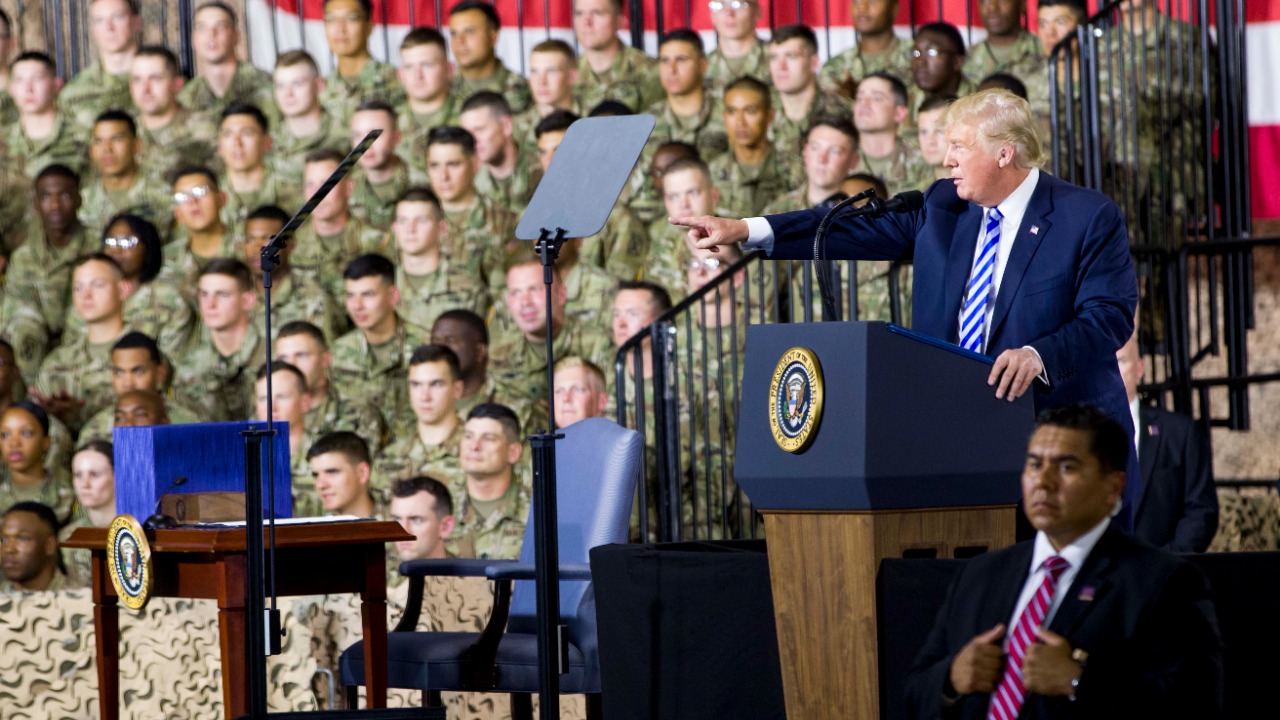
President Donald J. Trump used a White House speech to the nation to unveil the “warrior dividend,” presenting it as a direct expression of gratitude from his administration to the armed forces. By tying the amount to 1776, he wrapped the policy in the language of founding-era patriotism, signaling that the bonus is as much about national identity as it is about household budgets. The choice to announce it from the White House, rather than leaving it to the Pentagon alone, underlined that this is a presidential initiative, not just a routine adjustment to military benefits.
That symbolism is reinforced in outside explanations that link the $1,776 figure to the year the United States declared independence and cast the checks as a signature Trump move aimed at uniformed “warriors.” One breakdown of the plan notes that Trump announced the one-off payment as a way to honor service members in a manner that is both financially tangible and symbolically tied to the nation’s founding story.
Who is eligible for the $1,776 payout
The most important question for troops and families is who actually qualifies for the $1,776 payment, and here the emerging guidance points to a focus on those currently serving on active duty. The “warrior dividend” is described as a stipend for service members who meet specific service requirements, rather than a blanket payment to anyone who has ever worn the uniform. That means eligibility is tied to current status and recent duty, not simply veteran status or prior enlistment.
Reporting on the program explains that the stipend is aimed at those who have been on duty for a defined stretch of time, with the criteria framed in terms of consecutive days of service as of a particular cutoff in Dec. One detailed explainer notes that the $1,776 payment is structured as a one-time pay stipend and that eligibility hinges on having served the required number of consecutive days as of Dec, with some scenarios also referencing a smaller $177 amount in related discussions of how the benefit is calculated or contrasted with other payments. Those specifics are laid out in guidance on what the $1,776 stipend is and when it arrives, which emphasizes that the bonus is not universal but targeted.
How and when the “warrior dividend” is being paid
On timing, the administration has been explicit that the goal is to get the money into service members’ hands before Christmas, turning the payout into a year-end boost that can help with holiday expenses or debt. The Pentagon’s messaging to units has stressed that the payment will appear as a separate line item in the normal pay system, so troops should see it in the same accounts where they receive their regular salary and allowances. That approach avoids the delays and confusion that can come with standalone paper checks or separate application processes.
Base-level communications have reinforced that schedule, telling airmen and other personnel to expect the one-time $1,776 “Warrior Dividend” to be processed in time for the holiday period and directing questions to local finance offices. At Minot Air Force Base, for example, the official notice explains that the Warrior Dividend is being issued as a one-time payment and provides contact information for those who need help understanding how it will show up in their pay, with the Warrior Dividend described as a special, pre-Christmas disbursement.
Where this fits in Trump’s broader economic pitch
The “warrior dividend” does not exist in a vacuum, and I see it as part of a broader Trump-era pattern of using targeted cash payments to signal support for specific groups while also touting economic policy. In the same breath that the White House promotes the $1,776 checks for service members, Trump and his allies have floated other direct-payment ideas, including tariff-funded stimulus concepts that would send money to households affected by trade policy. The military bonus, in that context, becomes both a policy choice and a political message about who the administration believes deserves immediate, visible rewards.
Coverage that walks through the mechanics of the $1,776 stipend often places it alongside discussions of Trump’s proposed $2,000 tariff stimulus checks, underscoring how the administration has tried to blend patriotic branding with pocketbook relief. By anchoring the military payment to 1776 and timing it for the holidays, the White House is betting that service members will feel both seen and supported, even as longer term debates over base pay, housing allowances, and veteran care continue. The “warrior dividend” may be a one-off, but it is also a clear signal of how Trump prefers to translate his political rhetoric about “warriors” into concrete, if limited, financial gestures.
More From TheDailyOverview

Nathaniel Cross focuses on retirement planning, employer benefits, and long-term income security. His writing covers pensions, social programs, investment vehicles, and strategies designed to protect financial independence later in life. At The Daily Overview, Nathaniel provides practical insight to help readers plan with confidence and foresight.

