Venezuela’s vast oil reserves are suddenly back at the center of global energy politics, with regime change in Caracas raising the prospect of a long, uneven comeback for one of the world’s classic petro-states. If that recovery materializes at scale, it could help cap crude prices for years and quietly erode one of Russia’s most important financial lifelines.
The stakes stretch far beyond pump prices. A revived Venezuelan industry would reshape OPEC+ dynamics, test United States influence in Latin America and force Moscow to defend its budget against a new competitor just as sanctions and war costs bite harder.
The hollowed-out giant that still scares oil markets
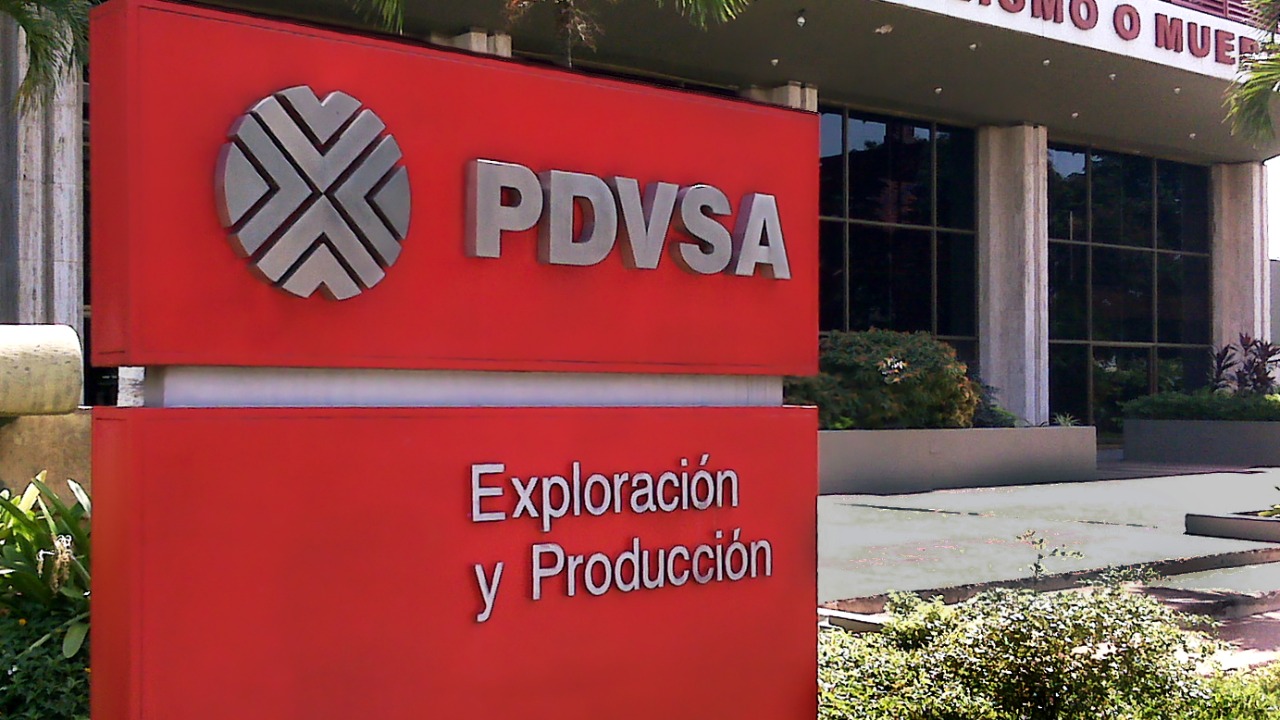
For all the talk of a Venezuelan surge, the starting point is grim. Years of mismanagement and sanctions left the national oil company, Petróleos de Venezuela, or PDVSA, with decaying fields, broken pipelines and refineries that barely function. Energy analyst Carole Nakhle, CEO of Crystol Energy, has described how Venezuela’s oil industry was already hollowed out, a far cry from the days when it pumped several million barrels per day and shaped global prices almost single-handedly. That erosion means any comeback will be slower and more capital intensive than the headline numbers about reserves might suggest.
Reversing that decline is not a matter of tweaking policy at the margins. Rebuilding Venezuela’s upstream and downstream capacity is, as one assessment put it, the work of a decade, requiring hundreds of billions of dollars in investment and a wholesale overhaul of PDVSA’s governance. That scale of effort is precisely why traders are not yet pricing in a flood of Venezuelan barrels, even as they watch every political move in Caracas for signs that the investment climate is stabilizing.
US intervention and the race to control future barrels
The geopolitical reset began in earnest when, early in January, the United States launched a military operation to arrest key figures in Venezuela, accelerating the end of Nicolás Maduro’s rule and opening the door to a new leadership in Caracas. That intervention, framed in Washington as a bid to restore democracy and stabilize a failing state, also had a clear energy dimension: securing a say over how the country’s oil sector is restructured and which companies get access to future production. With President Donald Trump in the White House, the United States has signaled it wants to move quickly from regime change to commercial engagement.
American producers are watching closely but are not rushing in blindly. Analysts have stressed that American oil companies will want a stable regime and credible contracts before committing the billions needed to revive heavy-oil projects and modernize refineries. That caution reflects hard lessons from past nationalizations and contract disputes, and it means the pace of Venezuela’s return will depend as much on legal guarantees and security as on geology.
OPEC+ braces for a slow but disruptive return
Even a gradual Venezuelan recovery is already reshaping strategy inside the Organisation of Petroleum Exporting Countries and its allies. In their latest deliberations, The Organisation of Petroleum Exporting Countries and its partners in OPEC+ opted to pause planned output hikes, citing uncertainty over how quickly new supply from Caracas could hit the market. Officials are effectively buying time, preferring to keep quotas tight rather than misjudge the scale of a potential shock from Latin America.
That caution is especially visible among the core producers. A recent briefing noted that Eight members of the OPEC+ group have agreed to keep supply increases paused in the first quarter, a decision taken just after the removal of Maduro by United States forces. Another account underlined that Opec will not increase oil production in the first quarter, reflecting concern that a United States-backed restructuring of Venezuelan oil could add supply at an awkward moment for prices.
How extra Venezuelan barrels could cap prices
Market analysts are already gaming out the price impact if Caracas manages even a modest production climb. One assessment, citing field data and investment scenarios, argued that Venezuela’s oil supply is likely to rise in the years ahead and depress prices, especially in the medium term. The logic is straightforward: every additional barrel from the Orinoco Belt or revived conventional fields adds to a market already wrestling with demand uncertainty and the long shadow of energy transition policies.
Some forecasters go further, arguing that a full-scale revival would structurally change the price band. One analyst noted that If Venezuela becomes a major oil producer again, that could cement lower prices long term and put pressure on Russia, especially if demand growth slows while supply options expand. In that scenario, OPEC+ would face a persistent tug-of-war between Gulf producers trying to defend a price floor and new Venezuelan volumes that make coordinated cuts harder to sustain.
Russia’s budget in the crosshairs
The country with the most to lose from a Venezuelan comeback is Russia, whose war-time economy leans heavily on hydrocarbon revenues. A detailed assessment of sanctions and fiscal stress warned that Billionaire Oleg Deripaska has voiced concerns that United States control over Venezuelan oil could threaten Russia’s budget if prices fall below the levels Moscow needs to fund its spending. With discounted Russian barrels already competing for buyers in Asia, a fresh source of heavy crude backed by Western capital would intensify the squeeze.
The broader pattern is familiar from Europe’s gas market. One analysis of the impact on Ukraine, Europe and Russia after pipeline flows were rerouted showed how quickly Moscow’s leverage can erode when buyers find alternative suppliers, even if the transition carries a significant economic toll for all sides. A similar diversification on the oil side, with Venezuelan barrels replacing some Russian supply in Atlantic Basin markets, would further weaken the Kremlin’s ability to use energy as a geopolitical tool.
The long road from potential to production
None of this is guaranteed, and the path from political change to sustained output growth is fraught. A detailed market note stressed that By Haik Gugarats and Carlos Camacho Send reporting highlighted how banks still see Venezuela’s oil production outlook as uncertain, with questions over financing, contract stability and the pace of technical rehabilitation. Even with friendlier politics, lenders and equity investors will demand clear assurances that new projects will not be derailed by future expropriations or sanctions snapbacks.
On the ground, the scale of the rebuild is visible in places like the El Palito refinery. Images from Reuters showed the El Palito complex of the Venezuelan state oil company PDVSA in Puerto Cabello, a symbol of how far the system has fallen and how much engineering work lies ahead. Another assessment warned that a regime change in Venezuela would immediately represent one of the largest upside risks to the global oil supply outlook, but also emphasized that the nation’s state oil company must be overhauled before that upside can be realized.
For now, I see a paradox taking shape. On paper, Venezuela’s reserves and the new political opening look like a textbook recipe for lower prices and a strategic setback for Moscow. In practice, the combination of a hollowed-out industry, wary investors and cautious OPEC+ partners means the impact will unfold slowly, in increments that give markets time to adjust. The direction of travel is clear enough, though: if Caracas can convert potential into production, the era when Russia could count on high oil prices to cushion its budget may be drawing to a close.
More From TheDailyOverview

Grant Mercer covers market dynamics, business trends, and the economic forces driving growth across industries. His analysis connects macro movements with real-world implications for investors, entrepreneurs, and professionals. Through his work at The Daily Overview, Grant helps readers understand how markets function and where opportunities may emerge.

