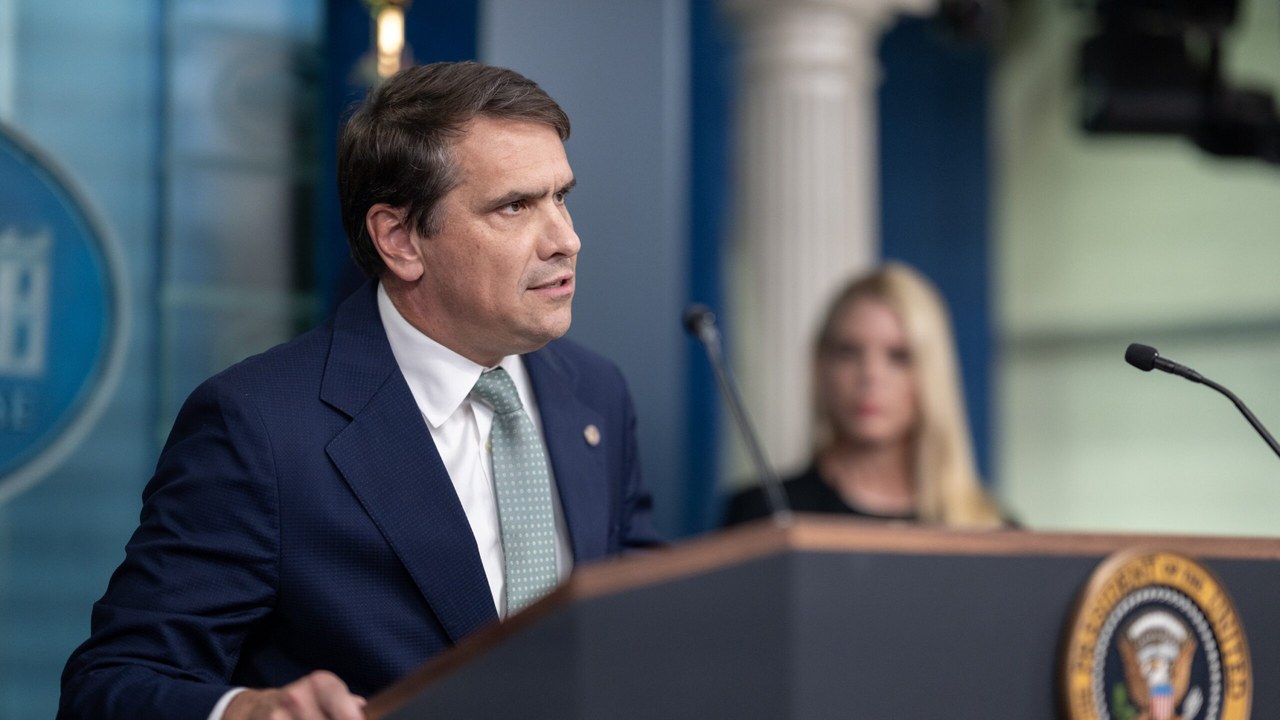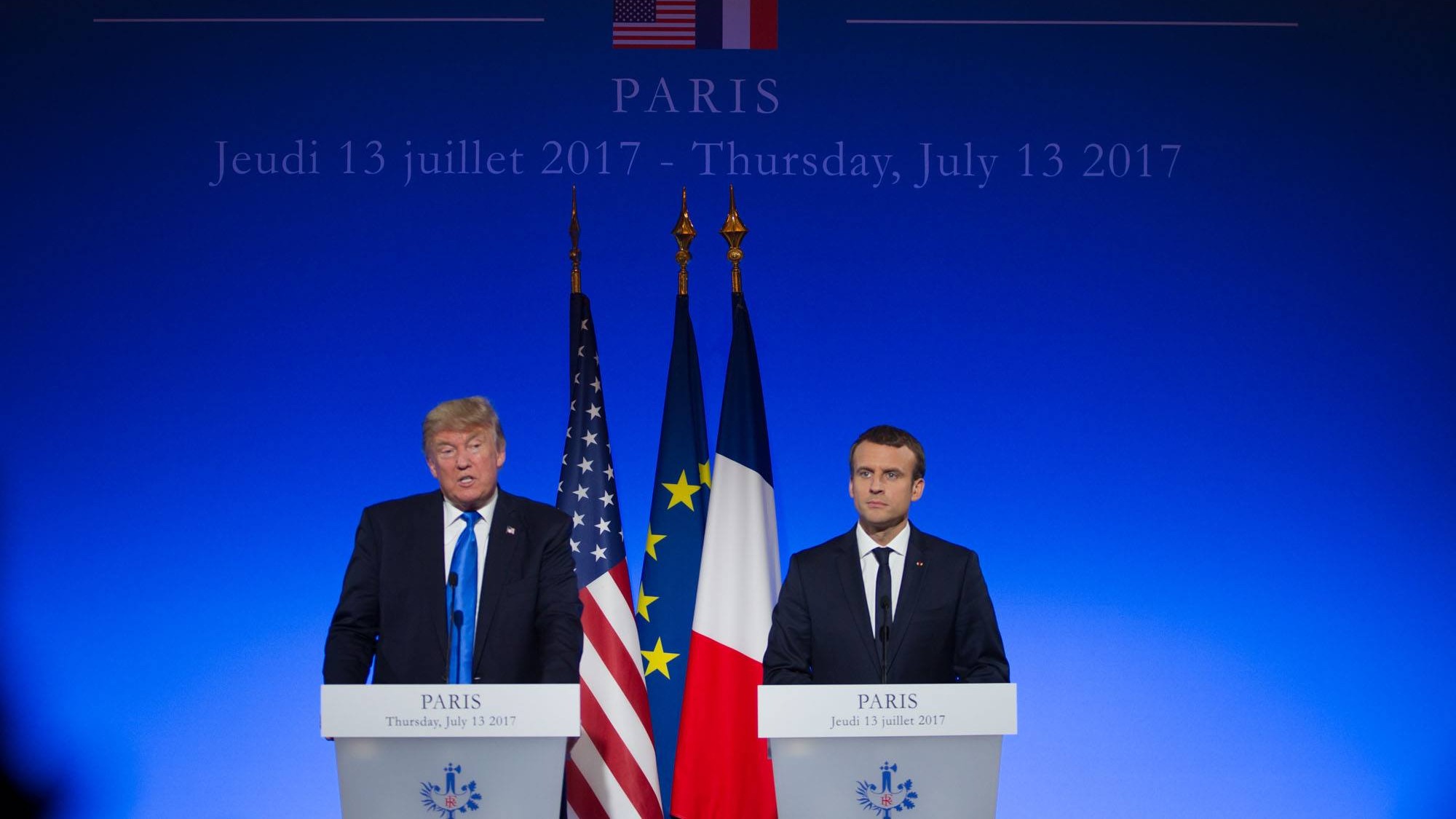
President Donald Trump is trying to turn the World Economic Forum in Davos into the launchpad for his signature foreign policy project, a new Gaza-focused “Board of Peace,” but a public refusal from Emmanuel Macron has exposed deep resistance among key allies. The clash between Trump’s push for a high-profile signing ceremony and the French president’s defiance is now testing not only the fate of the initiative but also the balance of power inside the Western alliance.
At stake is whether Trump can convert his personal diplomacy and tariff threats into a new global body that some see as a rival to the United Nations, or whether European leaders will succeed in boxing in a project they view as overreaching. The Davos standoff has turned a technical governance proposal into a litmus test of how far Washington can lean on partners like France before they push back.
Trump’s Davos gamble: a peace deal and a stage
Trump has arrived in Davos determined to secure signatures for his Gaza “Board of Peace” and to do it in front of the global elite that gathers each year in the Swiss Alps. He has been maneuvering for a made-for-television ceremony at the World Economic Forum in Davos, Switzerland, turning what might have been a quiet diplomatic rollout into a central spectacle of the meeting. In his telling, the Board of Peace would be the vehicle that finally “ends the Gaza conflict,” a sweeping promise that has raised expectations and skepticism in equal measure.
Behind the scenes, Trump’s team has been working to line up leaders willing to stand beside him when the Board’s charter is unveiled. Reporting on his plans describes a formal signing event on Thursday to “formalize” President Trump’s initiative, with invitations sent to a mix of Western and regional partners. Yet even before the pens are uncapped, the guest list is shrinking, and the optics of an empty stage now threaten to overshadow the substance of the proposal.
Inside the ‘Board of Peace’ vision
Trump’s Board of Peace is pitched as a new governance structure for Gaza, initially framed as a mechanism to coordinate reconstruction, security and political arrangements after years of conflict. Early descriptions cast it as a focused body, but European and Middle Eastern officials now see a broader ambition, with some warning that it could evolve into an institution that rivals or sidelines the United Nations. That perception has become one of the main reasons traditional allies are hesitating, wary of endorsing a structure they do not fully control.
European capitals are also struggling with the practical questions the Board raises. Several invited leaders are still trying to work out “how it’ll work,” including who would appoint members, how decisions would be enforced and whether it would sit alongside or above existing institutions. One account describes Told aides fielding basic questions from skeptical delegations even as the White House presses ahead with the Davos timetable. The gap between Trump’s sweeping rhetoric and the unresolved details has left the Board looking less like a finished peace plan and more like a work in progress.
Macron’s snub and the French red lines
Emmanuel Macron has emerged as the most visible opponent of Trump’s timetable, making clear he will not be part of a Davos signing that he believes goes too far. A person close to the French leader has said Macron “doesn’t plan to accept,” arguing that the charter extends beyond Gaza into a broader reordering of global governance that Paris has not endorsed. In private messages that later surfaced, Macron told Trump he did “not understand” what Washington was doing on Gaza, underscoring how far apart the two presidents now are on both process and substance.
Publicly, the French president has framed his resistance as a defense of multilateralism and European autonomy. At Davos, French President Emmanuel warned that the European Union should not bend to “the law of the strongest,” calling it “crazy” to accept a world where the biggest powers dictate terms. In another appearance he said “we do prefer respect to bullies,” a line that landed as a direct rebuke to Trump’s tactics and that echoed through European commentary on the Board of Peace.
Tariffs as leverage: the 200% threat
In response to Macron’s refusal, Trump has reached for one of his favorite tools, the tariff threat, to try to force France back to the table. He has floated imposing 200% duties on French wine and champagne, explicitly tying the move to what he sees as a snub of his Board of Peace. Another account quotes him warning that he will add a 200 per cent tariff if France’s President Macron refuses to join, a direct attempt to convert economic pain into diplomatic compliance.
Trump has not limited his threats to a single interview or venue. One report notes that On Tuesday he again threatened 200% tariffs on French wine and champagne after France’s President Emmanuel Macron resisted the Board. Chinese coverage has highlighted similar comments about a 200% champagne tariff, underscoring how Trump’s economic threats are now part of the global narrative around the peace board.
Macron’s counteroffensive: ‘We don’t give in to bullies’
Macron has not taken the tariff threats quietly, instead using Davos to mount a counteroffensive that casts France as standing up to pressure. In one exchange that a source close to him described as authentic, Macron told Trump he did not understand the U.S. approach on Gaza and made clear he would not be bullied into joining the Board. He later told reporters that “we don’t give in to bullies,” a phrase that has quickly become shorthand for the French position on both tariffs and the peace initiative.
French officials have also tried to shift the conversation from Trump’s threats to the broader principles at stake. French President Emmanuel has urged President Donald Trump to suspend tariffs on European countries, arguing that weaponizing trade undermines the very cooperation needed to stabilize Gaza. In parallel, Macron’s allies have circulated messages showing he had offered to host meetings with Ukrainians, the Danish and other partners, suggesting that France is not rejecting diplomacy on Gaza, only the specific vehicle Trump is trying to impose.
European divisions and G7 resistance
While Macron has taken the most confrontational line, Europe is far from united behind a single strategy. Some governments see value in engaging with the Board of Peace to shape it from within, while others fear that even a symbolic signature would legitimize a body they cannot control. Reporting from Davos describes Europeans divided on Trump’s proposal, with some Eastern and smaller states more open to U.S. leadership and larger Western capitals more skeptical.
Among the Group of Seven, however, resistance appears stronger. One detailed account notes that Fellow Group of leaders are declining invitations to join a body that could rival the United Nations, leaving Trump increasingly isolated among his traditional peers. Another analysis of the Board’s rollout says Takeaways from early talks include calls from Europe and Israel to rewrite the Board’s constitution and remit before any signatures are given, a sign that even potential partners want more control over the project’s direction.
Trump’s fury and the Greenland subtext
The Davos confrontation is not happening in a vacuum, it is layered on top of years of personal and policy friction between Trump and Macron. In private and public comments, Trump has fumed at the French leader over issues ranging from Greenland to Gaza, with one report noting that His remarks have left the transatlantic alliance in perhaps its most fragile state since World War II. Trump’s admiration for leaders like Vladimir Putin has caused additional alarm in European capitals, feeding a sense that the Board of Peace is part of a broader attempt to reorder alliances on his terms.
Earlier this year, Trump had even linked Britain’s decisions on other international agreements to his current obsession with Gaza, with one account noting that Trump had endorsed a British deal as recently as May before turning against it when it no longer fit his narrative. That pattern, of embracing and then discarding partners and agreements, is part of why Macron and others are reluctant to sign onto a Board whose long term trajectory they do not trust.
Davos as a pressure cooker
The setting of Davos has amplified every twist in the Board of Peace saga. The annual gathering is already dominated by talk of Trump’s tariffs and the Greenland episode, with one dispatch noting that the threat of new duties on European goods looms over Davos. Trump’s Board of Peace is described as a sure talking point at the meeting, initially seen as focused on ending the Gaza conflict but now viewed as a test of how far Washington will go in reshaping global institutions.
On the ground, Visitors to the World Economic Forum have watched as the Board drama has spilled into public speeches, private dinners and even social media posts. Anti WEF protests outside the secure zone have seized on the Board as evidence of elite overreach, while CEOs inside warn that emotional politics and tariff brinkmanship are undermining the stability they need to invest. The result is a pressure cooker in which every gesture, from a handshake to an empty chair at Trump’s ceremony, will be read as a geopolitical signal.
What failure in Davos would mean for Gaza and the West
Whether Trump secures a handful of signatures or faces a half empty stage, the Davos episode will shape perceptions of U.S. leadership on Gaza. If key allies like France stay out, the Board of Peace risks looking like a unilateral project rather than a shared framework, limiting its ability to coordinate reconstruction or security on the ground. Analysts already note that Trump’s Favorite Boast Expensively in His Face when allies refuse to play along, and the Board could become another example if Davos ends without a credible coalition.
At the same time, the tariff threats have opened a new front in the transatlantic relationship that will outlast any single ceremony. European leaders are already warning that they will not accept a world run by “bullies,” while Trump insists that using trade as leverage is the only way to get results. As the IMF chief bluntly told Europe to “get your act together,” Trump was simultaneously threatening new duties on French exports, a juxtaposition that captures the new normal of Western diplomacy. For Gaza, that means any hope of a durable peace framework now depends not only on local actors but also on whether Washington and Europe can find a way to cooperate that does not rely on threats and public humiliation.
More From TheDailyOverview

Grant Mercer covers market dynamics, business trends, and the economic forces driving growth across industries. His analysis connects macro movements with real-world implications for investors, entrepreneurs, and professionals. Through his work at The Daily Overview, Grant helps readers understand how markets function and where opportunities may emerge.