President Donald Trump is promising drivers that relief at the pump is just around the corner, casting cheaper gasoline as proof that his energy agenda is working. The political stakes are obvious: if prices fall fast enough, he can argue that his economic strategy is delivering in real time for commuters, truckers and families planning holiday road trips.
Yet the reality on the ground is more complicated than a simple pledge that lower prices are “on the way.” Gasoline costs are shaped by global oil markets, refinery capacity and demand, and the latest data shows a mixed picture that both supports and challenges Trump’s confident predictions.
Trump’s bold promises meet a stubborn price plateau
Trump has been telling voters that pump prices are headed sharply lower, framing it as a near-term certainty rather than a long-range aspiration. In a recent appearance, he went further, predicting how low gas could go “pretty soon” and tying that optimism to what he described as a resurgence in domestic production, especially in shale regions that have become shorthand for American oil power. His message is clear: if drivers just hang on a little longer, they will be rewarded with significantly cheaper fill-ups.
The numbers, however, show a market that is easing only gradually. According to one recent snapshot, the AAA national average for regular gas was described as “currently” sitting well below the record highs that once saw prices soar as high as $5.016 per gallon, but still far from the sub‑$2 fantasy many drivers remember from earlier downturns, a reality underscored in coverage of Trump’s prediction of how low prices will go pretty soon. For drivers in a 2018 Honda Civic or a 2022 Ford F‑150, that means a tank that is cheaper than at the peak of the price spike, but still expensive enough to squeeze monthly budgets.
White House messaging versus independent data
Inside the administration, officials have been eager to claim that the president’s policies are already delivering a meaningful break on fuel costs. One recent White House article trumpeted that gas prices had hit a four‑year low under Trump, crediting “Trump’s relentless commitment to American energy production” and pointing to a new low mark in Florida as evidence that the strategy is working nationwide. The narrative is that a surge in drilling, pipeline approvals and refinery throughput is translating directly into savings for drivers.
That celebratory tone was reinforced in a separate piece that framed the “Trump Energy Agenda Driving Gas Prices Towards Four-Year Lows,” citing forecasts that prices would keep drifting down through the fall. The article highlighted how the “Trump Energy Agenda Driving Gas Prices Towards Four, Year Lows” was aligned with outside expectations that Gas would get cheaper as seasonal demand eased, presenting the administration’s approach as both pro‑consumer and pro‑production. Together, these messages are designed to cement the idea that Trump and his team have engineered a uniquely favorable environment for motorists.
Independent data, though, paints a more nuanced picture. A separate analysis noted that Trump had claimed gas prices were at a 20‑year low, a sweeping assertion captured in the phrase “Trump Falsely Says Gas Prices Have Reached, Year Low, Here, The Real Data,” and then contrasted that boast with actual price records that show no such historic bottom. The same reporting, by Antonio Pequeño IV, known in the piece as Peque, underscored that while prices have fallen from their peak, they have not matched the lows seen in earlier downturns, a gap that undercuts the president’s most dramatic talking points and is laid out in detail in the real data.
What the pump actually looks like for drivers
For all the political spin, what matters to most people is what they see on the sign outside their local station. On that front, the trend has been choppy rather than dramatic. One recent report noted that the national average for regular gas stood at $3.055 on a Tuesday, almost exactly the same as $3.056 a year earlier under former President Joe Biden, a comparison that undercuts the idea of a uniquely Trump‑driven discount and is spelled out in detail in coverage of the $3.055 average. For a family in a 2020 Toyota RAV4, that means the cost of driving to work or school has barely budged year over year, despite the White House’s confident rhetoric.
Short‑term movements have also been volatile. Ahead of Thanksgiving, one report noted that Monday marked the eighth consecutive day that the national average price for gasoline was up year over year, even as analysts expected holiday prices to be slightly lower than the previous year. That tension between daily increases and seasonal relief was captured in a piece that cited CNN and GasBuddy, underscoring how drivers might feel whiplash as they watch prices tick up in the days before a long trip, even if the broader trend is slightly downward. For anyone planning a 500‑mile round‑trip in a 2019 Subaru Outback, that kind of day‑to‑day fluctuation can be the difference between a manageable expense and a painful surprise.
Can Trump really will lower prices into existence?
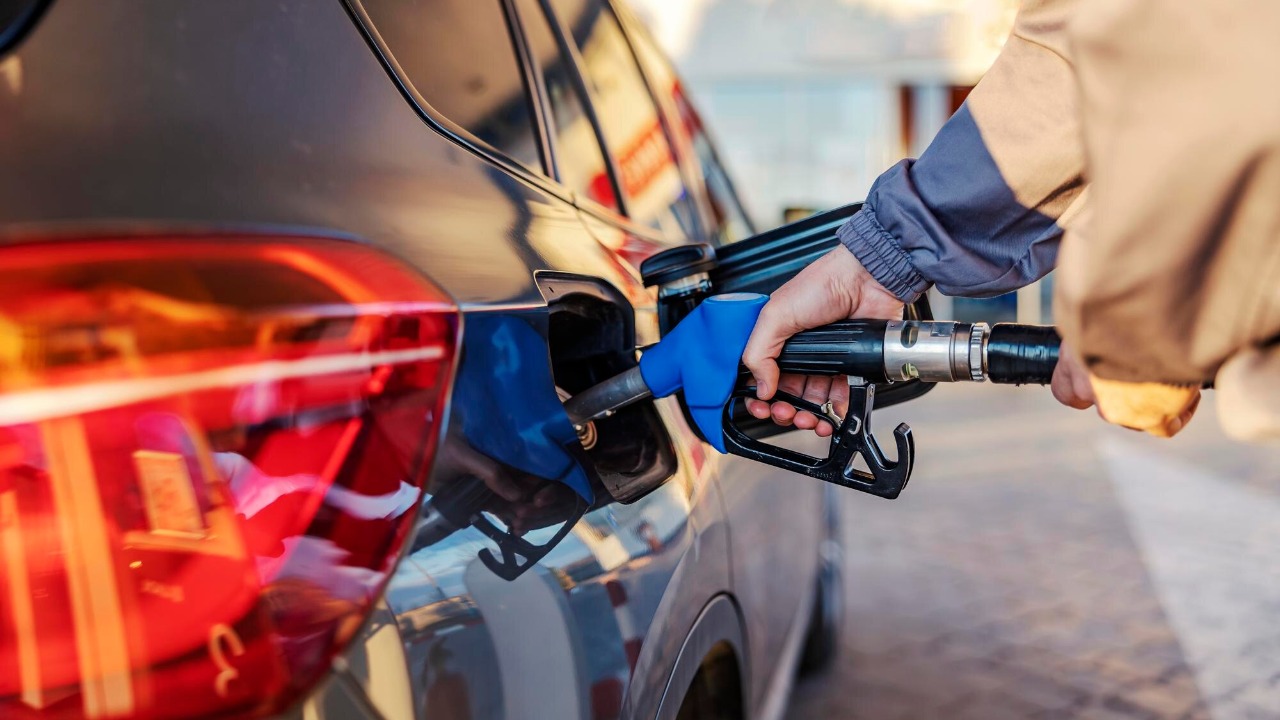
Trump has not just promised cheaper gas, he has tried to speak it into being. He has repeatedly insisted that prices will fall quickly, presenting his confidence as a kind of economic inevitability. Analysts, however, have warned that presidential rhetoric alone cannot override the fundamentals of supply and demand. One detailed examination argued that “Trump is trying to will lower prices into existence” and concluded bluntly that “It won’t work,” pointing to the limits of political pressure on a global commodity market and illustrating the point with an image of a customer pumping gas into their vehicle in Miam on October 24, a scene that captured the everyday reality behind the debate and was featured in coverage of lower prices.
There is also a broader inflation story that intersects with the gas debate. Trump has promised to tackle rising prices across the economy, famously declaring, “When I win, I will immediately bring prices down, starting on Day One.” A detailed fact‑check looked at whether he had kept that promise on groceries and other essentials, noting that categories like Groceries have remained stubbornly expensive even as some energy costs eased, and examining how gasoline fits into that picture of mixed progress. That analysis, which quoted his “When, Day One, Trump” pledge, suggested that while some pump relief has materialized, it has not been the sweeping, across‑the‑board drop that his campaign rhetoric implied, a gap explored in depth in a piece that asked whether he had truly tackled rising prices on Gasoline.
The global forces that could push prices back up
Even if Trump’s policies help nudge prices lower in the short term, global energy dynamics could easily reverse that trend. One key factor is the rapid growth of liquefied natural gas exports, which are reshaping demand patterns and infrastructure investment. A detailed report on Trump’s push for international gas deals noted that the U.S. Energy Information Administration expects LNG to be the biggest driver of increased demand that will push prices higher in 2025 and 2026, a warning that sits uncomfortably alongside the president’s promises of lasting relief and is laid out in an analysis that begins, “But the, Energy Information Administration, says” LNG will be a central force in future price moves, a point made explicit in coverage of LNG.
Domestic supply trends also matter. The White House has highlighted the “massive comeback” of regions like the Permian Basin as proof that Trump’s policies are boosting output, and there is evidence that increased production can help cap prices by keeping more crude flowing to refineries. Yet even robust drilling cannot fully insulate U.S. drivers from geopolitical shocks, OPEC+ decisions or refinery outages. That is why analysts and motorists alike still watch the live national average on tools like the AAA tracker, which updates daily and reflects the complex interplay of global and local forces. For a rideshare driver in a 2021 Toyota Camry or a delivery worker in a 2017 Ram ProMaster, those numbers are more than an abstraction, they are a direct measure of how far each paycheck will stretch.
Within the administration, there is a clear effort to frame any downward movement as proof that the “Trump Energy Agenda Driving Gas Prices Towards Four, Year Lows” is working exactly as intended. One official article even tied the trend to specific milestones, such as a new low mark in Florida, and credited “Trump’s relentless commitment to American” energy for the shift, a narrative laid out in detail in the White House piece on how American production is reshaping the market. Yet as long as the national average hovers near last year’s level and analysts warn of future upward pressure, Trump’s confident promise that cheaper gas is on the way will remain more of a political bet than a guaranteed outcome.
More From TheDailyOverview
- Tennessee loses $2.6B megafactory and faces major layoffs
- Retired But Want To Work? Try These 18 Jobs for Seniors That Pay Weekly
- What to do with your pennies after the U.S. stops minting them
- Home Depot CEO warns of a troubling customer trend in stores

Grant Mercer covers market dynamics, business trends, and the economic forces driving growth across industries. His analysis connects macro movements with real-world implications for investors, entrepreneurs, and professionals. Through his work at The Daily Overview, Grant helps readers understand how markets function and where opportunities may emerge.

