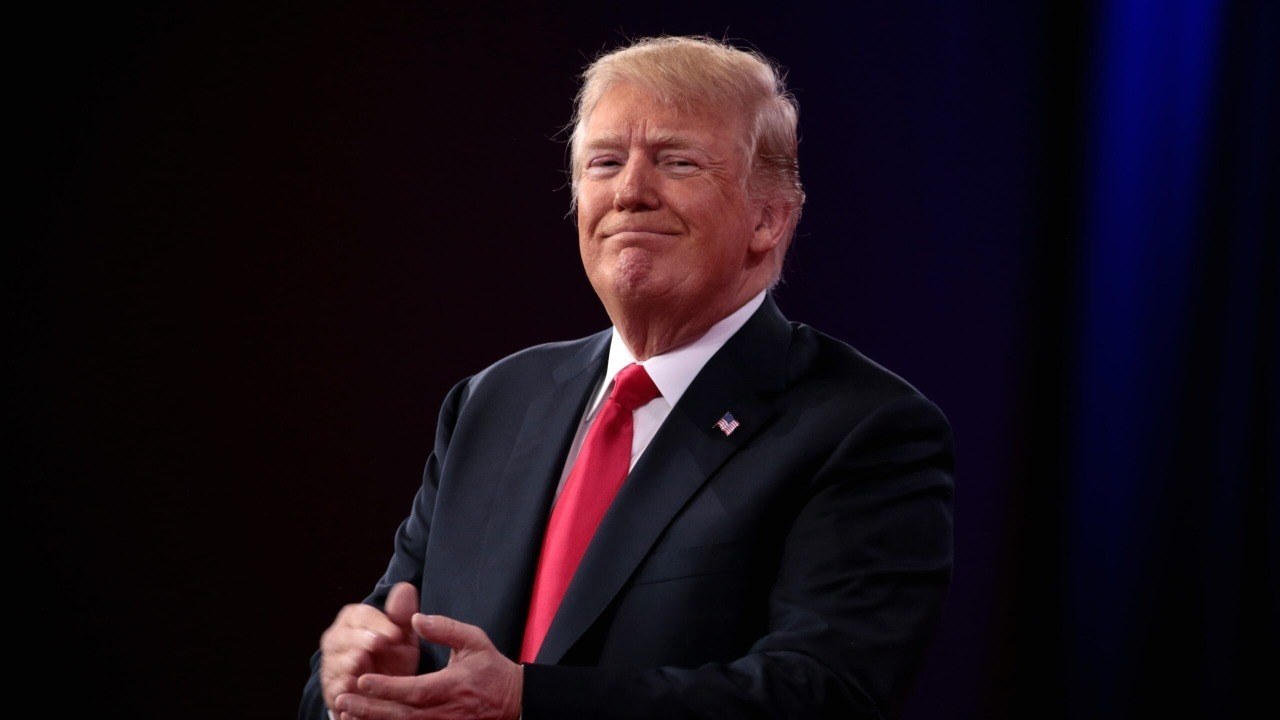
President Donald Trump used a visit to NASA’s Johnson Space Center in Houston on Friday to sign an executive order establishing the nation’s first federal service academy dedicated entirely to space. Standing at the same center where the Artemis II crew was decorated the same afternoon, the president directed the government to begin building a school that would train astronauts, engineers, military officers and civilian operators for a booming national-security and commercial space enterprise. It is the boldest institutional stamp yet on an agenda the administration has branded a new “Golden Age” of American spaceflight, and it plants that agenda inside a brand-new academy with the president’s fingerprints all over it.
The move fuses two of the administration’s favorite themes, military strength and national ambition, into a single institution modeled on West Point, Annapolis and the Air Force Academy. For a White House that has spent two years accelerating the Space Force and courting private rocket companies, an academy is the logical capstone: a pipeline built to graduate the people who will crew the missions the president keeps promising.
A New Service Academy Built for the Space Force Era
The order, titled “Establishing the United States Space Academy,” directs the federal government to stand up the country’s first academy focused on space, according to the NASA release announcing the signing. The document frames space as “a critical domain for American national security, economic growth, scientific discovery, and technological innovation,” and calls for a school that pairs hard technical instruction with leadership training, discipline and a commitment to public service. In plain terms, it is meant to do for the Space Force and the commercial space sector what the established academies have long done for the Army, Navy and Air Force: manufacture a steady supply of trained, mission-ready talent.
That gap is real. The Space Force, created during Trump’s first term over the objections and mockery of many Democrats, has grown quickly, and the private launch industry has grown faster. Until now, no dedicated federal academy existed to feed either one. The president argued that the country can no longer improvise its way through that shortage, and the executive order itself orders a formal process to fix it rather than leaving the pipeline to chance.
Isaacman’s Commission and a 120-Day Clock
Rather than conjure a campus overnight, the order creates a Presidential Commission on the United States Space Academy and hands it a deadline. NASA Administrator Jared Isaacman will chair the commission, with NASA Deputy Administrator Matt Anderson serving as executive director. The vice chairs are two senior White House officials: Michael Kratsios, the assistant to the president for science and technology, and Kevin Hassett, the assistant to the president for economic policy, alongside other representatives drawn from across the administration.
The commission has 120 days from the signing to deliver a report to the president. That report is supposed to recommend a governance framework, the service obligations graduates would owe the country, the physical location of the academy, any legislation Congress would need to pass, and more. In other words, the executive order does not by itself open a school; it launches the machinery that is supposed to design one and tell the president what it will take to make it real. Isaacman cast the assignment in sweeping terms, predicting that “so much of the future talent” behind the administration’s space goals “will be educated at the United States Space Academy.”
From a Moon Base to the “Orbital Economy”
The rationale the president offered was pure expansion. “Given the rapid growth of the U.S. Space Force and commercial space industry, and the expansion of our ambitions to the Moon and far beyond the Moon, it’s clear we will need to educate and train an entire generation of skilled service members, engineers, and civil operators,” Trump said, describing the academy as the answer to that need. It is the language of a leader who intends to be measured against the size of what he builds, not the caution of what he avoids.
Isaacman went further, tying the school to a concrete list of missions the administration says are coming. He pointed to returning NASA astronauts to the lunar surface, building a permanent Moon Base, developing nuclear power for spaceflight, igniting what he called “the orbital economy,” and launching new science missions, and he argued the academy would produce the engineers, scientists, technicians, operators and astronauts to carry them out. Critics will call that vision grandiose, and the price tag is nowhere in the order. But the ambition is the point, and it is exactly the kind of national project a president uses an academy to institutionalize so that it outlasts a single term.
The Latest Move in a Two-Year Space Push
The academy did not appear out of nowhere. It is the newest entry in a run of executive actions through which the administration has tried to seize the space initiative. In December 2025, the president signed an order on ensuring American space superiority, casting orbit as a contested military domain the United States must dominate. Just over a week before the academy signing, on Aug. 20, he issued a national security memorandum on space transportation policy aimed at speeding up launch and clearing regulatory friction for the commercial sector.
Friday’s event stacked symbolism on top of policy. At the same Houston ceremony, the president presented the Artemis II crew with the Congressional Space Medal of Honor, an award NASA had announced the astronauts would receive. Pairing a medal ceremony for a live Moon-mission crew with the creation of a school to train the next one was a deliberate piece of stagecraft, and an effective one: it let the president honor the program’s present and claim its future in a single afternoon.
What Still Has to Be Decided
For all the fanfare, the hardest questions are the ones the order punts to the commission. No location has been chosen; the academy could rise near Johnson Space Center, at an existing military installation, or somewhere entirely new, and communities across the country will lobby hard to land it. The service commitments graduates would owe, the balance between military and civilian training, the admissions pipeline, and the annual cost to taxpayers all remain open. Some pieces may require an act of Congress, which means the school’s fate will eventually run through a Capitol Hill that does not move on the president’s timeline.
None of that dampens what the administration accomplished in Houston. With one signature, the president converted a slogan about a “Golden Age” in space into a federal institution-in-waiting, complete with a chairman, a commission and a hard deadline. Whether the United States Space Academy graduates its first class in a few years or gets bogged down in the fights over money and location that trail every new federal project, the order guarantees that the effort now has a name, a mandate and a clock. For a president who measures himself by monuments, that is the whole idea.
This article was produced with the assistance of AI tools and reviewed by The Daily Overview editorial team.

Silas Redmond writes about the structure of modern banking, financial regulations, and the rules that govern money movement. His work examines how institutions, policies, and compliance frameworks affect individuals and businesses alike. At The Daily Overview, Silas aims to help readers better understand the systems operating behind everyday financial decisions. He also covers scams, fraud cases and the audits that expose them.


