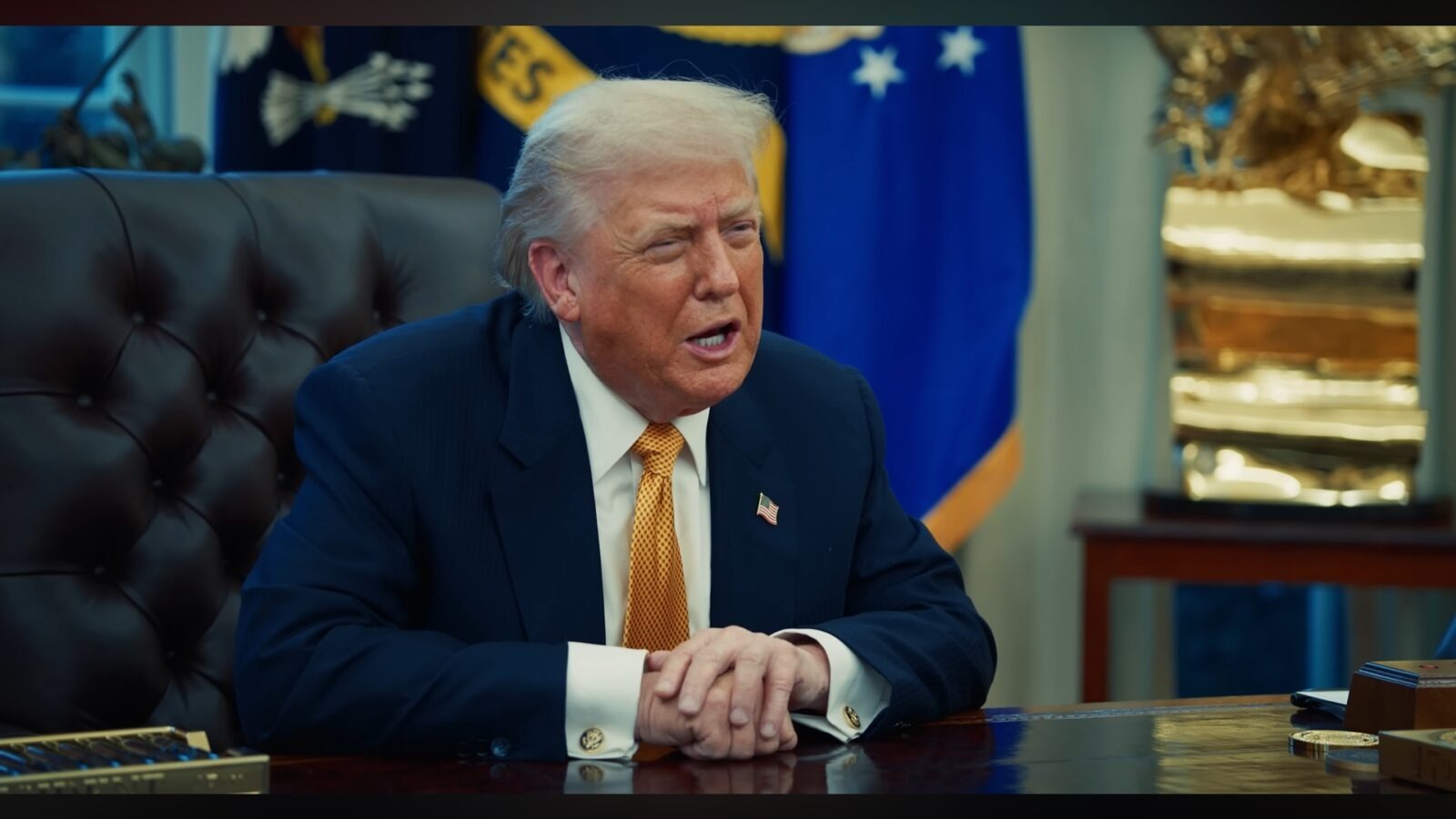
President Donald Trump has signed a new order that dramatically expands how much low-tariff Argentine beef can enter the United States, effectively quadrupling the quota for cheaper imports. The move is framed by the White House as a way to keep burgers and other beef products affordable at a time of tight domestic supply, but it is already intensifying a long-running clash between consumer price politics and the survival of U.S. cattle producers.
The decision lands just as the U.S. cattle herd has fallen to a 75-year low, raising the stakes for ranchers who argue that a flood of foreign beef will undercut them precisely when they should be in the strongest position to recover. I see a policy that promises short-term relief at the meat counter while deepening structural tensions in the rural economy and in America’s trade relationship with Argentina.
What Trump’s new order actually does
The latest directive from President Donald Trump builds on an existing tariff-rate quota for imported beef, but it sharply increases the volume of product that can come in at the lower duty. According to industry reporting, the proclamation authorizes an 80,000 metric ton increase in the in-quota allocation for certain beef products, a jump that amounts to a fourfold expansion over the previous year’s level for this specific channel of imports, and it is set to run through the end of the year as part of the U.S. beef TRQ adjustment described by that increase. The White House order specifies that, for calendar year 2026, the aggregate in-quota quantity for certain products described in Additional U.S. Note 3 of Chapter 2 of the Harmonized Tariff Schedule will be expanded, with the program scheduled to close on December 31, 2026, as laid out in the formal presidential action.
In practical terms, the administration is carving out a larger slice of the low-tariff beef quota and assigning it to Argentina, which has been lobbying for greater access to the U.S. market. Argentine officials have described the new agreement as granting an unprecedented volume of beef exports to the United States by the end of the year, a characterization that underscores how significant this shift is for their producers and is reflected in the statement from Argentina’s Foreign Ministry. From the U.S. side, the White House is presenting the move as a targeted, temporary adjustment rather than a permanent rewrite of beef trade rules, but the scale of the quota change makes it a major policy swing in its own right.
The White House affordability argument
Trump officials are selling the expansion as a consumer-first measure, insisting that more imported beef will help keep grocery bills in check. In a fact sheet, The White House framed the proclamation under the banner of SUPPLEMENTING OUR BEEF SUPPLY, stressing that President Donald J. Trump is acting to ensure affordable beef for the American consumer at a time when domestic supplies are tight and some cuts remain expensive, a message that runs through the administration’s own fact sheet. The official line is that by increasing access to lower cost imported trimmings, processors can blend cheaper inputs into ground beef and other mass-market products, which in theory should relieve pressure on retail prices.
The administration is also pointing to broader inflation trends to justify the move, arguing that food costs have been a persistent political and economic headache and that beef is a particularly visible symbol of that strain. In the same set of materials, officials note that some beef prices have come down by 8.6% since 2020, but they argue that more needs to be done to lock in those gains and prevent another spike, a rationale that underpins the affordability push. I read this as a classic example of a White House leaning on trade levers to address domestic price anxiety, even as it risks blowback from producers who see themselves as collateral damage.
Ranchers warn of pain at a 75-year herd low
On the other side of the ledger, U.S. cattle producers are sounding alarms about what this surge of Argentine beef could mean for their livelihoods. The National Cattlemen’s Beef Association has argued that the Argentinian beef import plan harms U.S. cattle producers, warning that expanding low-tariff access for foreign product will depress prices for domestic cattle and beef at a time when ranchers are already under strain, a concern laid out in the group’s public statement. Their frustration is sharpened by the timing: the U.S. Department of Agriculture has confirmed that the U.S. cattle herd is now at a 75-year low, a historic tightening of supply that, in a more protected market, might have translated into stronger returns for producers, as highlighted in the USDA-based reporting.
Producer groups also dispute the core economic premise that more imports will automatically translate into cheaper steaks and burgers for families. One major cattle organization said that While it fundamentally disagrees with the premise that increased imports can lower beef prices, it is at least encouraged to see the Trum administration acknowledge the close relationship between beef prices and the size of the U.S. cattle herd, a nuanced reaction captured in industry coverage. I see that as a polite way of saying ranchers think the White House is misdiagnosing the problem: they argue that concentration in meatpacking and retail, not a lack of foreign supply, is what keeps consumer prices high even when cattle prices are weak.
Argentina’s win and the trade backdrop
For Argentina, the expanded quota is a diplomatic and commercial victory that has been years in the making. The country’s Foreign Ministry has hailed the agreement as granting an unprecedented opportunity for Argentine beef to reach U.S. consumers by the end of the year, a sign that Buenos Aires sees this as a breakthrough in its long quest to regain and expand access to the American market, as reflected in the statement from Argentina’s diplomats. The Trump administration, for its part, has been willing to use agricultural market openings as a bargaining chip in broader trade relationships, including efforts to ease tensions over issues like soybean sales to China, a pattern that earlier reporting on how President Donald Trump’s administration moved to quadruple Argentine beef imports has tied to wider trade strategy involving soybean sales.
The new order also fits into a timeline of incremental steps that have steadily expanded Argentina’s footprint in the U.S. beef market. Earlier coverage noted that President Donald Trump’s administration planned to allow up to 99,000 metric tons of Argentinian beef into the United States at a reduced tariff rate, a ceiling that set the stage for the current jump in quota and was flagged by ranchers in Wisconsin who questioned whether such imports would really lower prices, as described in reporting on Argentinian access. From Argentina’s perspective, the latest proclamation is the payoff from that gradual opening, locking in a larger, more predictable share of the U.S. low-tariff beef quota at a moment when its own producers are eager for hard currency export markets.
Political optics and what comes next
Domestically, the optics of the move are complicated for Trump, who has long styled himself as a champion of rural America while also courting consumers frustrated with high grocery bills. The White House has emphasized that President Donald Trump signed the order on a Friday to expand the amount of Argentine beef that can be imported into the United States, a timing detail that underscores how the announcement was staged as a high-profile economic gesture, as noted in local coverage of Friday’s signing. National political reporting has similarly framed it as Trump signing an executive order on a Friday to quadruple beef imports from Argentina, with the additional quota directed entirely to that country, a detail that highlights how concentrated the benefit is and that has been emphasized in analysis of the executive order.
More From The Daily Overview
*This article was researched with the help of AI, with human editors creating the final content.

Grant Mercer covers market dynamics, business trends, and the economic forces driving growth across industries. His analysis connects macro movements with real-world implications for investors, entrepreneurs, and professionals. Through his work at The Daily Overview, Grant helps readers understand how markets function and where opportunities may emerge.


