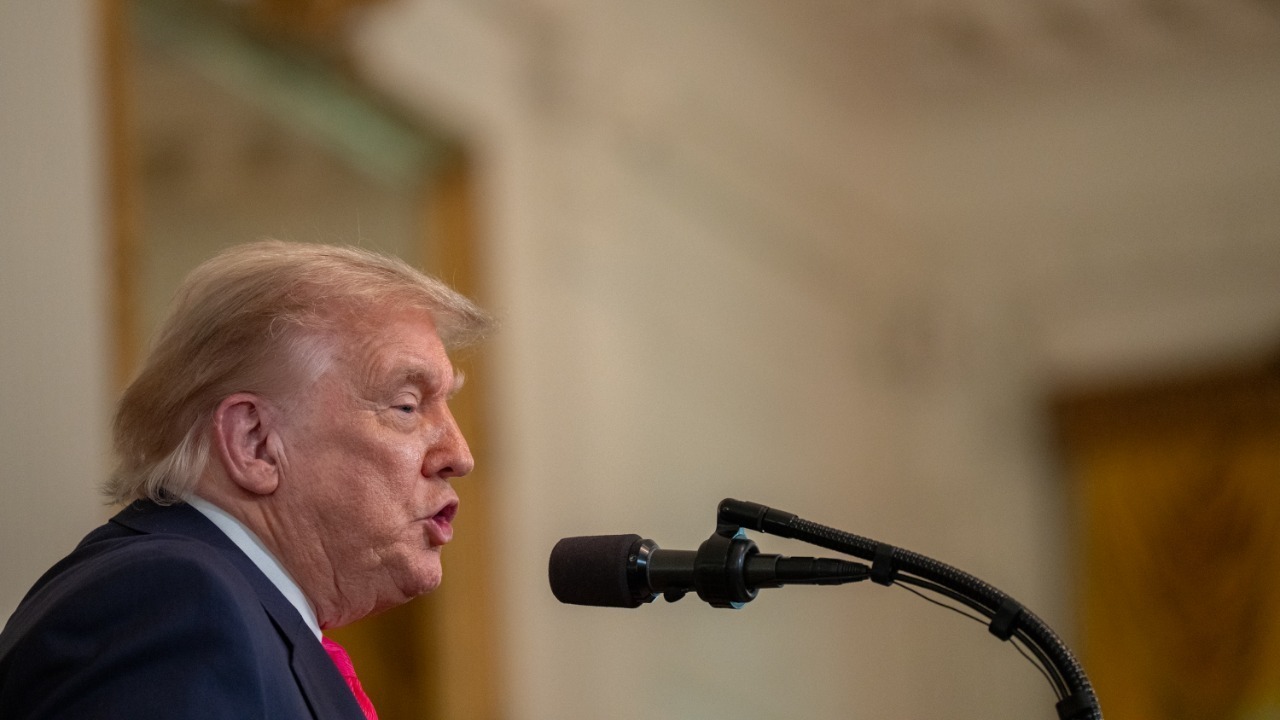
President Donald Trump has opened a new front in his long running war with the federal bureaucracy, filing a $10 billion lawsuit that accuses the Internal Revenue Service and the Treasury Department of presiding over one of the most damaging breaches of taxpayer confidentiality in modern history. The complaint, brought alongside his two eldest sons and the Trump Organization, turns years of reporting on his private finances into a legal and political showdown with the very agencies his administration oversees.
At stake is far more than a single family’s privacy. The case tests how far a sitting president can go in personally suing federal agencies he controls, how secure Americans can feel about their own tax records, and whether the government did enough to prevent a contractor from walking out with reams of sensitive data.
The $10 billion claim and who is suing whom
In the new filing, President Donald Trump is not just a political figure railing against the “deep state,” he is a named plaintiff demanding at least $10 billion in damages from the very government he leads. According to multiple accounts, the suit targets the IRS and the Treasury Department for what Trump’s lawyers describe as a catastrophic failure to safeguard his tax returns and those of his businesses, arguing that the unauthorized disclosures inflicted reputational and financial harm on the president, his brand and his family enterprise. One detailed summary notes that President Donald Trump is seeking at least $10 billion over the alleged violations of federal confidentiality rules.
The plaintiffs are not limited to the president himself. Reports describe how President Donald Trump, Donald Trump Jr., Eric Trump and the Trump Organization have jointly sued the Internal Revenue Service and the Treasury Depart, effectively turning the family business and its top executives into co litigants against the federal tax authorities. One account underscores that President Donald Trump, his two eldest sons and his family business filed the complaint against the Internal Revenue Service Treasury Depart, while another notes that Trump and sons demand a $10 billion payout in a new lawsuit against the IRS that also names the Treasury Department as a defendant. That framing, echoed in legal focused coverage that describes how Donald Trump and his family filed a $10 billion lawsuit against the IRS and Treasury Department, underscores how personal this fight has become for the president and his inner circle.
What the leaks revealed and why they matter
The lawsuit is the legal sequel to a series of bombshell stories that laid bare Trump’s finances in unprecedented detail. Earlier reporting on the leaked returns showed that Trump paid no income taxes for 10 out of 15 years before his first election, a revelation that cut against his image as a billionaire who boasted of writing large checks to the government and that fueled questions about his use of losses, deductions and aggressive tax strategies. One political analysis notes that the leaks showed Trump paid no income taxes in 10 of those 15 years, and that the disclosures fed public debate over whether the tax code is tilted toward real estate developers and other high net worth individuals who can legally zero out their bills, a point highlighted in coverage that links the revelations to the broader controversy over keeping presidential tax returns from public disclosure through Entrance doors at the IRS headquarters.
Those stories did not emerge in a vacuum. They were made possible by a massive breach inside the tax agency, in which a contractor named Littlejohn stole confidential data during his tenure at the IRS from 2017 to 2021 and passed it to media outlets that later published detailed examinations of Trump’s finances. One account of the new lawsuit notes that he stole that information during his contracting tenure at the federal tax agency from 2017 to 2021 and that Littlejohn is currently serving a prison sentence for his role in the scheme, while another emphasizes that the complaint faults the IRS and Treasury for failing to take mandatory precautions to prevent such a theft, a point underscored in reporting that describes how Littlejohn exploited weaknesses in the agency’s internal controls.
The legal theory: privacy, negligence and political motive
At the heart of Trump’s case is a straightforward claim that the government broke its own rules. Federal law strictly bars the disclosure of tax return information, and the complaint argues that the IRS and Treasury failed in their statutory duty to keep his records secure, both by allowing a contractor to access and steal them and by not catching the breach quickly enough to prevent publication. One detailed summary of the complaint notes that Trump sues the IRS and Treasury for $10B over a tax return leak and that the Key Takeaways section stresses how federal law makes unauthorized disclosures a crime punishable by up to five years in prison, a point that underscores the seriousness of the alleged violations and is echoed in a separate write up that describes how Trump sues IRS and Treasury for the leak.
But the lawsuit goes further than a dry negligence claim. Trump’s lawyers contend that the breach was not just a security failure but part of a broader effort to undermine him for political purposes, arguing that the agencies did not simply fall victim to a rogue contractor but tolerated vulnerabilities that allowed his most sensitive financial information to be weaponized. One analysis notes that the president is demanding that the federal government pay him at least $10 billion over the unauthorized disclosure of his tax returns and that the case creates what legal experts describe as an enormous conflict of interest because the president is effectively suing his own administration, a concern captured in reporting that frames Trump’s Lawsuit Against the IRS as one that Creates an enormous conflict of and that highlights how Jan legal experts see the president’s dual role as plaintiff and chief executive as uniquely fraught.
The conflict of interest problem for a sitting president
For any other taxpayer, suing the IRS is a daunting but relatively straightforward proposition. For President Trump, it is something else entirely, because he oversees the very agencies he is accusing of wrongdoing and his Justice Department is typically responsible for defending them in court. Legal analysts have pointed out that this creates a tangle of ethical and constitutional questions about who will represent the government, how decisions about settlement or litigation strategy will be made, and whether the president’s personal financial interests can be cleanly separated from his official duties. One detailed analysis notes that Trump’s Lawsuit Against the IRS Creates an Enormous Conflict of Interest and that Jan experts worry about the precedent of a president demanding at least $10 billion in damages from his own administration, a concern echoed in a separate account that describes how the president is demanding that the federal government pay him at least $10 billion in damages over the unauthorized disclosure of his tax returns and that frames the case as a test of institutional guardrails, as reflected in coverage that highlights the Analysis of those conflicts.
More From TheDailyOverview
*This article was researched with the help of AI, with human editors creating the final content.

Julian Harrow specializes in taxation, IRS rules, and compliance strategy. His work helps readers navigate complex tax codes, deadlines, and reporting requirements while identifying opportunities for efficiency and risk reduction. At The Daily Overview, Julian breaks down tax-related topics with precision and clarity, making a traditionally dense subject easier to understand.

