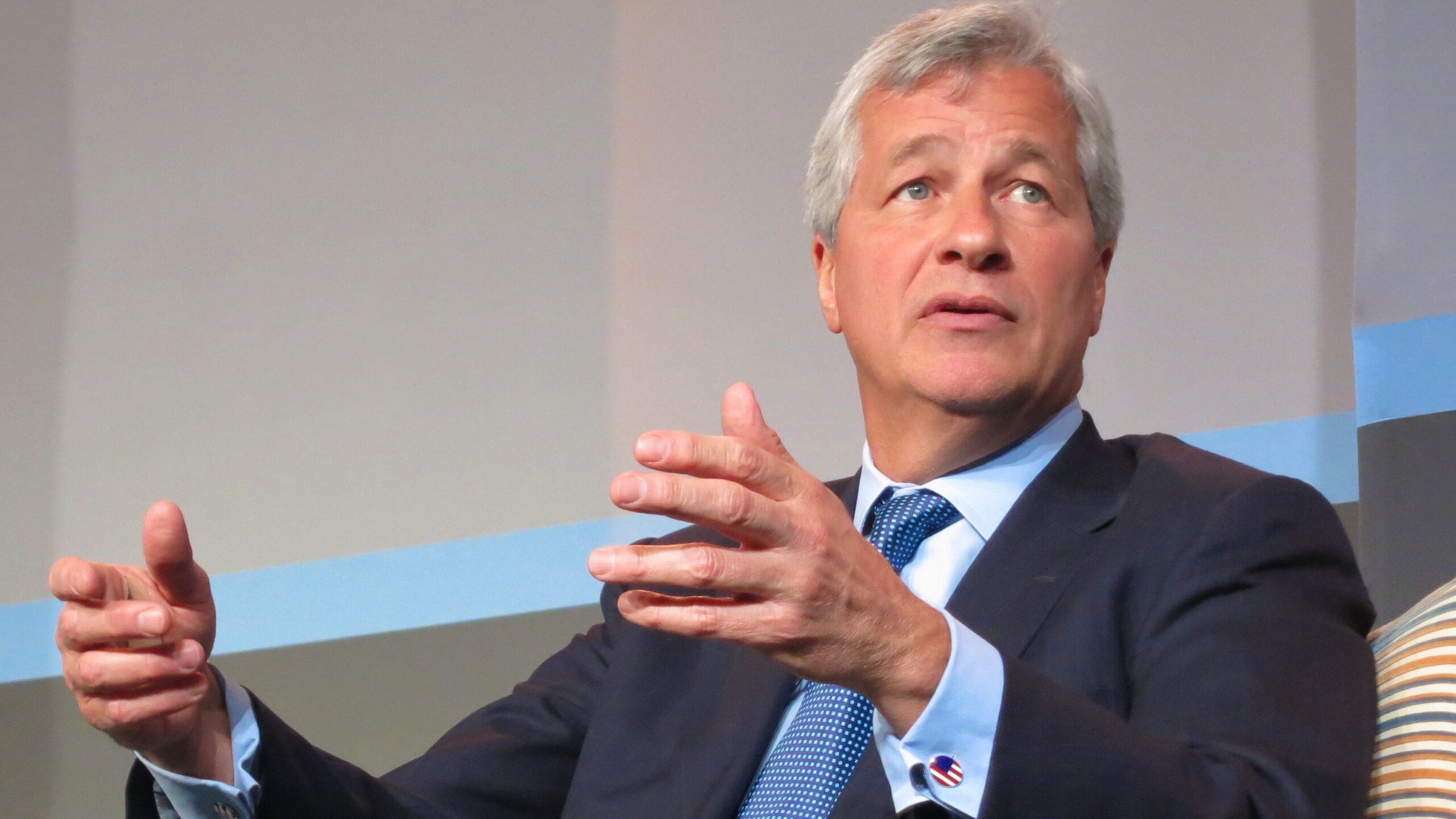
President Donald Trump has opened a new front in his long running clash with Wall Street, filing a $5 billion lawsuit that accuses JPMorgan Chase and its chief executive of punishing him for his politics. The complaint centers on the bank’s decision to close accounts tied to Trump and his businesses in early 2021, a move his lawyers now frame as part of a broader campaign of “debanking” conservatives. At stake is not only a large damages claim but also a test of how far major financial institutions can go in cutting ties with controversial clients without triggering claims of political discrimination.
The case lands at a moment when Trump is both president and a declared candidate for another term, and when accusations of ideological bias by large corporations have become a staple of his message. By turning a private banking dispute into a high profile legal battle, he is inviting courts, regulators and voters to weigh in on whether one of the country’s biggest lenders crossed a line when it decided it no longer wanted the Trump relationship on its books.
The $5 billion complaint and Trump’s ‘debanking’ narrative
In the new lawsuit, President Donald Trump alleges that JPMorgan Chase and its CEO, Jamie Dimon, deliberately shut down his personal and business accounts in early 2021 to distance the bank from his brand and his politics. The complaint seeks $5 billion in damages and portrays the closures as part of a coordinated effort inside the bank to “avoid working with the Trumps,” language that echoes Trump’s broader claim that powerful institutions are trying to push him and his allies out of mainstream economic life. According to the filing, the accounts at issue were tied not only to Trump himself but also to related entities that had long standing relationships with the bank.
Trump’s lawyers argue that the timing of the closures, coming shortly after the end of his previous term in office, shows that the decision was driven by reputational and political concerns rather than by standard risk controls or compliance reviews. They say the bank’s internal communications will show that senior executives wanted to signal disapproval of Trump’s conduct and to reassure other clients who were uneasy about doing business with him. In that telling, the alleged “debanking” is less about creditworthiness and more about ideology, a claim that tracks with Trump’s public accusation that the company acted to “avoid working with the Trumps” for political reasons, an assertion reflected in reporting on the lawsuit.
JPMorgan’s response and Jamie Dimon’s role
JPMorgan Chase has rejected Trump’s allegations, saying in an emailed statement that the lawsuit “has no merit” and that it intends to defend itself vigorously. The bank maintains that its decision to close the accounts was based on internal assessments and risk considerations, not on Trump’s political views or his status as president. A spokesperson for Chase has framed the move as consistent with the bank’s right to choose its clients and to manage legal, regulatory and reputational exposure, a position that aligns with the bank’s broader approach to high profile and high risk relationships. In its public messaging, the bank has emphasized that it did not single out Trump for his ideology and that it applies the same standards to all customers.
The complaint, however, puts Jamie Dimon personally at the center of the dispute, accusing the CEO of steering the bank toward a politically motivated break with Trump. Dimon has long been one of the most prominent figures in American finance, and his occasional public comments about economic policy and the Federal Reserve have sometimes drawn Trump’s ire. Earlier this year, when Dimon raised concerns about Trump’s posture toward the Fed, Trump quickly pushed back, calling Dimon “wrong” and brushing aside the criticism of his approach to monetary policy, a clash that was noted in coverage of the bank dispute. By naming Dimon personally, Trump is not only seeking damages but also turning a long running war of words into a direct legal confrontation.
How the lawsuit fits into Trump’s broader political strategy
Trump’s decision to frame his banking dispute as “political debanking” fits neatly into a narrative he has been building for years, in which large corporations, financial institutions and technology platforms are portrayed as aligned against him and his supporters. By suing JPMorgan Chase and Jamie Dimon for $5 billion, he is reinforcing the idea that conservative voices are being pushed out of key economic infrastructure, from payment processors to social media to major banks. That storyline has proven potent with his base, which sees in these conflicts evidence that cultural and corporate elites are trying to marginalize them. The lawsuit gives Trump a fresh example to point to when he argues that he is fighting not only political opponents but also a powerful financial establishment.
At the same time, the case allows Trump to cast himself as a victim of corporate overreach while also reminding voters of his long standing identity as a businessman who knows how to take on big banks. In campaign style remarks, he has often contrasted his own record of negotiating with lenders with what he describes as the timidity of other politicians. The new complaint against JPMorgan and its CEO, Jamie Dimon, underscores that theme by suggesting that even a president can be targeted by a bank that wants to signal its distance from his politics, a framing that is reflected in detailed accounts of how Trump and Dimon ended up on opposite sides of this dispute. For Trump, the legal fight doubles as a campaign talking point about standing up to what he calls a hostile corporate class.
The legal and regulatory stakes for ‘debanking’ claims
Beyond the political theater, the lawsuit raises concrete legal questions about when a bank’s decision to end a relationship crosses into unlawful discrimination. Financial institutions generally have broad discretion to close accounts, especially when they perceive heightened regulatory, legal or reputational risk. However, Trump’s complaint argues that when those decisions are driven by animus toward a customer’s political identity, they may violate contractual obligations or other legal protections. If a court were to accept that theory in the context of a $5 billion claim, it could invite similar suits from other public figures who believe they were dropped for ideological reasons, potentially reshaping how banks document and justify account closures.
Regulators are already under pressure from different sides on this issue. Some lawmakers have urged agencies to crack down on what they describe as “debanking” of lawful businesses, while others have pressed banks to be more aggressive in cutting ties with clients who pose reputational or compliance risks. The Trump case could sharpen that debate by forcing regulators to clarify how they expect banks to balance risk management with fair access. Reporting on the lawsuit notes that President Donald Trump’s team is explicitly calling the account closures “political,” while JPMorgan insists that the decision had “no merit” as a political claim and that it will defend its actions, a stance reflected in coverage of how Chase and its are responding. The outcome could influence not only Trump’s relationship with one bank but also the broader regulatory conversation about access to financial services.
Escalating tensions between Trump and Wall Street
The lawsuit also marks an escalation in the long and sometimes uneasy relationship between Trump and major Wall Street figures. While he has often touted his business background and relationships with financiers, he has also clashed publicly with executives who question his policies or his rhetoric. The decision to sue JPMorgan Chase and Jamie Dimon for $5 billion turns that tension into a formal legal battle, one that could expose internal bank deliberations and further strain ties between the White House and the financial sector. For other banks and CEOs, the case is a reminder that high profile clients can quickly become high risk adversaries when political and business interests collide.
More From TheDailyOverview
*This article was researched with the help of AI, with human editors creating the final content.

Grant Mercer covers market dynamics, business trends, and the economic forces driving growth across industries. His analysis connects macro movements with real-world implications for investors, entrepreneurs, and professionals. Through his work at The Daily Overview, Grant helps readers understand how markets function and where opportunities may emerge.