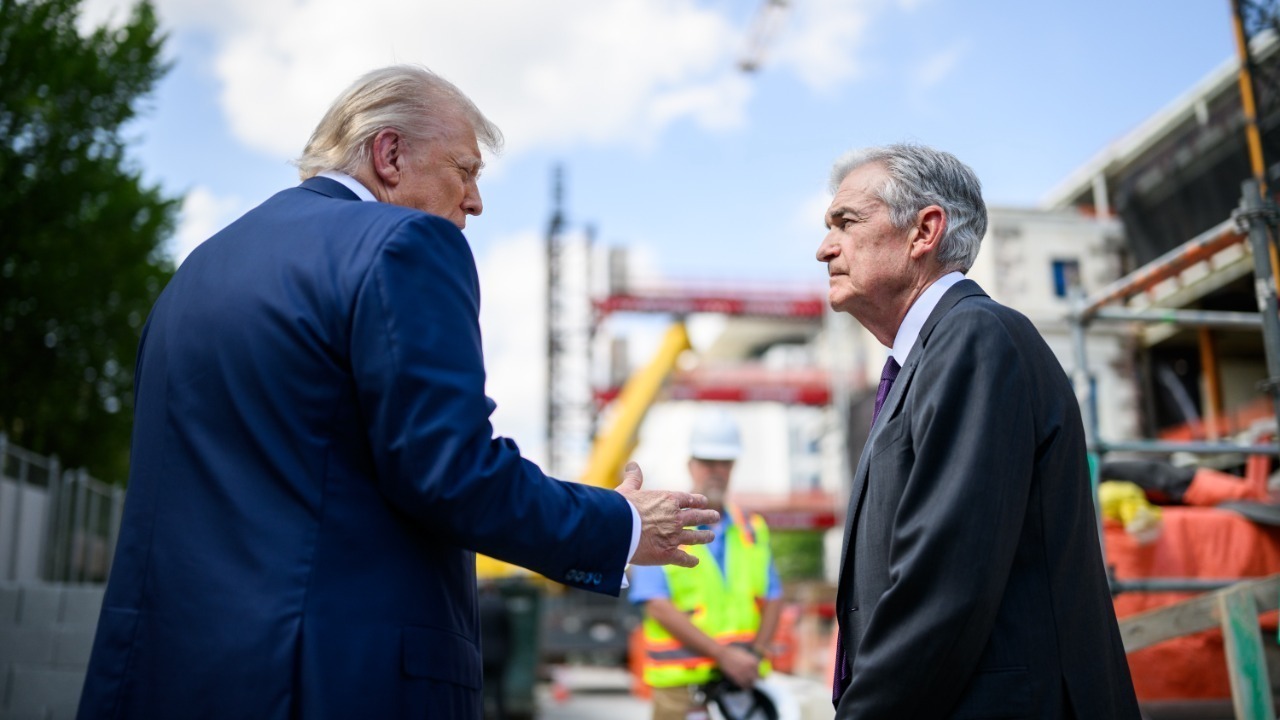
President Donald Trump is moving quickly to reshape the Federal Reserve, telling allies he intends to name a replacement for Fed Chair Jerome Powell in January and signaling that the search has narrowed to a small circle of contenders. The timing raises the stakes for financial markets already trying to gauge the path of interest rates and the central bank’s independence. It also caps a long running clash between Trump and Powell that has shifted from private frustration to public threats of firing and even litigation.
The coming decision will determine who steers monetary policy through a delicate phase of cooling inflation, political pressure for lower borrowing costs, and scrutiny of the Fed’s own spending. It is a choice that blends personal grievance, legal constraint, and economic strategy, and it is unfolding in full view of investors, lawmakers, and foreign governments that rely on the stability of the world’s most influential central bank.
Trump’s January deadline and the shrinking shortlist
Trump has told advisers he wants a new Federal Reserve chair named “sometime in January,” turning what had been a rolling feud with Jerome Powell into a concrete personnel decision. Reporting from Palm Beach describes the president saying he will unveil the next chair next month, framing the move as a response to what he sees as policy mistakes and personal disloyalty from Powell, whom he has repeatedly criticized in public and private settings. That January target has now become the focal point for Wall Street and Washington, which are trying to anticipate how a new chair might shift the trajectory of interest rates and regulatory policy.
The White House has already signaled that the search has moved from a broad canvas to a tight group of finalists. Over the summer, officials said the process had been “widening” to as many as eleven names, but by August Trump’s team was describing the race as “down to 3 or 4” candidates after internal vetting and external feedback, according to a briefing relayed by Following CNBC. That tightening field, combined with Trump’s own claim that he already knows who he will pick, suggests the January announcement is less an open question than a staged reveal of a decision that is largely made.
A feud years in the making
The looming replacement is the culmination of a relationship between Trump and Powell that has deteriorated from wary cooperation into open hostility. Trump has not only second guessed Powell’s rate decisions, he has also mocked him personally, at one point calling him “a stupid man” while venting about the Fed’s reluctance to cut borrowing costs as aggressively as the White House wanted, a remark that surfaced in coverage of the president’s comments about his next pick for chair and was recounted in detail by Trump says he knows. That kind of language has underscored how personal the dispute has become, far beyond the usual policy disagreements between presidents and central bankers.
Powell, for his part, has tried to keep the focus on the institution, even as he has been forced to respond to Trump’s broadsides. He has defended the Fed’s independence and its decisions on interest rates, while also facing criticism over internal matters such as the cost of renovating the central bank’s headquarters. In one notable move, Powell asked an inspector general to review renovation expenses that were initially projected at $1.9 billion but then climbed because of what the Fed described as “unforeseen conditions,” a step that was detailed in an explainer on whether Trump can fire the Fed chair and that highlighted Powell’s sensitivity to governance concerns, as laid out in Powell has asked.
Threats to fire and sue Powell
Trump has repeatedly floated the idea of firing Powell outright, even as legal experts question whether a president can remove a Fed chair simply for policy disagreements. In recent remarks, he has said he would still like to dismiss the current chair and has complained that Fed Chair Jerome Powell did not cut rates as quickly or as deeply as Trump wanted him to, a grievance that surfaced in a widely circulated interview summarized by Aditi Bharade. Those comments have kept alive the question of whether Trump might try to push Powell out before a successor is confirmed, even as the administration moves ahead with the formal search for a replacement.
The president has also escalated his rhetoric into legal territory, threatening to sue Powell personally over what he portrays as mismanagement and obstruction of his economic agenda. In coverage of Trump’s latest remarks, one financial news service described how he has talked about taking Powell to court while simultaneously promising to name a new Fed chair in January, a dual track strategy that was captured in a report on how Trump “threatens to sue” the current chair and that highlighted the murky outlook for 2026 interest rates, as detailed in Key Takeaways. The combination of legal threats and personnel moves has injected an unusual level of drama into what is normally a technocratic appointment process.
Legal limits on removing a Fed chair
Behind the political theater lies a hard legal question: how far can a president go in trying to oust a sitting Fed chair before the end of a statutory term. The Federal Reserve Act gives governors fixed terms and has traditionally been interpreted to shield them from removal except for cause, a standard that is meant to protect monetary policy from day to day political pressure. That is why, even as Trump has mused about firing Powell, legal analysts have stressed that any attempt to do so without clear evidence of misconduct would likely trigger a court fight and could unsettle markets that rely on the Fed’s independence.
Explainers on the subject have walked through the relevant statutes and precedents, noting that Powell’s position is not identical to that of other executive branch officials who serve at the pleasure of the president. One detailed account of the constraints emphasized that Powell’s request for an inspector general review of the $1.9 billion renovation budget was partly aimed at demonstrating good governance at a time when his critics were looking for grounds to challenge him, a dynamic that was spelled out in the same analysis that asked whether Trump can fire the Fed chair and that underscored the legal protections around Powell’s role, as seen in $1.9. Those protections help explain why the White House has focused on naming a successor when Powell’s term ends rather than trying to force him out immediately.
Inside the search: from long list to finalists
Trump’s team has been working for months to identify a successor who aligns more closely with the president’s preferences on interest rates and regulation. Early in the process, officials floated a wide range of names, including current Federal Reserve governors and outside economists, before narrowing the field based on interviews, background checks, and informal feedback from market participants. The White House has been explicit that it wants someone who is comfortable with lower rates and more tolerant of political scrutiny, a profile that has guided the winnowing of candidates.
By late summer, the administration was signaling that the search had moved from a sprawling list to a compact group of serious contenders. A spokesperson, Kush Desai, told reporters that, following earlier coverage of the process, the White House now saw the race as “down to 3 or 4” names after an initial pool that reportedly stretched to eleven, a shift that was described in detail in a briefing carried by White House. That same account noted that some of those under consideration could also be tapped for other roles on the Fed board, suggesting Trump may use the current opening to reshape the central bank’s leadership more broadly, not just at the top.
Who might follow Powell
While Trump has insisted he already knows whom he will choose, the names circulating around Washington reflect a mix of continuity and change. Some of the potential candidates are already serving inside the system, including Federal Reserve governors Christopher Waller and Michelle Bowman, who have been mentioned in reporting on the administration’s efforts to narrow the list of possible successors. Others are former officials or outside economists who share Trump’s skepticism of higher rates and his desire for a more growth oriented stance from the Fed.
An earlier rundown of the administration’s thinking listed Christopher Waller and Michelle Bowman alongside a former Fed governor identified as Kev, underscoring that the White House is looking at people with direct experience inside the institution as well as those who have been vocal critics from the outside, a mix that was highlighted in a detailed account of how the Federal Reserve leadership search is unfolding, as described in Federal Reserve. More recently, Treasury Secretary Scott Bessent has confirmed that moves to replace Jerome Powell are underway and has described the process as a search for “the next leader of the world’s most influential central bank,” a phrase that captures both the gravity of the choice and the administration’s determination to put its own stamp on the Fed, as he explained in comments summarized in Treasury Secretary Scott Bess.
Markets brace for a new Fed era
Investors are already trying to game out how a Trump appointed successor to Powell might reshape the path of interest rates, especially heading into 2026. Financial analysts note that Trump has been vocal about wanting faster and deeper cuts, arguing that the Fed has been too cautious in easing policy even as inflation has cooled. That stance has fed expectations that a new chair would be more dovish, potentially lowering borrowing costs for households and businesses but also raising questions about whether the central bank might fall behind if price pressures flare up again.
One recent analysis of Trump’s threats to sue Powell and his plan to name a new chair in January warned that the 2026 interest rate outlook has become “murky” because markets do not yet know how the next leader will balance political pressure with economic data, a concern that was spelled out in a report on how Trump’s rhetoric is clouding forecasts for future policy, as detailed in Trump plans. That same piece noted that Trump’s sharp disagreements with Powell over rate cuts have already influenced market expectations, with traders increasingly pricing in a more politically driven Fed once a new chair is in place.
Signals from Palm Beach and Washington
Trump’s most recent comments on the Fed have come from his base in Florida, where he has mixed political events with economic messaging. Speaking in PALM BEACH, he has told supporters and reporters that he intends to announce Powell’s replacement next month and has reiterated his view that the current chair has failed to deliver the rate cuts he believes are necessary for stronger growth. Those remarks, delivered against the backdrop of his Mar a Lago residence, have been framed as part of a broader effort to show that he is taking direct control of economic policy heading into the next phase of his presidency.
At the same time, coverage from Washington has emphasized the institutional stakes of the coming decision. One detailed report described how the Federal Reserve building in Washington has become a symbol of the tug of war between President Donald Trump and Fed Chair Jerome Powell, noting that Trump came close to seeking Powell’s removal before deciding instead to focus on naming a successor “January sometime,” a formulation that underscored both his impatience and his recognition of the legal constraints he faces, as laid out in The Federal Reserve. Another account from PALM BEACH, Florida, described Trump threatening to sue Fed’s Powell while promising to announce a replacement “sometime in January,” a pairing that captured the mix of legal saber rattling and personnel maneuvering at the heart of the current standoff, as reported in PALM.
The global stakes of “Who will lead the Federal Reserve?”
Beyond domestic politics, the question of who follows Powell carries global implications. The Federal Reserve sets the benchmark for borrowing costs around the world, influencing everything from mortgage rates in the United States to capital flows into emerging markets. A more dovish chair could weaken the dollar and spur risk taking abroad, while a more hawkish leader might tighten global financial conditions and put pressure on countries that borrow heavily in dollars. That is why foreign investors and central banks are watching Trump’s January timeline as closely as Wall Street is.
One international focused analysis framed the coming appointment as “the biggest variable in the 2026 battle,” asking bluntly “Who will lead the Federal Reserve?” and arguing that the answer will shape cross border capital flows and exchange rate fluctuations for years to come, a perspective that underscores how much rides on Trump’s choice, as explained in Who. That same piece noted that Trump’s hints about “firing” Powell have already injected uncertainty into global markets, which must now prepare for a potential shift in the Fed’s leadership and strategy at a time when the world economy is still adjusting to post pandemic realities.
More From TheDailyOverview

Silas Redman writes about the structure of modern banking, financial regulations, and the rules that govern money movement. His work examines how institutions, policies, and compliance frameworks affect individuals and businesses alike. At The Daily Overview, Silas aims to help readers better understand the systems operating behind everyday financial decisions.

