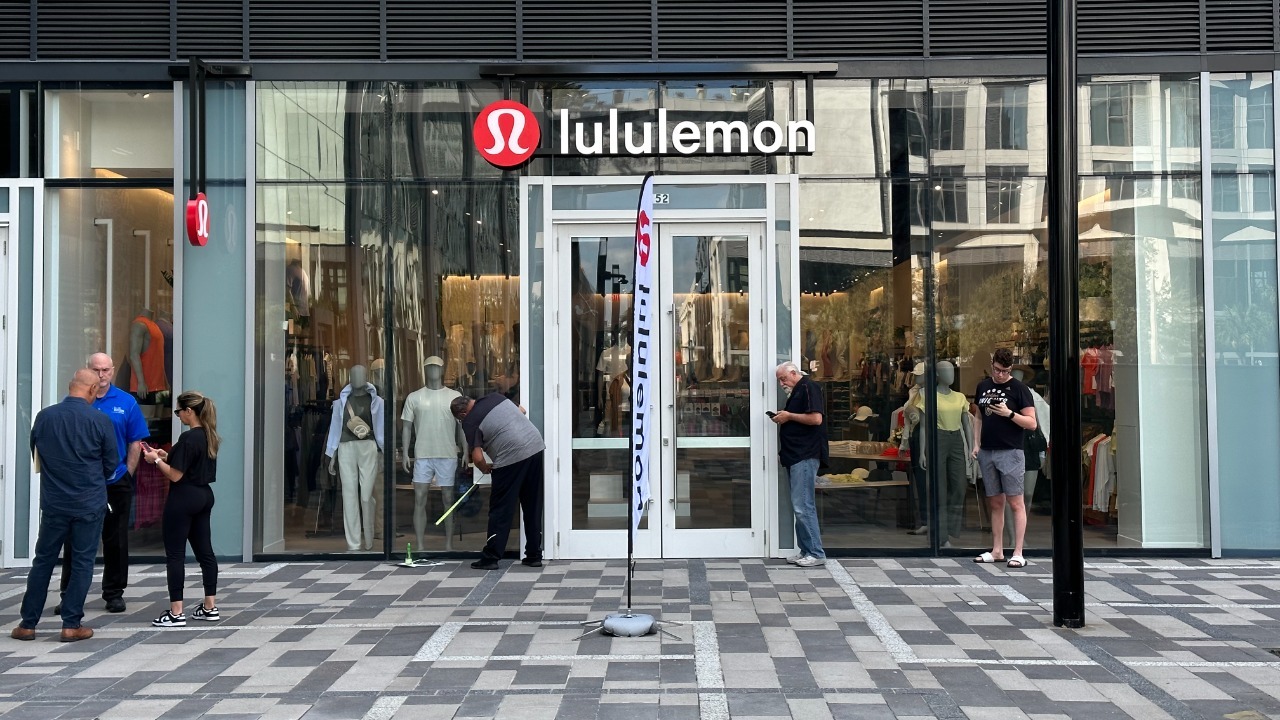
Lululemon is heading into a rare double transition, with a new chief executive on the way just as its outspoken founder moves to reassert influence over the boardroom. At stake is not only who runs the yoga-wear pioneer, but whether investors believe the brand can recapture the creative spark and growth premium that once set it apart from the rest of athletic apparel.
Chip Wilson is betting that reshaping the board before the next CEO is chosen will restore that confidence, even if it means a bruising proxy fight with the company he created. I see his campaign as an attempt to hard‑wire product obsession and long‑term brand building back into governance, rather than leaving the succession process solely in the hands of directors he now openly questions.
The proxy fight that reignited a founder’s crusade
Chip Wilson has moved from critic on the sidelines to active combatant by launching a formal proxy contest to change Lululemon’s board. He has used his right as a major shareholder to nominate three independent director candidates, a step that, if successful, would give him a powerful voice in how the company navigates its leadership transition and strategic priorities, according to Dec Wilson nominations. The move signals that Wilson no longer trusts the current board to steer the brand through a crucial next chapter without fresh oversight.
In corporate terms, Wilson has triggered a classic proxy fight, seeking to persuade fellow shareholders to vote his slate onto the board at the next annual meeting rather than rubber‑stamp the incumbents. His campaign is framed as a push to restore what he calls “visionary leadership” at Lululemon Founder Chip Wilson Launches Proxy Fight for Board Changes Ahead of CEO Transition, tying governance reform directly to the looming CEO handover. By escalating his long‑running disagreements into a shareholder vote, he is forcing a public reckoning over who should define Lululemon’s future.
Why Wilson says investors have lost faith
Wilson’s argument rests on a blunt diagnosis: he believes the current directors have eroded investor trust by drifting away from the product‑led culture that once powered Lululemon’s premium valuation. He has said shareholders have “no faith” that this board can select and support the next CEO without adding members with deeper product and brand expertise, a criticism echoed in coverage that notes his contention that Shareholders have no faith in the current process. I read that as less a personal attack and more a claim that the board has become too financial and not sufficiently entrepreneurial.
His campaign materials and public comments link that loss of faith to Lululemon’s recent stock performance relative to peers, arguing that the company has lagged even as the broader market rallied and competitors like On and Nike have pushed aggressively into performance innovation. In his view, the board has not only failed to protect the brand’s creative edge, it has also mishandled communication around the CEO transition, leaving investors unsure about the long‑term plan, a concern highlighted in analysis of How Lululemon. Wilson is effectively telling fellow shareholders that unless the board changes, the next CEO will be set up to disappoint.
A succession clock ticking in the background
The urgency behind Wilson’s move is magnified by the fact that Lululemon is already in the middle of a CEO succession process. The company has announced that its current chief executive, Calvin McDonald, will depart, and it has outlined a formal plan to identify and install a new leader, as detailed in reporting on What Succession Plan After CEO Departs Calvin. That timetable means any board changes secured at the upcoming annual meeting could directly shape who gets the top job and what mandate that person receives.
From Wilson’s perspective, allowing the existing directors to complete the search without new voices would lock in a strategic direction he has already rejected. He has framed his proxy fight as a way to “recommit” Lululemon to genuine creativity and product leadership before the next CEO is chosen, rather than trying to course‑correct after the fact, a theme he underscored in comments cited in Wilson campaign for change. In practical terms, that means he wants his nominees in the room when the board debates candidates, compensation, and the balance between growth, margins, and innovation.
The three nominees and what they signal
Wilson’s slate is carefully constructed to send a message about the kind of board he thinks Lululemon needs. He has nominated three independent directors with deep experience in building global consumer brands, a move confirmed in summaries noting that Lululemon founder Chip Wilson has put forward three independent candidates to stand for election. Rather than choosing financial engineers or governance specialists, he has leaned into operators who have scaled performance brands and media platforms.
One of the most prominent names is Marc Maurer, the former co‑CEO of On Running, who helped transform that Swiss upstart into a global performance powerhouse with strong direct‑to‑consumer momentum, as detailed in Wilson nominates three brand‑building and reinforced in coverage noting that Maurer helped scale On into a global performance brand. Profiles of the nominees also highlight Maurer’s tenure as co‑chief executive of On Holding AG from January 2021 to June 2025, underscoring his track record in high‑growth sportswear, according to Profiles of the Nominees. By centering his slate on people like Maurer, Wilson is effectively arguing that Lululemon’s board should look more like the product‑obsessed teams that built the brand in the first place.
Media, sport and the push for product‑centric governance
Wilson’s other nominees round out a profile that blends sports, media, and consumer insight, all aimed at reinforcing his call for a board with “stronger product experience.” One of those figures is Laura Gentile, who oversaw ESPN’s marketing and brand strategy, bringing a deep understanding of how to connect performance storytelling with passionate communities, a background highlighted in coverage noting that Gentile oversaw ESPN. Another nominee, Marc Maurer, is repeatedly cited as a “brand‑building” veteran, reinforcing Wilson’s insistence that directors should live and breathe product rather than treat it as a line item, as described in the report that Wilson nominates three brand‑building experts.
By choosing candidates with this mix of experience, Wilson is trying to hard‑wire a specific philosophy into Lululemon’s governance: that the board should be able to challenge management on fabric innovation, community engagement, and digital storytelling, not just quarterly earnings. The emphasis on independent directors who are not beholden to him personally is also deliberate, as he has stressed that the campaign “cannot be about me” but about recommitting Lululemon to creativity and product leadership, a framing captured in his comments that “I know this campaign for change is about the company’s future, not his own role. In effect, he is trying to convince investors that a more product‑centric board is the best safeguard for the next CEO’s success.
How Lululemon is pushing back
Lululemon is not passively accepting Wilson’s critique, and its official response shows a company keen to defend its record and its autonomy. In a statement from its headquarters in VANCOUVER, British Columbia, the company told investors that shareholders are “not required to take any action at this time,” signaling that it views Wilson’s notice to nominate directors as an opening gambit rather than a foregone conclusion, according to the press release that emphasized Shareholders Not Required to Take Any Action at this Time. The company also noted that Wilson had declined to engage further after initial outreach, suggesting it believes he moved to confrontation before exhausting private dialogue.
Beyond process, Lululemon has vigorously defended its growth and profitability since Wilson’s departure, arguing that its current strategy has delivered strong results and that its board has already launched a robust CEO search. In public comments, the company has pointed to years of double‑digit expansion and margin improvement as evidence that it does not need a founder‑led reset, a stance reflected in reporting that Lululemon also defended its record of growth and profitability since Wilson left. The subtext is clear: the company wants investors to see the proxy fight as a distraction from a succession process it insists is already on solid footing.
Other activists and a broader pattern of pressure
Wilson is not the only one pressing Lululemon to change, which adds another layer of complexity to the board’s calculus. Activist investor Elliott Management has disclosed a stake of about 1 billion dollars in the company, positioning itself as a separate force pushing for improved performance and governance, according to reporting that notes Wilson is not the only actor seeking change. The presence of Elliott Management means the board must navigate not just a founder’s campaign but also the expectations of a sophisticated activist with its own playbook.
This convergence of founder activism and hedge‑fund pressure fits into a wider pattern across consumer and tech companies, where original visionaries and financial activists sometimes align tactically even if their end goals differ. In Lululemon’s case, both Wilson and Elliott Management appear to be leveraging the CEO transition as a moment to demand sharper execution and clearer strategy, even as they may diverge on issues like capital allocation or long‑term risk. For investors, the question is whether this combined pressure will produce a more accountable board or simply destabilize a company already managing a sensitive leadership change, a tension captured in coverage of board shakeup dynamics.
What the fight reveals about Lululemon’s strategy
Underneath the proxy mechanics lies a deeper debate over what kind of company Lululemon wants to be in its next era. Wilson’s camp argues that the brand has drifted from its roots in technical innovation and community‑driven retail, and that the board has become too focused on short‑term metrics at the expense of bold product bets. His call to “recommit” to creativity and product leadership is essentially a demand that the next CEO be chosen for their ability to push boundaries in design and experience, not just to manage a mature apparel portfolio, a theme he has tied directly to his effort to restore investors’ faith.
The current board, by contrast, is effectively arguing that its strategy is working and that it can manage both growth and innovation without ceding control to a founder who has been publicly critical for years. Its insistence that shareholders need not act immediately, and its emphasis on a structured CEO search, suggest a belief that stability and continuity are more valuable than a disruptive reset. The clash between these visions will shape not only who gets a seat in the boardroom, but also whether Lululemon doubles down on its original playbook or evolves into a more conventional global apparel giant, a tension that sits at the heart of the proxy fight to fill board seats.
How the vote could reshape the next CEO’s mandate
Whatever the outcome, the proxy fight will heavily influence the environment the new CEO walks into. If Wilson’s nominees win, the next chief executive will face a board with a stronger product and brand orientation, and with directors who owe at least part of their mandate to a founder who has loudly questioned the status quo. That could empower a leader who wants to take creative risks, but it could also raise expectations for rapid change in areas like design, community engagement, and direct‑to‑consumer growth, as implied by the emphasis on three new board candidates with brand‑building pedigrees.
If the current board fends off the challenge, the new CEO will inherit a mandate shaped more by continuity than by Wilson’s critique, but the public nature of the fight means they will still need to address questions about innovation, culture, and long‑term growth. Either way, the succession process is no longer a quiet, internal exercise; it is a high‑stakes referendum on how Lululemon balances founder legacy, activist pressure, and institutional governance. For investors weighing their votes, the choice is less about personalities and more about which board configuration they trust to pick, and then support, a leader capable of keeping Lululemon ahead in an increasingly crowded field, a decision that will play out at the intersection of shareholders and CEO succession.
More From TheDailyOverview

Silas Redman writes about the structure of modern banking, financial regulations, and the rules that govern money movement. His work examines how institutions, policies, and compliance frameworks affect individuals and businesses alike. At The Daily Overview, Silas aims to help readers better understand the systems operating behind everyday financial decisions.