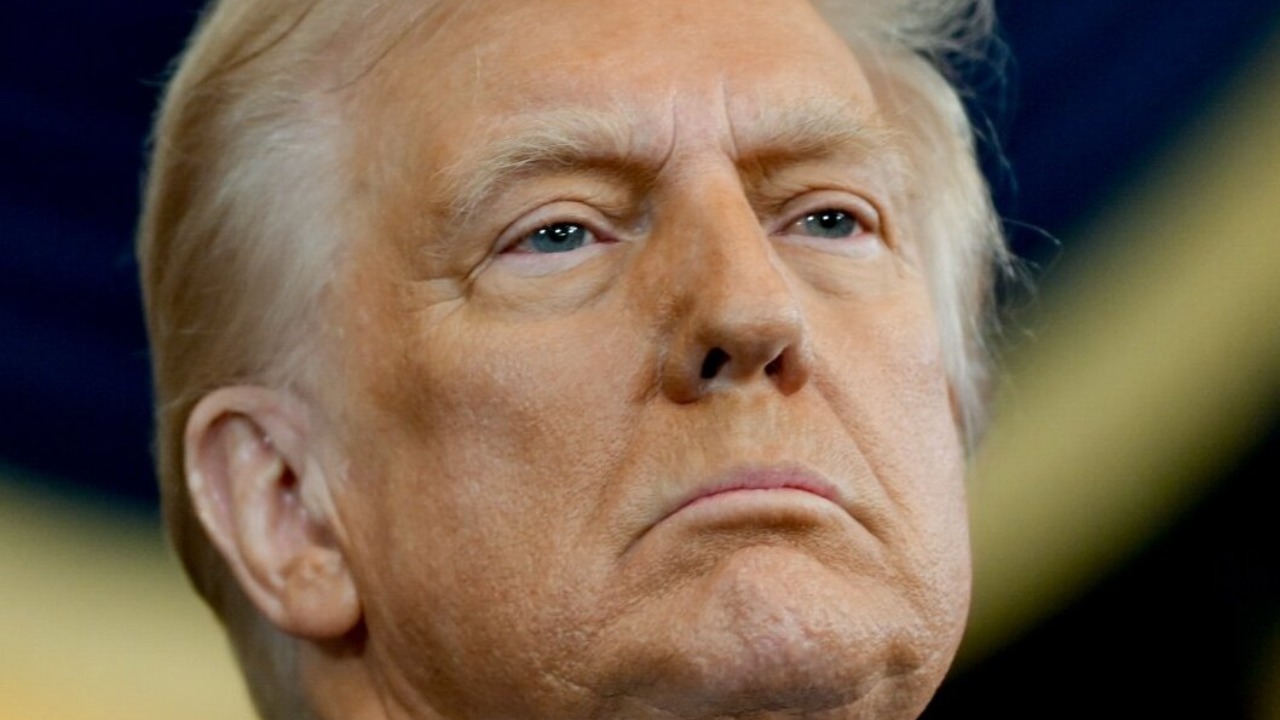
President Donald Trump is again dangling the prospect of direct cash from his trade agenda, telling Americans that $2,000 “tariff dividend” checks could start arriving around the middle of 2026. The idea, pitched as a way to share tariff revenue with households, has energized some voters who remember earlier pandemic-era relief, but it is colliding with a wall of fiscal skepticism inside his own party. One Republican senator is now publicly warning that the country is “broke,” sharpening a fight over whether Trump’s promise is a bold use of trade policy or an unfunded campaign-style giveaway.
Trump’s evolving promise of $2,000 tariff checks
Trump has spent months sketching out a plan to send a one-time $2,000 payment to most households, framing it as a “tariff rebate” or “tariff dividend” that would convert trade penalties on foreign goods into cash for voters. In interviews and public remarks, he has described the checks as a way to ensure that ordinary Americans, not just the federal government, benefit from higher duties on imports, and he has repeatedly tied the figure to a flat $2,000 amount rather than a sliding income-based scale. Coverage tracking where his tariff rebate idea stands heading into 2026 notes that the White House has treated the proposal as a signature second-term promise rather than a fully drafted policy.
Earlier this month, Trump tightened the timeline, telling reporters that the $2,000 “tariff dividend stimulus check” could be ready in 2026 and signaling that midyear is his new target. In one account of that exchange, he suggested that Americans would see the benefit once legal and logistical hurdles are cleared, presenting the payment as a dividend from money already being collected at the border. That new schedule, described in detail in a Jan report on $2,000 tariff checks, marks a shift from earlier, vaguer references to sometime in his current term.
How the “tariff dividend” is supposed to work
At the heart of Trump’s pitch is a simple story: the United States raises tariffs on foreign products, importers pay more at the border, and that extra revenue is then redistributed to citizens as a lump-sum payment. In his telling, the $2,000 check is a way to turn trade toughness into a tangible household benefit, especially for families who feel squeezed by inflation and stagnant wages. A detailed explainer on what a tariff is, written by Maria Francis of the USA TODAY NETWORK, notes that President Donald Trump’s $2,000 tariff dividend proposal rests on the assumption that higher duties can be sustained without crippling consumer demand or provoking damaging retaliation.
In practice, economists point out that tariffs are usually passed along to consumers in the form of higher prices, which means households could be paying more at the store even as they wait for a promised check. Trump’s allies counter that the one-time payment would more than offset those costs for many families, especially if the check lands in a year when other forms of federal relief have dried up. A fact-check on January relief payments underscores that there are no new federal stimulus checks approved for this month and that Trump’s proposed $2,000 tariff dividend has no finalized legislation behind it, even as Trump has repeatedly floated the idea since returning to the White House.
Legal and logistical roadblocks
Even if the trade math added up, the legal pathway to cutting $2,000 checks is far from straightforward. Tax and budget experts say the president cannot simply redirect tariff revenue by executive order, because Congress controls federal spending and has already allocated much of that money to other purposes. One analysis of whether the administration can send out Can Trump $2,000 checks notes that the idea has shifted from a near-term pledge to a more distant possibility as lawyers warn that any large-scale rebate would almost certainly require new legislation.
Republican lawmakers have echoed that caution, stressing that “the law is the law” and that the most likely outcome is that it would take an act of Congress to authorize such a sweeping transfer. A report on Senate reaction quotes one Republican senator saying that, as of now, the idea of Congress approving a new round of checks is remote, especially with deficit hawks demanding that tariff revenue be used to reduce red ink rather than finance fresh spending. That skepticism is captured in coverage of how As of now, the plan remains more of a political talking point than a concrete bill moving through committees.
Republican backlash: ‘We can’t afford it’
The sharpest resistance to Trump’s tariff checks is coming from inside his own party, where long-standing deficit hawks see the proposal as a betrayal of fiscal restraint. Sen. Ron Johnson, a Wisconsin Republican, has been particularly blunt, warning that the United States is already drowning in debt and that any new cash program should be paired with aggressive deficit reduction. In an interview highlighted by one national outlet, Trump is quoted promoting $2,000 tariff checks that could come mid-2026, while a Republican senator responds flatly, “We can’t afford it,” underscoring the internal GOP split.
Johnson’s critique is not just rhetorical. Earlier in the summer, he urged colleagues to focus on lowering the deficit using tariff revenue, arguing that any windfall from trade penalties should go toward long-term fiscal health rather than short-term political gains. A detailed account of Senate Republicans’ stance notes that he has pressed for using the money to help “lower” and “middle” income families indirectly by stabilizing the economy, rather than mailing out one-time checks. That tension is laid out in a piece quoting Ron Johnson and other Republicans who see the tariff dividend as fiscally reckless.
Voter expectations and the risk of overpromising
For many Americans, the headline number is what sticks. Trump’s allies have leaned into that, asking in interviews, “Will you get a $2,000 dividend stimulus check?” and framing the proposal as a straightforward benefit that could land in bank accounts as early as next year. One widely shared explainer notes that President Donald Trump said that Americans may receive $2,000, but that the plan has yet to come to fruition, capturing both the appeal and the uncertainty. That tension is evident in coverage that poses the question, Will Americans actually see the money or just another round of political messaging.
Regional outlets are fielding similar questions, with residents asking whether they will see a $2,000 “tariff dividend” check in 2026 and how it would interact with other forms of aid. One report focused on North Carolina voters notes that President Trump has repeatedly proposed sending $2,000 payments funded by what he describes as tens of billions of dollars in tariff-related revenue, even as budget analysts warn that those figures are already baked into federal projections. That story, framed around whether Will North Carolinas get checks, illustrates how the promise is shaping expectations even in the absence of concrete legislative movement.
More From The Daily Overview

Silas Redman writes about the structure of modern banking, financial regulations, and the rules that govern money movement. His work examines how institutions, policies, and compliance frameworks affect individuals and businesses alike. At The Daily Overview, Silas aims to help readers better understand the systems operating behind everyday financial decisions.


