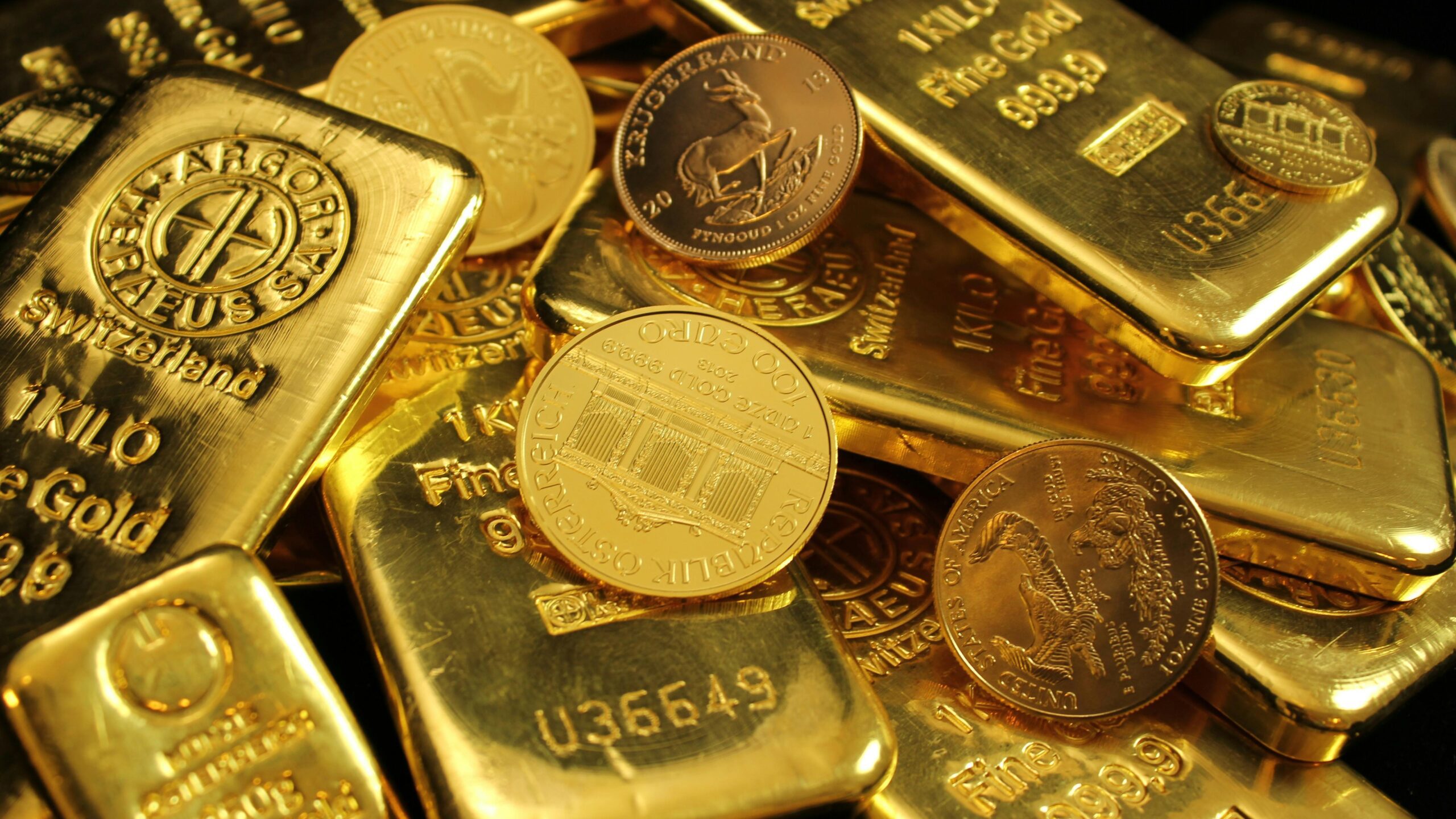
Gold’s latest surge is not just another commodity story, it is a blunt verdict on the way governments and central banks are managing the global economy. Prices have jumped alongside mounting anxiety about debt, inflation and political risk, turning a traditionally sleepy asset into a front‑page barometer of fear. When Terry Savage calls attention to this blistering rally, the message is less about shiny metal and more about what investors think is going wrong beneath the surface.
At its core, the move reflects a loss of confidence in paper promises, from government bonds to central bank assurances that inflation is under control. As money floods into bullion and related assets, it is signaling that a critical mass of savers no longer trusts that today’s policies will preserve the value of their cash over the next decade.
Gold’s rally as a vote of no confidence
In my view, the most important thing gold is telling us right now is that investors are quietly voting against the status quo. Terry Savage has pointed out that gold and silver prices have soared in the midst of global geopolitical uncertainty and deep concern about inflation and debt, a pattern that fits with the metal’s long history as a refuge when people doubt financial authorities. When savers move from bank deposits and government bonds into bullion, they are not chasing yield, they are buying insurance against policy mistakes and currency erosion, a shift that reflects a broad unease with the direction of the economy rather than a narrow bet on commodities.
That unease is visible in the way demand has broadened beyond traditional gold bugs. Savage’s own analysis notes that the surge is tied to a mix of geopolitical shocks and economic worries that have pushed mainstream investors to reconsider the role of hard assets in their portfolios, reinforcing the idea that this is a macro signal rather than a niche fad. Her detailed breakdown of the recent spike in the price of gold on her site explains how the move has been driven by a convergence of risks that are hard to hedge with conventional stocks and bonds.
Deficits, debt and the five drivers of demand
Underneath the price action sits a structural story about debt and deficits that is far bigger than any one trading day. Economist Jan Norland, cited by Savage, has argued that there are five main drivers of demand for gold, starting with what he calls colossal budget deficits. It is not just the United States that is running the numbers hot, governments across advanced and emerging economies are piling on obligations that will have to be financed either with higher taxes, more borrowing or inflation, and none of those options is comforting to long‑term savers. When deficits become a permanent feature rather than a cyclical response to crisis, gold begins to look less like a speculative trade and more like a parallel store of value.
Norland’s list of demand drivers goes beyond fiscal policy to include the behavior of central banks and the erosion of their independence, a theme Savage highlights as a key reason investors are nervous about the future purchasing power of their currencies. As political pressure on monetary authorities grows, the line between short‑term economic management and long‑term inflation control can blur, which is exactly the scenario in which gold historically shines. Savage’s summary of Jan Norland’s five drivers on her site underscores how these structural forces, from colossal deficits to concerns about central bank independence, are feeding directly into the current rally.
Global debt: from Japan to China and beyond
The warning embedded in gold’s rise becomes even clearer when you look at the global debt map. The Japanese have always had a huge public debt as a percentage of GDP, a situation that markets have tolerated for years because of domestic savings and a stable political environment. Now even China’s public debt is running at 8.5% of GDP, a figure that undercuts the notion that only Western democracies are stretching their balance sheets. When both The Japanese and China are leaning so heavily on borrowing, investors naturally start to question how sustainable the global debt build‑up really is.
Savage’s recent column on the subject ties these numbers directly to the appetite for gold, arguing that the metal is acting as a hedge against a world in which governments everywhere are tempted to inflate away their obligations. The fact that concerns about public debt now span from Tokyo to Beijing and Washington suggests that the rally is not a localized reaction but a response to a systemic trend. Her discussion of how The Japanese debt burden and China’s 8.5% of GDP figure fit into Norland’s broader worries about the erosion of central bank independence is captured in a detailed analysis that links these global imbalances directly to the metal’s appeal.
Market volatility and political risk in the Trump era
Gold’s message is not only about balance sheets, it is also about politics and market psychology. In a recent television appearance, Savage noted that U.S. gold futures hit a record high as investors digested uncertainty over whether the Trump administration’s policies would trigger new waves of tariffs and trade frictions. When the occupant of the White House is willing to reset trade rules and fiscal priorities quickly, markets tend to price in a wider range of outcomes, and that volatility often sends nervous money into gold. The fact that this record came against the backdrop of debates over the direction of tax and spending policy under Trump underscores how tightly the metal is linked to political risk.
That same sensitivity shows up in the stock market’s swings. In another segment, Savage described a live look at the big board as the market opened, with the Dow down 631 points and expectations for a wild trading day. A drop of 631 points in the Dow is not, by itself, a systemic crisis, but it is the kind of jolt that reminds investors how quickly paper wealth can evaporate when sentiment turns. Her commentary on that volatile open, captured in a broadcast that highlighted the Dow’s slide, dovetails with her broader argument that recurring shocks are nudging savers toward assets that feel less exposed to daily headlines.
How individual investors should read the signal
For ordinary investors, the temptation in a moment like this is to chase what has already gone up, but Savage has been explicit that the rally is a warning, not an all‑clear to go all in. In her latest column, she writes that gold and silver prices have soared in the midst of global geopolitical uncertainty and concerns about inflation, but she frames that surge as a signal to reassess risk rather than a green light to abandon diversified portfolios. Her own blog post, written By Terry Savage, lays out how Gold and silver fit into a broader strategy that includes stocks, bonds and cash, rather than standing alone as a cure‑all for economic anxiety, a point she makes clearly in her discussion of the recent spike.
She also flags a crucial caveat that many gold enthusiasts prefer to ignore. Before you go all in on gold, there is one warning signal that Norland points out, which is that if the furor over gold is driven mainly by speculative futures trading rather than long‑term demand, the price could be vulnerable to a sharp reversal. Savage relays Norland’s concern that a market dominated by leveraged bets can unwind quickly, leaving latecomers exposed, a nuance she highlights in her column that urges readers to treat gold as insurance, not a lottery ticket.
More From TheDailyOverview
*This article was researched with the help of AI, with human editors creating the final content.

Grant Mercer covers market dynamics, business trends, and the economic forces driving growth across industries. His analysis connects macro movements with real-world implications for investors, entrepreneurs, and professionals. Through his work at The Daily Overview, Grant helps readers understand how markets function and where opportunities may emerge.

