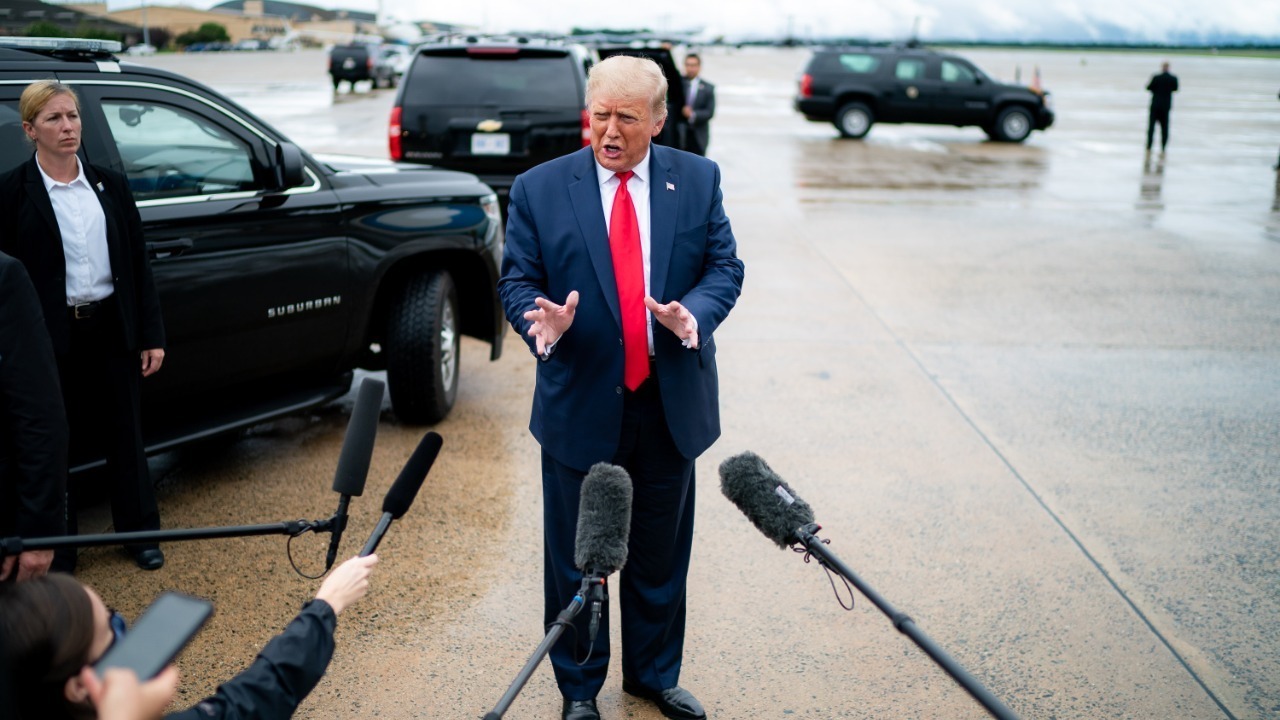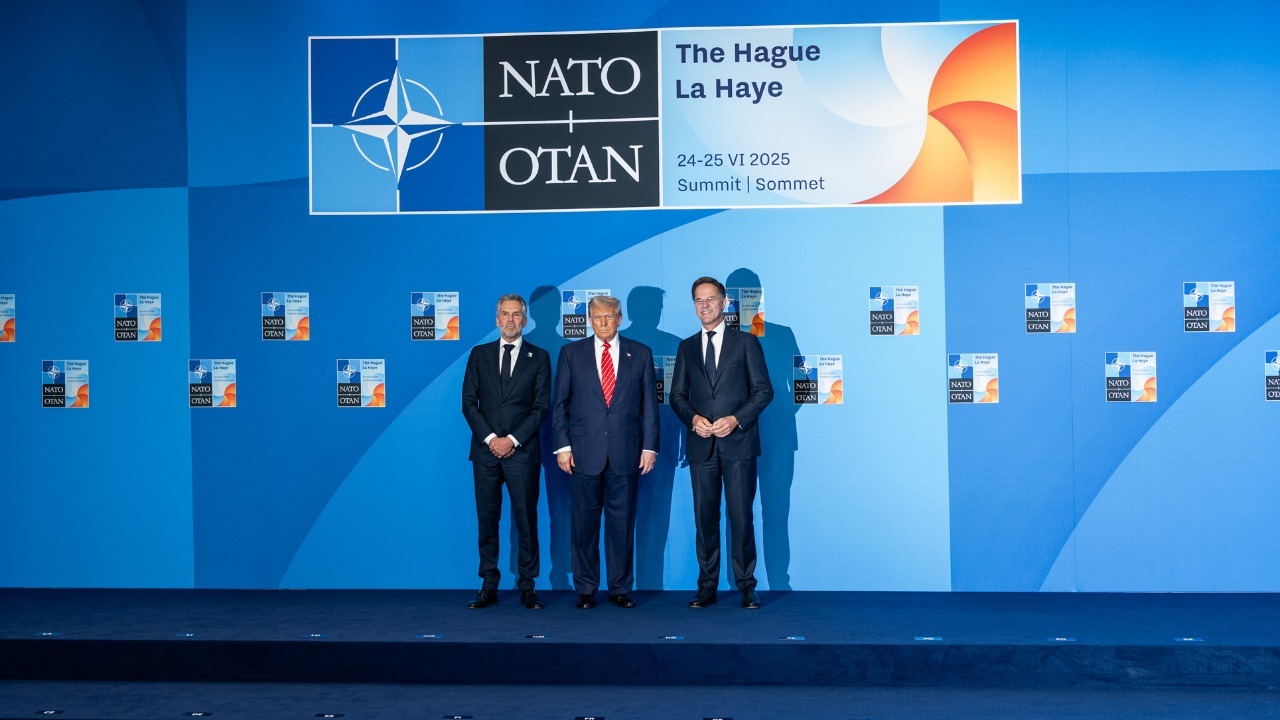
President Donald Trump is selling his new Greenland initiative as a breakthrough that secures “total access” for the United States while easing tensions with Europe. Behind the triumphant language is a looser “framework” with NATO that could reshape Arctic security, U.S. missile defense and the politics of a rapidly warming region. What it really means for Washington is a mix of strategic opportunity, diplomatic risk and a long list of unanswered questions.
At its core, the Greenland push is about locking in U.S. influence over a vast island that sits between North America and Europe and astride key sea lanes. The emerging deal links that ambition to NATO’s evolving posture in the High North, and to a broader effort to update Cold War era arrangements that no longer match today’s competition with Russia and China.
From tariff threats to a Greenland “framework”
The pivot to a cooperative framework followed weeks in which President Donald Trump used the threat of tariffs on European goods as leverage to gain concessions on Arctic security. According to accounts from Davos, President Donald Trump told reporters that he and NATO Secretary General Mark Rutte had formed the “framework of a future deal with respect to Greenland” and suggested he would “explain it down the line,” a formulation that left allies guessing how much had actually been agreed with Secretary General Mark. Trump then publicly dropped his tariff threat, a move described in one account as a relief in European capitals but also as a climbdown whose long term implications were “unclear” for partners watching from DAVOS, Switzerland and COPENHAGEN where officials were attending the World Economic Forum and reacting to the Reuters-described shift.
Trump has framed the outcome as an “ultimate long-term deal” that is “really fantastic for the USA” and claims it “gets everything we wanted” in Greenland, language he used while describing the arrangement as a framework of a future deal in Davos that would be fleshed out later with NATO and European partners, according to accounts of his remarks about Trump. Earlier coverage of the standoff noted that Trump’s tariff threats had been explicitly tied to getting movement on Greenland, and that he ultimately backed off after announcing that a “framework” had been agreed, with one Morning Rundown describing how Trump drops Greenland tariff threat once a framework of Greenland deal was agreed, a sequence that underscored how economic pressure and Arctic security were being linked in the Morning Rundown narrative.
What “total access” in Greenland actually covers
Behind the rhetoric, the emerging arrangement appears to center on expanded U.S. military and economic rights on specific parts of the island rather than outright territorial acquisition. According to media reports cited in one detailed account, the compromise could see the United States granted sovereignty over small pockets of Greenland where military installations already exist, while broader questions about how far Trump is apparently backing down from earlier ambitions remain unclear, a nuance captured in coverage that stressed how, according to those media reports, the shape of the deal and the reasons for his apparently backing down remain uncertain for According observers. Trump himself has said the United States is negotiating “total access” to Greenland and that the country will get “everything we want” as talks proceed, comments he made in an interview with Maria Bartiromo in which President Donald Trump linked that access to a broader missile defense plan and suggested that the negotiations would secure extensive rights for the United States in Greenland.
Trump has also described the initiative as a future deal on the Arctic that would give the United States “total” access to Greenland, a phrase that appeared in an account of his comments that framed the talks as part of a wider Arctic security conversation involving NATO and Denmark and noted that Trump says future deal on Arctic to give US total access to Greenland in remarks carried by AP News. At the same time, Danish officials have signaled they are open to what has been dubbed “Golden Dome” talks after Trump said Wednesday that he had secured a framework deal on Greenland including access to mineral rights for the United States and its allies, while stressing that Copenhagen is fully aware of its own position and will defend its sovereignty in any negotiation over Wednesday.
NATO’s Arctic pivot and the “Arctic Sentry” concept
For NATO, the Greenland framework is part of a broader shift toward hardening defenses in the High North without diluting support for Ukraine. On Thursday, Rutte told reporters that NATO countries would ramp up security in the Arctic as part of the agreement, a message that Arctic deployments and surveillance will increase even as Secretary General Mark Rutte has been quoted as confident that Arctic security will not interfere with the war effort in Ukraine, a balance he described while speaking as NATO’s Rutte about the alliance’s priorities in the Arctic. Another detailed account of the talks notes that on Thursday, Rutte said NATO allies would step up security in the Arctic as part of the agreement and that this was folded into a wider discussion of what Trump has actually secured, with the piece asking what has Trump really obtained in Greenland and quoting On Thursday, Rutte in the context of NATO’s evolving NATO posture.
Trump has touted the security side of the package as a new “Arctic Sentry” partnership, a label that appeared in coverage of his Davos remarks which noted that Mr. Trump took his threat and folded it into a broader Arctic Sentry security partnership that would involve NATO and European allies in a more formalized Arctic defense architecture, with the phrase Arctic Sentry used to describe the emerging security partnership in Greenland. Analysts at one Atlantic-focused think tank have argued that by taking a win on Greenland, Trump has set U.S. and allied security in the Arctic on a better path, noting that in Davos, President Donald Trump pledged not to use force to take Greenland and agreed to a framework that could channel competition with Russia and China into more predictable military arrangements, a view laid out in a dispatch that framed the episode as a turning point for President Donald Trump, Greenland and allied security.
Denmark, Greenland and the 1951 defense deal
Any U.S. move in Greenland runs through Copenhagen and Nuuk, and the framework is already forcing a rethink of the legal underpinnings of America’s presence there. A detailed research briefing on President Trump and Greenland notes that on 17 January Mr Trump intensified his rhetoric and that in January United States President Donald Trump has been pressing the issue in ways that raised questions in Denmark’s parliament about whether the existing arrangements are “tenable or sustainable,” a phrase used in the context of President Trump and Greenland, Frequently asked questions about how sovereignty and defense responsibilities are shared between Copenhagen and Greenland. In parallel, The United States and Denmark have agreed to renegotiate a 1951 defense agreement covering U.S. bases on the island, with By Newsroom reporting that the two governments will update the accord amid Arctic security concerns and that the talks are scheduled to begin around January 19, 2026, a sign that Washington and Copenhagen see the need to modernize the legal framework that governs U.S. forces in GMT.
More From TheDailyOverview
*This article was researched with the help of AI, with human editors creating the final content.

Grant Mercer covers market dynamics, business trends, and the economic forces driving growth across industries. His analysis connects macro movements with real-world implications for investors, entrepreneurs, and professionals. Through his work at The Daily Overview, Grant helps readers understand how markets function and where opportunities may emerge.