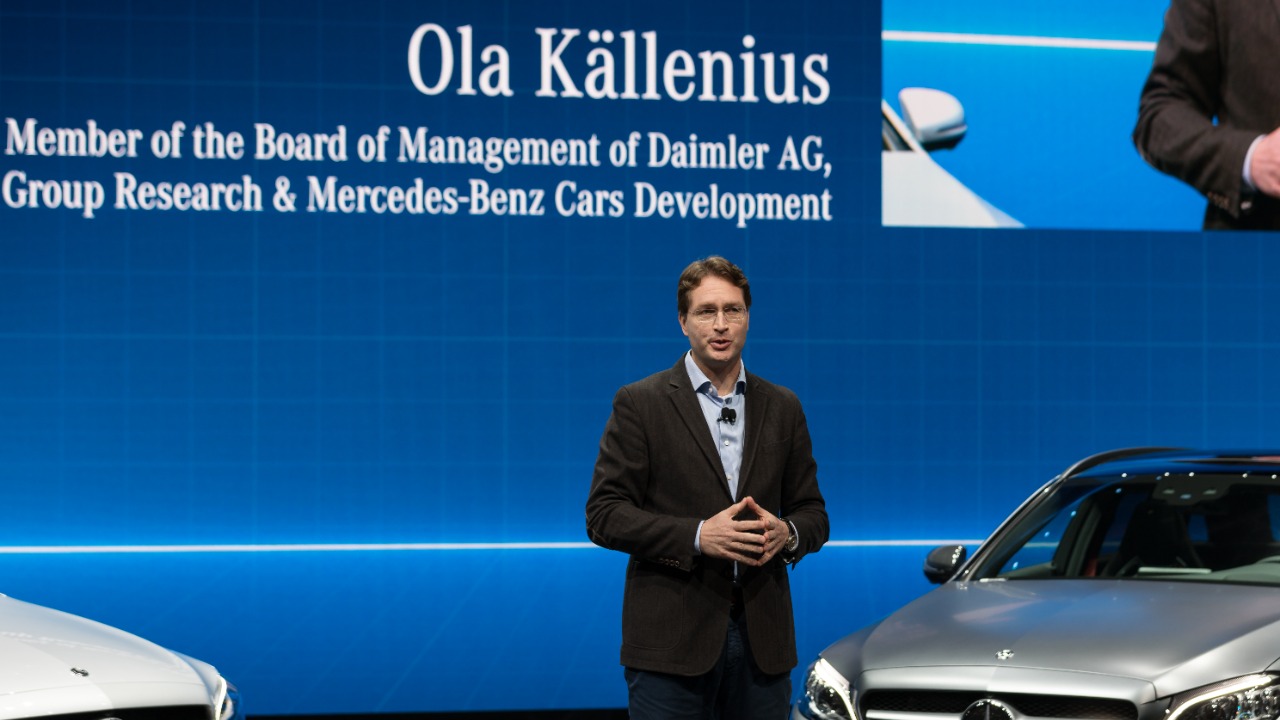
The Trump administration’s quiet attempt to uproot Mercedes-Benz from Stuttgart and replant its headquarters on American soil was more than a one-off sales pitch. It was a window into how far Washington is now willing to go to redirect industrial power, and how firmly some European champions intend to resist. At the center of the story is Mercedes-Benz CEO Ola Källenius, who listened to the offer and then drew a hard line, insisting the company’s German roots “cannot and should not be torn from the ground.”
That clash between political ambition and corporate identity captures a deeper tension in the global economy. Governments are increasingly acting like aggressive recruiters in a high-stakes talent war, while multinationals weigh not just tax breaks and tariffs, but history, brand and supply-chain resilience. The failed Mercedes pitch shows what happens when those calculations collide.
The secret pitch: Lutnick, Trump and a headquarters on the move
According to multiple accounts, the push began when Commerce Secretary Howard Lutnick, acting for President Donald Trump, approached Mercedes-Benz Group with a proposal to shift its global headquarters from Stuttgart to the United States. The idea was not simply to add another factory or expand an existing plant, but to relocate the nerve center of one of Europe’s most storied manufacturers. Reporting indicates that Lutnick framed the move as a strategic partnership, promising a friendlier regulatory climate and a political champion in the White House who has made reshoring a signature priority.
Behind the scenes, the administration’s goal was clear: convert a symbol of German engineering into a flagship of Trump’s industrial policy. One detailed account notes that the Trump Administration Sought as part of a broader effort to tilt global industrial power toward the US. That ambition fits neatly with Trump’s long-standing focus on visible corporate wins, from auto plants to semiconductor fabs, that can be pointed to as proof that “America First” is more than a slogan.
Tariffs, threats and the limits of economic hardball
The pitch did not unfold in a vacuum. Trump has repeatedly used tariffs and the threat of new trade barriers as leverage, and Mercedes executives were acutely aware of that backdrop. Accounts of the meeting describe Lutnick highlighting the costs of potential tariffs on vehicles imported from Germany, and contrasting them with the advantages of producing and managing operations from inside the US market. One report on the episode notes that the administration explicitly linked tariffs, costs and the strength of Germany’s auto sector to its push to bring more production and decision-making across the Atlantic, underscoring how trade policy has become a bargaining chip in corporate location decisions.
Yet there are clear limits to this kind of economic hardball. Mercedes already has a significant manufacturing footprint in America, including its long-standing plant in Alabama, which means the company can hedge against some tariff risk without uprooting its headquarters. A separate account of the administration’s outreach describes how officials tried to persuade Mercedes-Benz to expand its production and manufacturing footprint in America, but even that more incremental ask ran into resistance once it was tied to political pressure rather than pure business logic, as detailed in coverage of how the Trump Administration Tried to move more of its operations.
Ola Källenius’s hard no and what it says about corporate identity
When the offer reached Ola Källenius, the response was unambiguous. The Mercedes-Benz CEO listened to Lutnick’s case and then rejected it, reportedly telling US officials that the company’s roots in Stuttgart “cannot and should not be torn from the ground.” That phrase, later recounted in several reports, was not just a sentimental flourish. It was a statement that Mercedes sees its identity as inseparable from the city where the automobile was invented and where its headquarters has long stood, a stance echoed in coverage that described how Germany’s auto heritage remains central to the brand.
Other reports reinforce how firmly Källenius shut the door. One account notes that the Benz CEO Ola told US Commerce officials that Mercedes’ roots are not going anywhere, while another describes how the Mercedes-Benz CEO flatly rejected the Trump administration’s pitch to move the HQ to the US. In a political environment where some companies have been quick to trumpet new US investments after a single phone call from the White House, Källenius’s refusal stands out as a reminder that not every boardroom is willing to trade history and home-country ties for short-term incentives.
German pride, American ambition and a transatlantic fault line
For Berlin, the idea of losing Mercedes’ headquarters would have been more than an economic blow. It would have signaled that one of the crown jewels of German industry no longer saw its future anchored in its home country. That is part of why the story has resonated so strongly in German and international coverage, which has framed the episode as a test of national industrial resilience. Germany has long prided itself on a dense ecosystem of engineering talent, suppliers and research institutions that make cities like Stuttgart uniquely attractive for automakers, and losing a headquarters would have raised uncomfortable questions about whether that ecosystem is still enough.
On the American side, the move fits into a broader pattern of Trump’s economic nationalism. The president has repeatedly celebrated announcements of new plants and jobs, particularly in swing states, and a Mercedes headquarters relocation would have been a marquee win. One detailed report on the outreach notes that the Mercedes Rejected Push by Treasury Sec. Lutnick to Move HQ to the U.S., underscoring how high-level the effort was. The fact that it failed despite that pressure highlights a growing fault line: Washington’s appetite for headline-grabbing relocations is running into European companies’ determination to keep their command centers close to home.
Why the Mercedes gambit may backfire on US reshoring goals
There is a risk that this kind of aggressive HQ poaching will ultimately undercut the very reshoring gains Trump is chasing. When a government tries to pull an entire headquarters out of its home country, it can look less like a partnership and more like a raid, prompting foreign firms to diversify away from the US to avoid becoming political pawns. One account of the episode notes that the Trump Administration tried to get Mercedes to move to America as part of a broader push, but the backlash in Europe suggests that such tactics may harden attitudes rather than soften them.
It is telling that separate reporting describes how the Trump Administration Tried to Persuade Mercedes to Move Production to the U.S., only for the company to reject the proposal and reiterate that its roots could not be torn from the ground. That account, which details how Mercedes Rejected Trump overtures on production as well as headquarters, suggests that heavy-handed political pressure may actually reduce the willingness of European automakers to expand in the US, even when the underlying economics might otherwise support it.
More From The Daily Overview
*This article was researched with the help of AI, with human editors creating the final content.

Grant Mercer covers market dynamics, business trends, and the economic forces driving growth across industries. His analysis connects macro movements with real-world implications for investors, entrepreneurs, and professionals. Through his work at The Daily Overview, Grant helps readers understand how markets function and where opportunities may emerge.