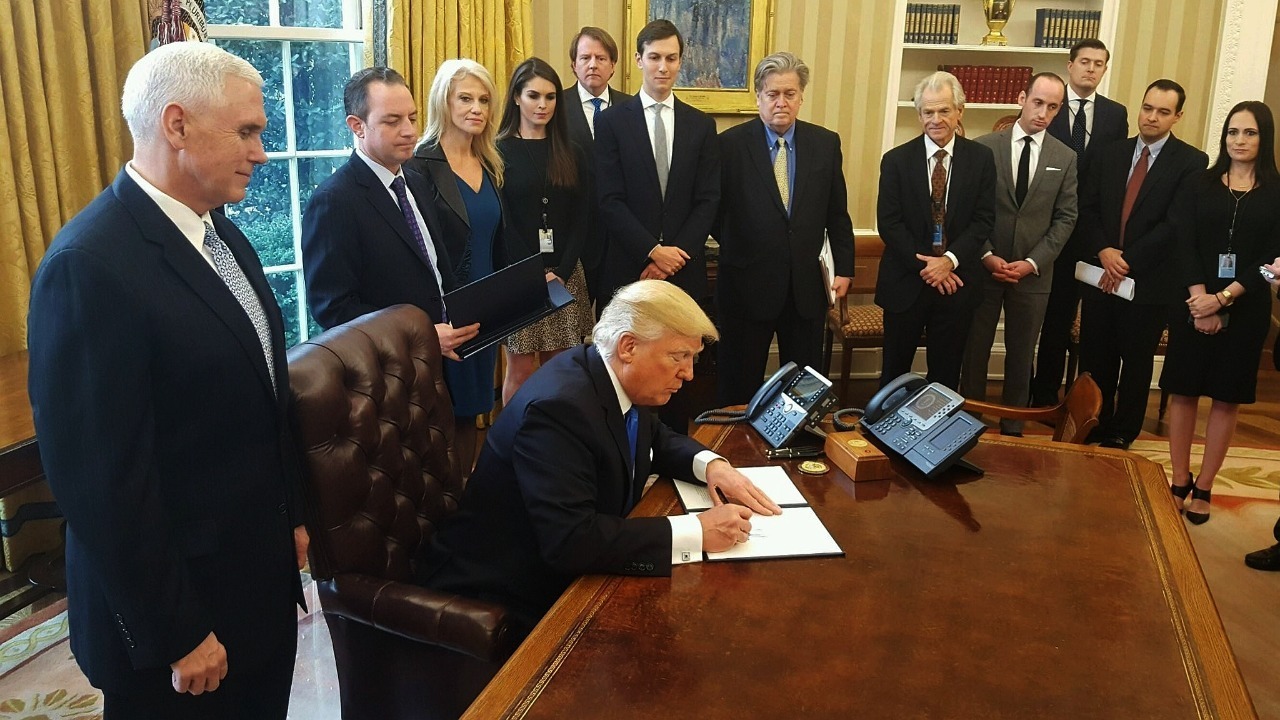
President Donald Trump is sharpening his focus on legal immigration, urging cuts to visa programs and arguing that the current system is buckling under its own weight. His push to slim down pathways into the United States is framed as a response to pressure on public services and border management, even as business groups and some lawmakers warn that aggressive reductions could backfire on the economy and labor market.
By tying visa limits to broader concerns about system strain, Trump is trying to recast legal immigration as part of the same challenge as unauthorized crossings and asylum backlogs. The debate now centers on whether trimming visa categories will relieve that pressure or simply shift it elsewhere in an already stressed immigration infrastructure.
Trump’s latest call to cut back visas
Trump has moved from criticizing illegal border crossings to explicitly targeting legal channels, arguing that the United States issues too many visas and that the volume is unsustainable. He has framed the problem as one of capacity, saying that federal agencies, local communities and social services are overwhelmed and that the only realistic response is to reduce the number of people entering through work, family and humanitarian programs. In his telling, the visa system is no longer a controlled gateway but a pipeline that feeds into an already overloaded immigration apparatus.
That argument builds on earlier efforts to restrict categories such as family-based visas and the diversity lottery, which Trump has repeatedly linked to security and resource concerns. Reporting on his immigration agenda describes a consistent pattern of proposals to narrow eligibility, tighten screening and cap overall numbers, often justified by references to strained processing backlogs and the costs of housing and supporting newcomers once they arrive, as detailed in recent coverage and corroborated by additional reporting.
How the administration links visas to “system strain”
In public remarks and internal talking points, the administration has started to treat legal visas as part of a single pressure system that includes asylum claims, humanitarian parole and unauthorized crossings. Officials argue that every new entrant, regardless of category, eventually draws on the same pool of adjudicators, detention space, housing support and local services, which they say are already stretched thin. By that logic, cutting visa numbers is presented as a way to relieve pressure on immigration courts, reduce wait times and free up resources for enforcement at the southern border.
Data on backlogs and processing times supports the claim that the system is under stress, even if the causes are more complex than raw visa volume. Analyses of U.S. Citizenship and Immigration Services caseloads show millions of pending applications and petitions, with some categories facing multi‑year waits, while immigration courts have accumulated hundreds of thousands of unresolved cases, according to backlog research. Separate reporting on local impacts documents how cities that receive large numbers of new arrivals, including those with legal status, have struggled to expand shelter capacity and social services, a trend highlighted in recent accounts of municipal budgets and emergency spending.
Targeted visa categories in Trump’s sights
Trump’s calls to trim legal immigration are not evenly spread across all visa types, and his rhetoric has singled out specific categories as especially problematic. Family-based visas beyond the nuclear family, the diversity visa program and certain humanitarian pathways have been portrayed as low‑skill or low‑screening channels that add to population growth without clear economic benefit. At the same time, he has periodically criticized high‑skilled programs such as H‑1B, arguing that they can be abused to undercut American workers, even as some of his advisers push to preserve or refocus those visas on what they describe as “the best and the brightest.”
Reporting on draft policy documents and public speeches indicates that the administration has explored numerical caps and tighter eligibility rules for extended-family sponsorship, as well as proposals to eliminate or sharply reduce the diversity lottery, which currently allocates 55,000 immigrant visas each year, according to State Department data. Coverage of internal debates also describes efforts to narrow humanitarian parole and temporary protected status, with officials arguing that these tools have been stretched beyond their original intent, a theme that appears in policy previews and legal immigration analyses.
Economic stakes of trimming legal immigration
Any move to cut visa numbers collides with the reality that many sectors of the U.S. economy depend on foreign workers and new residents to fill jobs and sustain growth. Economists have repeatedly found that immigrants, including those on temporary and permanent visas, contribute to labor force expansion, entrepreneurship and innovation, particularly in technology, health care and agriculture. Reducing legal pathways risks tightening already constrained labor markets, especially in regions with aging populations and low birth rates, where employers rely on a steady inflow of workers to keep factories, farms and service industries running.
Studies cited in recent coverage show that immigrants account for a significant share of net labor force growth and that foreign‑born workers are overrepresented in fields such as software development, nursing and seasonal farm work, as documented in labor statistics and summarized in economic research. Business coalitions have warned that sharp visa reductions could exacerbate shortages that already affect sectors from semiconductor manufacturing to elder care, a concern reflected in industry statements. At the same time, some analyses note that better targeting of visas toward documented labor gaps, rather than across‑the‑board cuts, could address both economic needs and public concerns about system capacity, a trade‑off explored in policy proposals.
Labor market pressures and the “American worker” argument
Trump has framed visa reductions as a defense of U.S. workers, arguing that employers use foreign labor to suppress wages and avoid investing in training. That message resonates in industries where workers feel squeezed by automation, outsourcing and the rise of contract work, and it allows the administration to present cuts to legal immigration as part of a broader pro‑worker agenda. The political appeal is clear: by casting visa holders as competitors in a tight job market, the White House can claim to be protecting paychecks and bargaining power, even as economists debate the actual impact on wages.
Empirical research on immigration and labor markets paints a more nuanced picture than the zero‑sum framing suggests. Large‑scale studies have found that immigration has modest effects on average wages for native‑born workers, with some downward pressure in specific low‑skill segments but gains in complementary roles and over the long term, according to major reviews. Analyses of H‑1B and other skilled visas indicate that foreign professionals often fill gaps in STEM fields and can spur job creation by supporting business expansion, as summarized in research on innovation. Reporting on Trump’s messaging shows that these complexities rarely surface in his speeches, which instead highlight individual stories of displacement and frame visa cuts as a straightforward way to “put American workers first,” a theme traced in recent coverage.
Backlogs, bottlenecks and the real sources of strain
While Trump points to visa volume as a core driver of system strain, many experts argue that the more immediate problem is chronic underinvestment in processing capacity and outdated procedures. Immigration agencies still rely heavily on paper files, manual data entry and fragmented IT systems, which slow adjudications and make it harder to manage surges in applications. Court dockets have ballooned as enforcement actions outpace the hiring of immigration judges and support staff, creating multi‑year waits that fuel public frustration and uncertainty for applicants.
Analyses of agency operations describe how staffing shortfalls, fee‑funded budgets and shifting policy directives have combined to produce persistent backlogs, even in years when application numbers were relatively stable, as detailed in government audits. Reports on immigration courts show more than 3,000,000 pending cases nationwide, with average wait times measured in years rather than months, according to case tracking data. Policy experts quoted in recent commentary argue that without investments in technology, personnel and streamlined rules, simply cutting visa numbers would treat a symptom rather than the underlying administrative disease.
Local impacts on cities, schools and services
Trump’s argument about system strain draws political force from visible pressures in cities and states that have absorbed large numbers of newcomers in a short period. Local officials in places like New York, Chicago and Denver have reported rising costs for shelter, schooling and health care, and some have called for federal help or tighter controls on new arrivals. These challenges are often most acute when migrants arrive without clear housing plans or work authorization, but they can also affect communities that receive substantial numbers of family‑based or humanitarian visa holders who need time to establish themselves.
Reporting from major urban centers documents how school districts have scrambled to add bilingual staff, how hospitals have expanded charity care and how city budgets have been reshaped by emergency spending on temporary housing, as described in New York coverage and echoed in Midwestern reporting. At the same time, longer‑term studies show that immigrant communities can revitalize neighborhoods, expand the tax base and offset population decline, particularly in smaller cities and rural areas, according to demographic analyses. That tension between short‑term strain and long‑term benefit complicates the case for broad visa cuts, suggesting that better coordination and support for receiving communities may matter as much as raw numbers.
Legal and political constraints on sweeping cuts
Even if Trump is determined to shrink legal immigration, his ability to do so unilaterally is limited by statute and the courts. Congress sets most numerical caps for permanent visas, and while the executive branch has significant discretion over how to administer programs, attempts to suspend or radically curtail categories have repeatedly drawn legal challenges. Judges have scrutinized efforts that appear to conflict with explicit statutory mandates or that rely on emergency powers in ways that courts view as overly broad or insufficiently justified.
Past litigation over travel bans, refugee admissions and temporary visa restrictions offers a roadmap for how future cuts might be contested, with plaintiffs arguing that the administration is exceeding its authority or acting in an arbitrary and capricious manner under the Administrative Procedure Act, as outlined in recent case summaries. Political dynamics also matter: business‑aligned Republicans and many Democrats have signaled resistance to deep reductions in employment‑based visas, while some lawmakers from high‑immigration districts oppose cuts to family reunification, according to Capitol Hill reporting. These constraints suggest that any sweeping attempt to “trim down” visas will likely unfold through a mix of regulatory changes, enforcement priorities and incremental adjustments rather than a single dramatic overhaul.
What a sustainable visa strategy could look like
The clash between Trump’s push for reductions and the system’s real constraints has revived a broader question: what would a sustainable legal immigration framework actually require. Many policy experts argue that the answer lies less in blunt cuts and more in rebalancing visa categories, modernizing processing and aligning admissions more closely with both humanitarian commitments and economic needs. That approach would treat legal immigration as a managed asset rather than a liability, while still acknowledging the capacity limits of agencies and local communities.
Proposals along these lines include shifting some visas from extended‑family categories to employment‑based slots, expanding merit‑based criteria within existing caps, and investing in digital case management to reduce backlogs, ideas laid out in bipartisan blueprints. Other recommendations focus on creating more flexible regional or sector‑specific visas that respond to documented labor shortages, along with stronger federal support for cities and states that receive large numbers of newcomers, as discussed in integration studies. Whether Trump’s call to slim down visas ultimately leads to such reforms or simply to narrower access will depend on how Congress, the courts and the public respond to his argument that the system is under intolerable strain.
More From TheDailyOverview
- Tennessee loses $2.6B megafactory and faces major layoffs
- Retired But Want To Work? Try These 18 Jobs for Seniors That Pay Weekly
- What to do with your pennies after the U.S. stops minting them
- Home Depot CEO warns of a troubling customer trend in stores

Grant Mercer covers market dynamics, business trends, and the economic forces driving growth across industries. His analysis connects macro movements with real-world implications for investors, entrepreneurs, and professionals. Through his work at The Daily Overview, Grant helps readers understand how markets function and where opportunities may emerge.

