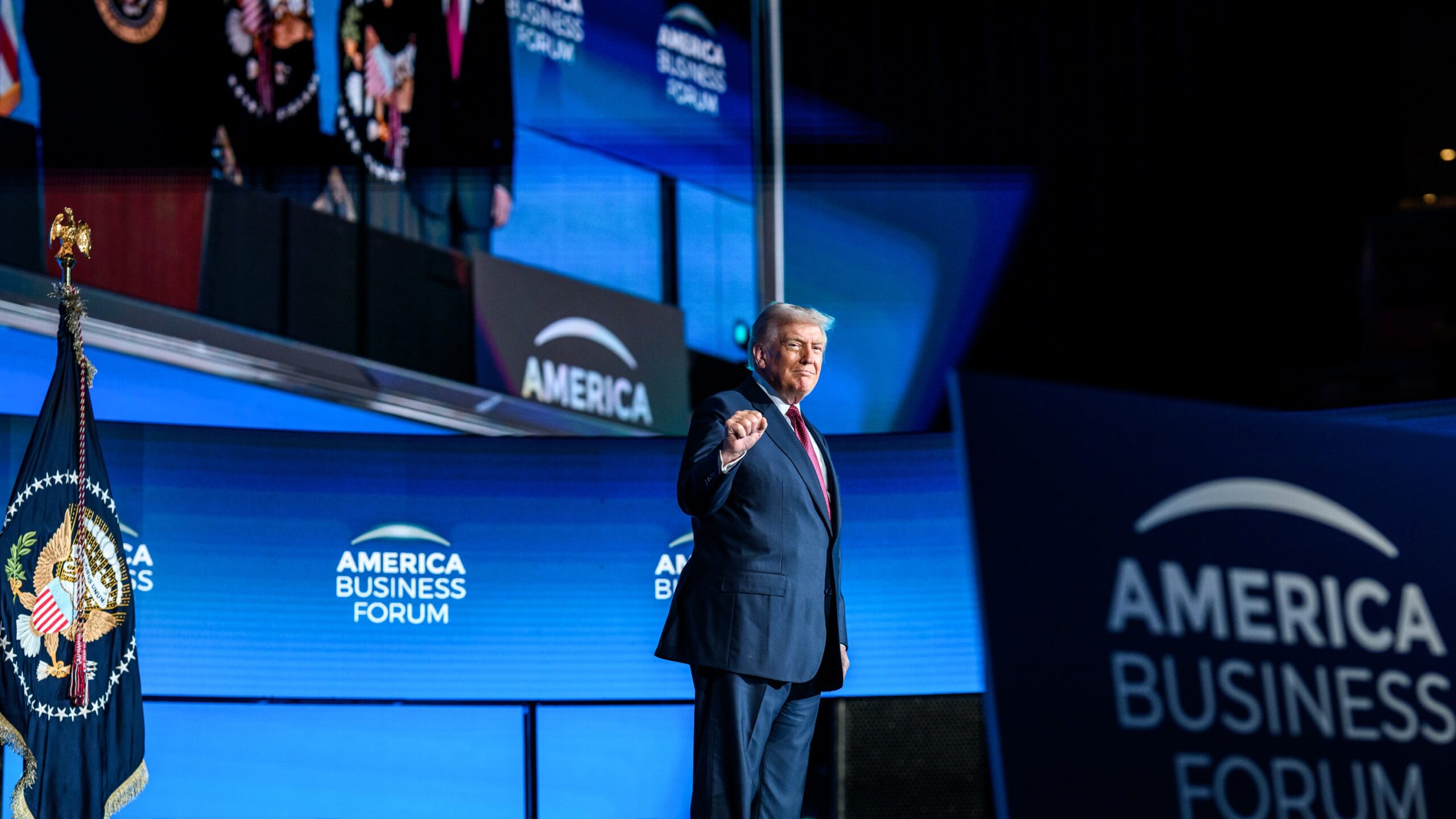
President Donald Trump told Americans that by Jan. 20, credit card companies would be breaking the law if they charged more than 10 percent interest. Yet as that deadline passed, card statements still showed rates in the high teens and twenties, and banks kept business as usual. The gap between the promise and reality lies in the collision of political messaging, legal limits on presidential power, and fierce resistance from the financial industry.
I see the failed 10 percent ceiling as a case study in how sweeping economic pledges run into the hard architecture of U.S. lawmaking. Trump’s vow energized borrowers drowning in double digit card bills, but it also underestimated how much authority sits with Congress, regulators and courts, not just the Oval Office.
What Trump actually promised cardholders
Trump did not float the 10 percent idea as a vague aspiration, he framed it as an imminent rule. In public remarks earlier in January, Trump said credit card companies would be “in violation of the law” if they did not bring rates down to 10 percent by Jan. 20, a claim later dissected in a detailed fact check. Trump told the credit card industry it had until Jan. 20 to impose that 10 percent interest cap, a deadline repeated in a widely shared social media post that quoted him as saying companies that failed to comply would face unspecified consequences. In another account of the same pledge, Trump called for a 10 percent cap on card rates by Jan. 20 and yet, as one detailed analysis noted, card rates barely moved.
The promise was not just rhetorical flourish, it was packaged as a concrete consumer rescue. One breakdown of the plan’s key takeaways noted that President Donald Trump proposed a 10 percent cap that would start on a Tuesday, with the expectation that by the next day card issuers would have to comply or risk being out of bounds. Another explainer on President Trump’s pledge stressed that he was demanding a nationwide 10 percent ceiling and warning that anything higher would be unacceptable. Trump’s own framing left little room for nuance, which is why the absence of any legal change by Jan. 20 now stands out so sharply.
The legal wall: why the White House could not flip a switch
Once I looked past the rhetoric, the first obstacle was straightforward: the president cannot unilaterally rewrite private lending contracts. A detailed regulatory update pointed out that, under existing precedent, an act of Congress is the only clear legal path to capping interest rates nationwide, and even that might require state level changes. Another legal analysis echoed that, explaining that despite Trump’s statements, the White House has limited authority to impose a nationwide cap on private lending rates without new legislation.
That legal reality helps explain why, even as Trump talked about companies being “in violation of the law,” experts kept stressing that there was no such law on the books. One consumer focused explainer framed the core question bluntly, asking what happened to President Trump’s proposed 10 percent cap and answering that the proposed 10 percent credit card interest limit had not taken effect because it lacked a statutory basis. A separate breakdown of what happened to the plan underscored that any binding cap would require Congress to change how credit is offered nationwide. In other words, the Jan. 20 deadline was a political line in the sand, not a legal one.
Congress and the stalled legislative path
Trump’s team did eventually pivot toward the branch that actually writes laws. In mid January, Washington watchers noted that, under existing court decisions, only an act of Congress could deliver a durable nationwide cap, and that such a bill would not fit neatly into the Jan. 20 timeline. By the following week, Trump was publicly looking to lawmakers, with one report describing how he turned to Capitol Hill and asked legislators to back a 10 percent ceiling, a shift captured in coverage by Paige Smith. That account noted that the president’s allies were exploring statutory options rather than relying solely on executive orders.
On the Senate side, the most concrete step was the Introduced S.381, formally titled the 10 Percent Credit Card Interest Rate Cap Act, which would temporarily cap card interest rates and direct agencies such as the Federal Reserve and the Federal Trade Commission to enforce the limit. The bill’s appearance underscored that at least some lawmakers were willing to put Trump’s idea into legislative text. But the measure remained only that, a proposal introduced in the Senate, not a law signed by the president. Without passage in both chambers and a signature, the Jan. 20 deadline came and went with no statutory teeth behind Trump’s threat.
Wall Street, banks and a fierce lobbying counterattack
Even before the deadline, the financial industry was signaling that it would not quietly accept a 10 percent ceiling. In Washington, The Administration announced plans to issue an executive order imposing a temporary 10 percent cap on credit card interest rates, prompting the main bank lobby to warn that such a move would restrict access to credit and hurt borrowers who rely on cards, a pushback detailed in a statement from Washington. Another industry response described how banks argued that a hard ceiling would force them to pull back from higher risk customers, leaving some households without any revolving credit at all. That same concern surfaced in a separate explainer on why President Trump’s demand could backfire, with analysts warning that a strict cap might force millions of card cancellations.
Individual banks were just as blunt. One report noted that Capital One got little resistance from the White House when it finalized its purchase and merger with Discover Financial, but that the same Capital One and its peers balked when Trump pushed for a one year 10 percent cap, warning of reduced card products for some demographics. U.S. Bancorp, identified by its ticker USB, saw its stock move as investors weighed the potential impact, and CEO Gunjan Kedia said the proposed 10 percent cap would severely affect its clients and the products the card would offer. At the very top of Wall Street, JPMorgan’s Jamie Dimon went further, with one account quoting him calling credit card interest rate caps an “economic disaster,” a warning that appeared in coverage of how Trump had proposed capping rates at 10 percent for a year and called on Congress to pass legislation.
Markets, experts and the quiet non‑compliance
As the Jan. 20 date approached, markets and experts treated Trump’s deadline as a risk scenario, not a certainty. One market commentary noted that Markets seemed to price in a worst case outcome, rapid implementation of measures that would not give banks time to adjust, even though the same analysis stressed that executive orders or agency rulemaking could not easily override existing lending frameworks. A separate consumer oriented piece asked what would happen to borrowers if the cap really took effect and concluded that, while some cardholders would see lower interest, others might lose access to credit altogether, a theme echoed in the What This Means section of that analysis. Another industry focused feature quoted Kolk saying that “if a 10 percent rate cap was actually implemented on credit cards the impacts would be unprecedented,” warning that millions of accounts could be closed, a stark assessment captured in coverage of what Kolk and other experts expect next.
More From TheDailyOverview
*This article was researched with the help of AI, with human editors creating the final content.

Silas Redman writes about the structure of modern banking, financial regulations, and the rules that govern money movement. His work examines how institutions, policies, and compliance frameworks affect individuals and businesses alike. At The Daily Overview, Silas aims to help readers better understand the systems operating behind everyday financial decisions.

