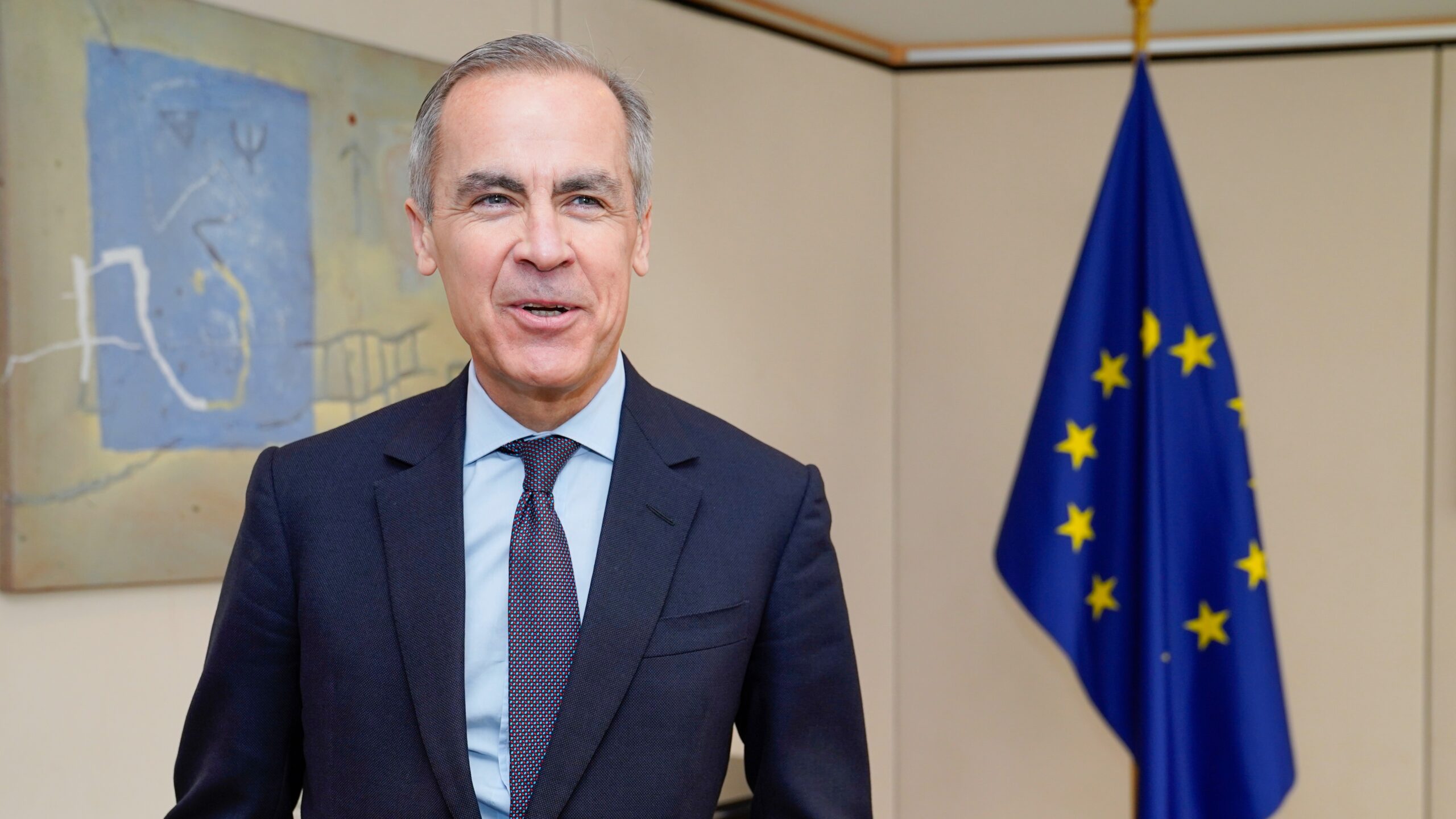
Canada’s new trade pact with China has detonated a political storm on both sides of the border, with one U.S. senator declaring that Washington “just got absolutely rolled.” The agreement, centred on electric vehicles and farm exports, is being hailed by Prime Minister Mark Carney as a strategic breakthrough and condemned by critics as a risky opening for Beijing into North America’s economy. At stake is not only the future of Canadian industry but also the balance of power in the continent’s trade architecture.
As I see it, the fury is less about any single tariff cut and more about what the deal signals: a middle power trying to carve out room between a protectionist United States and an assertive China, and forcing everyone else to adjust on the fly.
What Carney actually signed with Beijing
The core of the pact is a Preliminary Agreement-In-Principle to Address Economic and Trade Issues between Canada and the People’s Republic of China, which lays out a roadmap for lower barriers on both sides. Ottawa’s own Backgrounder describes a package that would reopen Chinese markets to Canadian canola and other farm goods while easing frictions over steel and aluminum. The same framework underpins a broader strategic partnership on trade and investment that positions Canada as a preferred supplier of critical minerals and agri-food to a fast growing Asian giant.
On the Chinese side, officials have signalled that they are prepared to resolve an anti dumping investigation into exports of Canadian origin canola seed and to revisit a similar probe into pea starch. Legal analysis of the new strategic partnership notes that in Agriculture, China appears ready to lift long standing irritants that have cost prairie farmers access to a market of more than one billion consumers. For Carney, who has framed trade diversification as economic survival, those concessions are the political counterweight to the more controversial automotive provisions.
The EV gambit that enraged Washington and Ontario
The most explosive element of the deal is Canada’s decision to slash tariffs on imported Chinese electric vehicles, a move that instantly set Ottawa at odds with both the White House and key provincial leaders. Reporting on the Beijing visit describes how Canada agreed to cut its tariff on Chinese EVs in return for lower barriers on Canadian exports, with Prime Minister Mark Carney making the announcement after speaking to the media at Ritan Park in Beijing, China. The new rate, which Canadian officials say will fall far below the 100 percent wall maintained in the United States, effectively invites Chinese manufacturers to treat Canada as a launchpad into the North American market.
That prospect has infuriated U.S. trade hawks and domestic auto interests, who warn that cheap Chinese models could undercut Ford F 150 Lightnings and Tesla Model 3s assembled in Michigan and Texas. A detailed account of the reaction quotes U.S. officials warning that Canada will regret the decision to allow Chinese EVs into its market, arguing that the lower tariff will let subsidized Chinese brands flood showrooms from Vancouver to Halifax. In Ontario, where assembly plants for Ford, General Motors and Stellantis anchor thousands of jobs, Ontario Premier Ford delivered an angry tirade warning that slashing the EV tariffs would give Chinese manufacturers a decisive edge and put all Canadians at risk.
Why U.S. politicians say they were “rolled”
In Washington, the deal has become a proxy fight over who sets the rules of North American trade. Senator Brian Schatz, speaking to reporter Ashleigh Fields, complained that the United States had been “absolutely rolled” by the China Canada arrangement and accused Ottawa of inviting Chinese supply chains into the continent through the back door. A companion version of the same interview, flagged as NOW PLAYING with a prompt to Listen, underscores how quickly the phrase has become shorthand in U.S. politics for a perceived strategic blunder.
President Trump has taken a more ambivalent line, publicly acknowledging the deal on Friday and encouraging Carney to build ties with China even as his advisers fret about the implications. In one account of his remarks, President Trump is quoted saying “That’s OK. That’s what he should be doing,” before warning that Chinese firms could use Canada to burrow into the North American supply chain. A separate analysis notes that, However, in the wake of renewed bilateral ties between Canada and China, the president was less hostile and more sanguine in tone, even as his trade team warned that Chinese EVs and batteries could enter North America through Canada and complicate future CUSMA negotiations.
Carney’s high wire act between Beijing and Washington
For Mark Carney, the deal is part of a broader attempt to reposition Canada as a nimble middle power that can talk to both Washington and Beijing without being swallowed by either. Earlier this week, Mr. Carney capped a whirlwind of diplomacy with a speech in Davos after official visits to China and Qatar, where he cast Canada as a country that must “flex” on the global stage simply to ensure its own survival. A tally of his international trips since taking office shows a leader intent on diversifying away from over reliance on the United States, even as he reassures voters who elected him last spring that he will protect domestic jobs.
That balancing act is visible in the fine print of the agricultural and industrial chapters. Canadian officials say they were “leaning on an open door” in Beijing when they pressed for the removal of barriers on canola, with the agriculture minister explaining that, On Friday, the Liberal government reached a deal with Beijing to allow tens of thousands of tonnes of Canadian seed back into Chinese crushers. The same background material from Ottawa’s Preliminary Agreement in Principle to Address Economic and Trade Issues between Canada and the People, Republic of China, stresses that Canada expects that Canadian canola exporters will regain stable access to the Chinese market as part of a wider Trade Diversification strategy.
Backlash at home, and a bet on the cars of the future
At home, Carney is facing a wall of criticism from opposition politicians who argue that he has traded away leverage for uncertain gains. Some Canadian politicians outside of Carney’s government were not impressed, with Conservative leader Pierre Poilievre among those who slammed the deal as naive about Beijing’s intentions. One account of the reaction notes that Some Canadian critics accused Carney of repeating the mistakes of past Western leaders who underestimated rising powers, while Carney’s allies counter that the alternative is to be squeezed between protectionism in Washington and industrial policy in Beijing.
Carney is betting that cheaper EVs will help Canada meet its climate goals and give consumers more choice, even if that means letting Chinese brands compete head to head with North American incumbents. A detailed clean energy analysis notes that Canadian Prime Minister Mark Carney gave a searing speech on the future of transport that has become one of the Most Popular reads on Chinese EV sales, setting out how a Small Oil Company Polluted Midland’s Water Reserve was used as a cautionary tale about clinging to fossil fuels. The same research, which draws on a Poll of consumer attitudes, argues that as the U.S. and Water Reserve rich regions clash over tariffs, China stands ready to step in and sell the cars of the future, from compact city EVs to long range crossovers that compete directly with Ford, General Motors and Tesla.
For Beijing, the upside is obvious. The deal gives China a friendlier landing zone in North America at a time when Washington is trying to wall off its market with punitive tariffs and local content rules. Legal commentary on the new strategic partnership notes that in Canadian agriculture and minerals, Chinese buyers now have clearer pathways to secure long term supplies. For North America’s political class, that is the real source of the anger: not just that Canada cut a deal, but that it may have quietly shifted the centre of gravity in the continent’s trade debate.
More From TheDailyOverview
*This article was researched with the help of AI, with human editors creating the final content.

Grant Mercer covers market dynamics, business trends, and the economic forces driving growth across industries. His analysis connects macro movements with real-world implications for investors, entrepreneurs, and professionals. Through his work at The Daily Overview, Grant helps readers understand how markets function and where opportunities may emerge.

