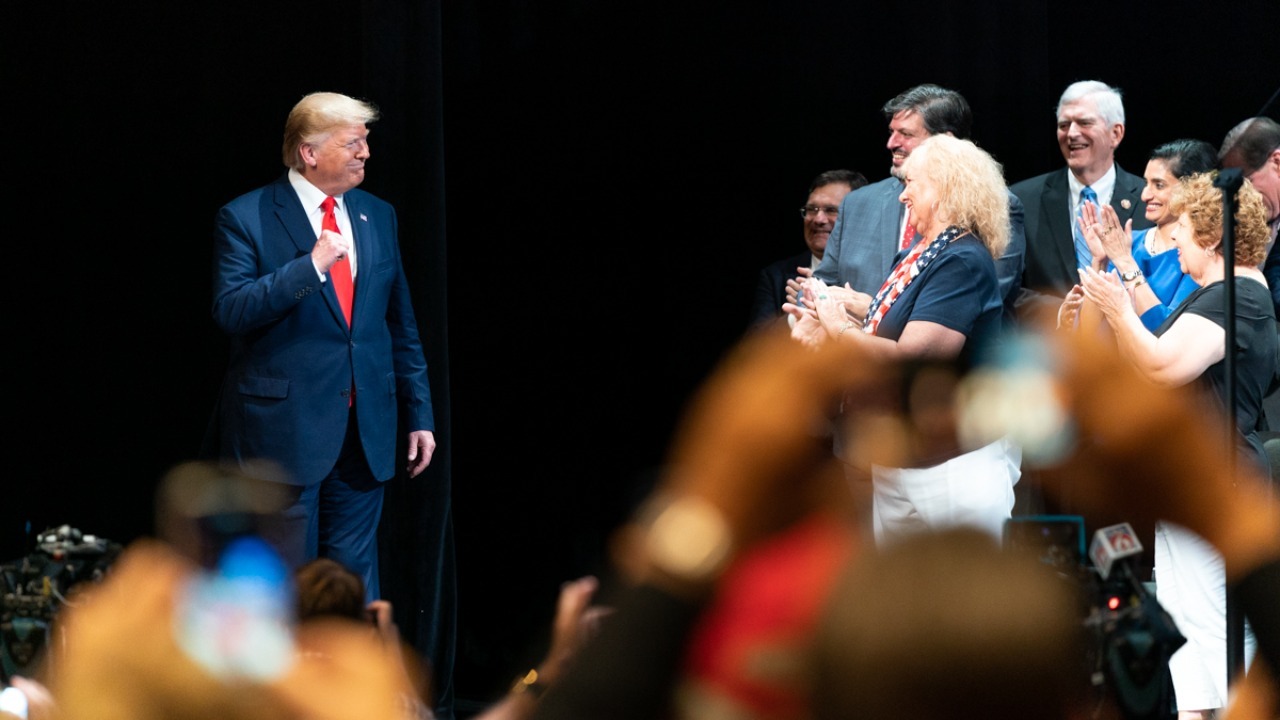
Donald Trump built a powerful bond with older voters by promising to wipe out federal taxes on Social Security benefits, turning a dry line of the tax code into a vivid campaign pledge. Two years into his second term, however, retirees are still seeing those benefit amounts show up in the taxable column of their 1040s, and the gap between the slogan and the statute has become impossible to ignore. The story of how “tax-free Social Security” morphed into a narrower deduction for some seniors is really a story about political branding colliding with budget math and legislative reality.
The original promise: a clean break from taxing benefits
When Donald Trump first vowed to end federal income taxes on Social Security benefits, he framed it as a simple matter of fairness, arguing that workers had “already paid in” and should not be taxed again in retirement. In campaign appearances and interviews, including a video where Donald Trump talked about ending taxes on Social Security benefits, the message was unambiguous: seniors would keep every dollar of their monthly checks. That clarity helped him consolidate support among older voters, who are more likely to turn out and who closely track any change to their benefits.
During the 2024 election campaign, that pledge hardened into a specific promise that he would eliminate all income taxes on Social Security, not just trim them around the edges. Analysts later noted that During the campaign, President Trump repeatedly said he would end income taxes on Social Security benefits entirely, not just on half of those benefits. That set a clear benchmark: anything short of a full repeal of benefit taxation would fall short of what voters had been told to expect.
How Social Security is actually taxed today
To understand why many retirees feel misled, I have to start with how the system still works today. Under current law, up to 85 percent of Social Security benefits can be counted as taxable income depending on how much other income a retiree has, a structure that has not been fundamentally rewritten in Trump’s second term. A tax explainer notes that Social Security benefits are still taxed under current tax law and are considered part of a recipient’s taxable income, even though some seniors can use other deductions to reduce their bill.
Financial planners are still walking clients through worksheets that look very similar to the ones they used before Trump returned to office. One major guide explains that With the new tax law, Social Security income continues to be taxable, although an additional deduction for seniors is available for tax years 2025–2028. That is a far cry from the clean, universal exemption that “no tax on Social Security” seemed to promise on the campaign trail.
Who actually pays tax on Social Security benefits
Another key piece of context is that not every retiree pays federal income tax on their benefits in the first place. The tax code already shields lower income seniors, which means the political fight is really about middle income and upper middle income retirees who have other earnings or retirement income on top of their checks. One analysis of Trump’s broader tax agenda points out that only about 40% of people who get Social Security pay federal income taxes on it, and that Paying this tax usually means they have substantial other income.
That reality helps explain why the promise to end taxation on benefits polls so well but is harder to translate into law. A video fact check from Nov noted that eliminating the tax could be a popular move among seniors, since more than 20 percent of adults are over 65, but also warned that the promise may be hard to keep. The beneficiaries of a full repeal would skew toward retirees with higher overall incomes, which complicates the politics of selling such a change as purely relief for the most vulnerable.
The “One Big Beautiful Bill” and the branding of victory
Trump’s team tried to turn the promise into legislative reality with a sprawling tax package branded as The One Big Beautiful Bill Act. The statute, often shortened to the The One Big Beautiful Bill Act, is also known as OBBBA or the Big Beautiful Bill and was enacted by the 119th Unit of Congress, giving the White House a marquee accomplishment to tout. In official messaging, the administration framed the package as proof that “promises made” on taxes were now “promises kept.”
The White House even published an article declaring that No Tax on Social Security is a Reality in the One Big Beautiful Bill, presenting the law as if it had fully delivered on the campaign rhetoric. That framing set up a clash between the administration’s branding and the fine print of the statute, which still left many retirees paying tax on part of their benefits.
What the new law actually did for seniors
When tax experts dug into the text of the Big Beautiful Bill, they found something more modest than the sweeping promise implied. Instead of carving Social Security benefits out of the tax base altogether, the law created a new deduction targeted at older taxpayers, effectively trimming taxable income for some but not all retirees. A detailed breakdown notes that the new law does not create a special exemption for taxes on Social Security benefits. What it does Instead is offer a larger standard deduction for seniors and adjust the income thresholds at which that tax kicks in.
One prominent critic highlighted how far that falls from the original pledge. In a widely shared post, Representative John Larson pointed out that the Senate version proposes a $6,000 deduction for individual incomes up to $75,000 and for married couples with incomes up to $150,000, rather than eliminating the tax outright. That structure helps some seniors, particularly those just over the old thresholds, but it still leaves the basic system of taxing benefits intact.
Fact checks: “No tax” rhetoric vs taxable reality
Independent analysts quickly pushed back on the idea that Trump had truly delivered tax free benefits. One detailed review concluded that at no point did the new law make Social Security benefits fully exempt from federal income tax, despite the White House messaging. The same review stressed that Taxes on Social Security benefits were not eliminated and that many middle income retirees would continue paying tax on some benefits.
Another fact check drilled into the specific claim that “no tax on Social Security” was part of the bill Trump signed. It found that the law does not eliminate taxes on Social Security benefits and instead focuses on other priorities like rate cuts and overtime provisions. The review stated plainly that the answer to the question “Is ‘no tax on Social Security’ part of the bill Trump signed?” is no, explaining that Social Security benefits remain taxable even as the law also touches issues like no tax on overtime. That gap between the slogan and the statute is at the heart of why many seniors now feel the promise has not been kept.
Who really benefits from the new deduction
Once the dust settled, tax experts tried to map out which seniors would actually see lower bills under the new regime. The emerging picture is that the biggest winners are retirees who already owed little or no tax on their benefits, rather than those who were paying substantial amounts. One analysis put it bluntly, arguing that the beneficiaries of the new deduction are likely those seniors who are not paying federal income tax on their Social Security benefits at all, and that the promise of ending the tax has not become the law of the land. That critique is anchored in a review that states, “Put another way, the beneficiaries of the new deduction are likely those seniors who are not paying federal income tax on their benefits, and the promise has not become the law of the land.”
Trump has also floated a broader income tax cut that would exempt people earning less than $150,000 from federal income tax, which could indirectly affect some retirees. A breakdown of that proposal notes that While retirees with low incomes generally do not owe taxes on their Social Security benefits, those who receive income from other sources could see their overall tax burden fall considerably during his second term. Even so, that is still a different policy from the original, targeted promise to stop taxing Social Security benefits themselves.
Messaging vs math: why full repeal keeps stalling
Trump’s political team has continued to talk as if the job is done, even as tax forms tell a different story. In one televised appearance, he touted “zero tax” benefits for seniors while celebrating that Social Security offices were now open for full business hours 5 days a week, presenting it as part of a broader pro senior agenda. The clip, in which he said that “our social security offices are now open for full business hours 5 days a week” and linked that to his push for “zero tax” benefits, can be seen in a video titled President Trump touts ‘zero tax’ benefits for seniors.
Yet the budget math behind a true repeal remains daunting. Nonpartisan analysts have warned that Trump’s broader tax and Social Security proposals could accelerate the program’s financial problems. One report found that But proposals Trump has made on the campaign trail would exhaust Social Security by 2031 or 2032 at the latest, according to the Committee for a Responsible Federal Budget. That warning helps explain why lawmakers have been reluctant to go all the way to a full repeal of benefit taxation, even as they embrace more limited deductions.
How seniors are hearing the message now
For many retirees, the confusion is not just about line items on a tax form but about what they were told to expect. Local news segments have tried to bridge that gap, explaining that the administration’s rhetoric about “no tax on Social Security” does not match the reality of the law. One segment from CBS News Miami keeping an eye on your money reported that the Trump administration had said the Big Beautiful Bill would mean no tax on Social Security, then walked viewers through why their benefits were still showing up as taxable income.
Tax preparation companies are fielding similar questions. One national firm notes that Aug guidance to clients has to stress that Social Security benefits are still taxed under current law, even as new deductions can reduce their income and lower their tax. That disconnect between the promise of “no tax” and the reality of “some tax, but maybe less” is why the question in the headline keeps coming back: Trump vowed tax free Social Security, so why are seniors still paying?
More From TheDailyOverview

Nathaniel Cross focuses on retirement planning, employer benefits, and long-term income security. His writing covers pensions, social programs, investment vehicles, and strategies designed to protect financial independence later in life. At The Daily Overview, Nathaniel provides practical insight to help readers plan with confidence and foresight.