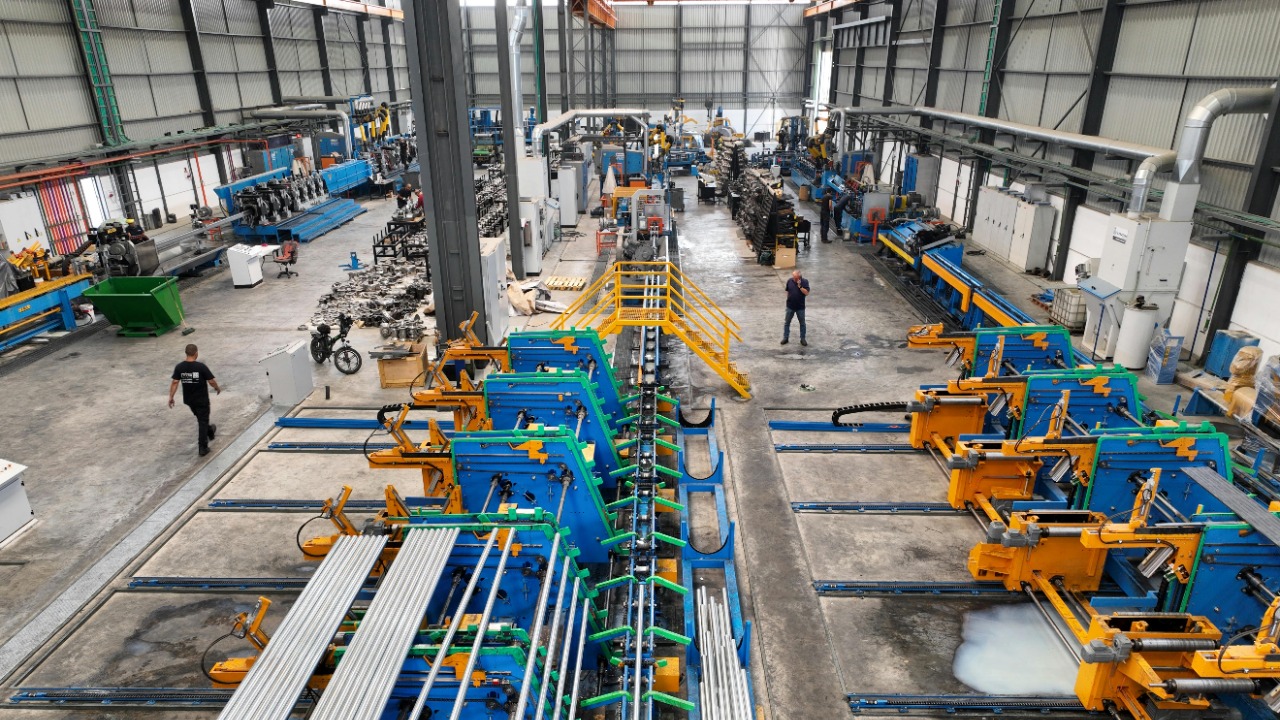
President Donald Trump is promising that a sweeping new round of tariffs will ignite a “golden age” of American manufacturing within a year, reviving factory towns and restoring middle class jobs at breakneck speed. The pitch is simple and emotionally powerful: raise barriers on imports, force production back home, and watch assembly lines roar back to life. The economic record, however, points to a far slower and more complicated reality than the one-year miracle he describes.
When I look at the data from Trump’s first tariff push and the current state of the industrial economy, the gap between the promise and the evidence is hard to miss. Previous rounds of trade fights coincided with shrinking factory payrolls, and today’s manufacturers are wrestling with high costs, weak demand, and a deep skills shortage that no tariff can fix overnight. The question is not whether the United States can rebuild manufacturing, but whether tariffs alone can do it on the timeline Trump is selling.
Trump’s one-year promise collides with past tariff outcomes
Trump is again presenting tariffs as a fast-acting cure for industrial decline, arguing that higher duties will quickly pull production from abroad and turbocharge hiring. That narrative runs into the experience of his earlier trade war, when his own signature policies were followed by a drop in factory jobs rather than a surge. In the period after his first big tariff moves, Manufacturing employment fell by 42,000, and the sector’s job growth slowed compared with the gains earlier in his presidency, a pattern that undercuts the idea that tariffs reliably trigger rapid job creation.
That earlier period is especially important because it shows how Trump’s own approach played out in real time, not in theory. Detailed Analysis of the August Jobs Day Release found that American factory payrolls were shrinking in response to Trump’s tariffs, even as employment in other parts of the economy continued to rise. That American manufacturing pullback, documented in the same American manufacturing employment research, suggests that simply repeating the same tariff-heavy playbook is unlikely to flip the script and deliver a boom within twelve months.
Economic models flag growth and jobs risks, not instant booms
Independent economic modeling also raises doubts about the idea that tariffs can deliver a near-term manufacturing renaissance without broader collateral damage. Analysts at PWBM have warned that Trump’s tariff package functions like a highly distorting tax on imports, with Many standard trade models underestimating the harm to growth and household incomes. When tariffs act as a tax on inputs that manufacturers rely on, they can raise production costs and squeeze margins, which is not a recipe for rapid hiring sprees.
Macroeconomic projections of the current tariff environment point in the same direction. A recent assessment of the Real GDP Effects of the latest Tariffs finds that they are slowing US GDP growth by 0.5 pp in 2025, with lingering drag into 2026. In the long run, the study concludes that the economy is smaller with the current tariff regime than it would be without it, a finding that sits awkwardly beside Trump’s promise of a swift golden age powered primarily by higher border taxes.
Manufacturing reality: reshoring hopes, structural hurdles
Even without new tariffs, there is genuine momentum behind bringing some production back to the United States, especially in strategic sectors like semiconductors and electric vehicles. Yet the practical obstacles to turning that trend into a broad-based jobs boom within a year are significant. Building new factories and relocating companies requires substantial investment, long permitting timelines, and complex supply chain adjustments, and even optimistic reshoring advocates acknowledge that the most significant hurdle is the workforce needed to staff those plants.
That workforce gap is already visible on factory floors. A detailed Manufacturing Forecast of the sector’s Challenges, Trends, and Workforce Solutions describes a significant skills gap that is holding back growth, with employers struggling to find enough qualified technicians, welders, and automation specialists. Without a rapid expansion of training pipelines and apprenticeship programs, tariffs that nudge production back to the United States risk colliding with the hard limit of how many skilled workers are actually available to run the machines.
What past tariffs did to factory jobs and trade deals
Trump’s earlier tariffs on imported goods, especially from Asia, offer a concrete test of his theory that higher duties automatically translate into more factory work. A careful review of those measures found that the tariffs Trump imposed on Chinese products in 2018 had a net negative effect on manufacturing jobs and on overall employment, even after accounting for any gains in protected industries. That record suggests that the pain from retaliatory tariffs, higher input costs, and disrupted supply chains outweighed the benefits for most workers on the factory floor.
Trump’s signature trade agreement in North America also fell short of his promises to remake the industrial landscape. The United States-Mexico-Canada Agreement, or USMCA, was billed as a fix for the old trade regime, but a detailed review concluded that it created more problems than it solved and did not deliver the sweeping gains for workers and firms that Trump had promised. If a full renegotiation of the United States, Mexico, Canada Agreement could not engineer a dramatic manufacturing revival on its own, it is hard to see how tariffs alone can do so in a single year.
Business sentiment: cautious optimism, not euphoria
On the ground, manufacturers are not behaving as if a guaranteed golden age is around the corner, even if they are hopeful that conditions will improve. A recent survey of industrial firms found that Article Highlights showed Business indicators were negative overall for manufacturers in 2024 amid slow demand, even as many executives expressed optimism about their firms in 2025. That mix of bruised balance sheets and cautious hope does not match the kind of exuberant investment wave that would be needed to transform the industrial landscape in twelve months.
Trump’s own economic messaging acknowledges that factories are still struggling to hire, even as he touts new projects and pledges. Reporting on his latest economic push notes that Even if all of the pledges turned into real projects, many plants are already having trouble finding qualified or willing workers, and inflation has remained above the Federal Reserve’s annual target this year. That combination of labor shortages and persistent price pressures complicates any attempt to rapidly scale up production without triggering further cost spikes for consumers.
Wall Street, Main Street, and the politics of tariff whiplash
Financial markets are also weighing the risks of Trump’s tariff-heavy strategy, particularly if it collides with slowing growth and high debt costs. One recent analysis warned that Trump’s tariff and trade policy could help set the stage for a market downturn, highlighting research by New York Fed economists that examined the future outcomes of public companies that were adversely impacted by earlier rounds of tariffs. If investors start to price in weaker earnings for globally exposed manufacturers, the cost of capital for factory expansions could rise just as Trump is urging companies to build more at home.
On Main Street, the politics of tariffs are proving more volatile than the simple story of national revival suggests. Reporting from industrial communities finds that Trump keeps changing his mind on which countries and products to target, with higher tariffs now touching more than 100 countries and leaving businesses complaining that they have had very little consistency. That policy whiplash makes it harder for manufacturers to plan multi-year investments in new plants or product lines, which are exactly the kinds of commitments a genuine manufacturing revival would require.
Trump’s allies argue that the short-term pain is worth the long-term gain, and that a tougher stance on trade will eventually force foreign governments and multinationals to accept a more favorable playing field for American workers. Yet the record from his first term, the warnings from macroeconomic models, and the lived experience of factory owners and workers all point to a slower, messier path than the one-year golden age he now promises. Tariffs can be a powerful tool, but they are also a blunt one, and the evidence so far suggests they are more likely to deliver higher costs and uneven disruption than an overnight manufacturing miracle.
More From TheDailyOverview

Grant Mercer covers market dynamics, business trends, and the economic forces driving growth across industries. His analysis connects macro movements with real-world implications for investors, entrepreneurs, and professionals. Through his work at The Daily Overview, Grant helps readers understand how markets function and where opportunities may emerge.

