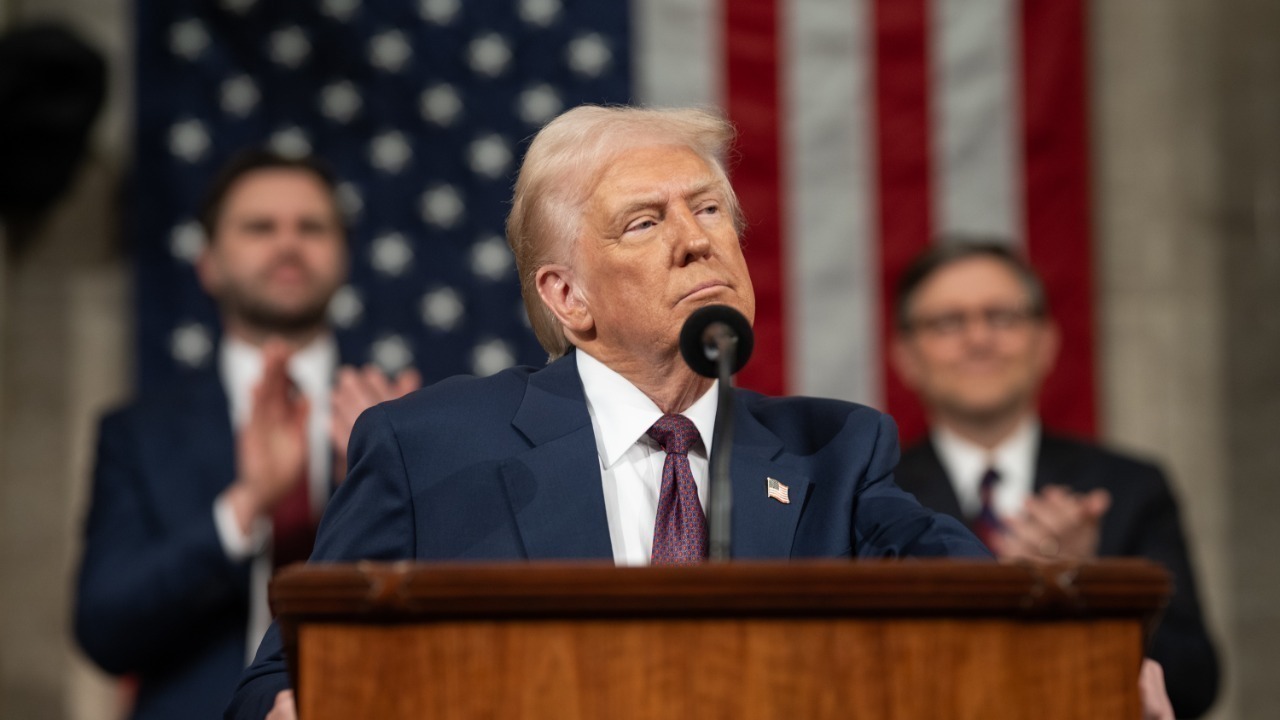
President Donald Trump is pressing ahead with plans for a new White House ballroom, but he will not say how much of the project he will personally fund. The refusal to disclose his own contribution has turned what might have been a routine facilities upgrade into a test of transparency, ethics, and influence in the modern presidency.
As questions mount about who is paying for the venue and what they might receive in return, the ballroom has become a symbol of the blurred lines between Trump’s public office and private interests. I see the funding mystery as more than a curiosity about construction costs, it is a window into how power, access, and money intersect in his administration.
The moment Trump ducked the ballroom question
The controversy sharpened when Trump was asked directly how much he would personally donate to the ballroom and declined to give a number. In a televised exchange, he shifted in his seat and said he “won’t be able to tell” the reporter how much he is contributing, a response that immediately raised eyebrows because it came in reply to a simple, factual question about his own money. That visible discomfort, captured on video, turned a technical funding issue into a vivid moment of political theater that opponents and ethics experts seized on as evidence of a deeper reluctance to be transparent about finances tied to his office, a scene preserved in the clip of him as he squirms and dodges the question.
In another recording of the same exchange, a reporter presses him again, asking “How much specifically are you donating to this ballroom?” and Trump pivots to talking about how “we’ve raised a lot of money” without ever naming his own share. The pattern is consistent, he highlights the generosity of unnamed donors and the supposed benefits of the project, but he treats his personal stake as off limits. That evasiveness is not just a stylistic quirk, it shapes how the public can evaluate whether the president is using his office to enhance his brand, to reward allies, or to secure future favors, as seen in the widely shared video of the reporter’s question.
What we actually know about the White House ballroom plan
Even as Trump sidesteps questions about his own checkbook, more details have emerged about the ballroom itself. Reporting describes a plan for a large, formal event space on the White House grounds, framed by Trump as a way to host state dinners, official receptions, and high profile gatherings without relying on temporary tents or off site venues. The project is presented as a modernization of the executive mansion’s hospitality infrastructure, a physical legacy that would outlast his term and potentially reshape how presidents stage diplomacy and political theater, according to coverage that outlines the scope of the White House ballroom project.
At the same time, the ballroom is not emerging from a formal congressional appropriations process in the way a typical federal construction project might. Instead, Trump has repeatedly emphasized that private donors will cover the costs, a structure that places the project in a gray zone between public facility and privately financed monument. That hybrid status is precisely why the funding details matter so much, because the more the project relies on outside money, the more urgent it becomes to understand who is paying, how much they are giving, and what kind of access or recognition they might receive in return, questions that are central to the scrutiny documented in a detailed fact checking analysis.
Private donors, public power, and the access question
Trump has been clear on one point, he says taxpayers will not foot the bill for the ballroom because private donors are stepping up. That claim, repeated in interviews and public remarks, is meant to neutralize criticism about government waste, but it immediately raises a different concern, what do those donors expect in return for underwriting a permanent addition to the White House? When a sitting president invites wealthy individuals or corporations to finance a project on government property, the line between philanthropy and transactional politics becomes thin, a tension highlighted in reporting that examines his assertion that private donors are paying for the ballroom.
Ethics experts quoted in that coverage point out that even if no explicit quid pro quo is promised, the optics of major donors effectively buying a piece of presidential history are troubling. A donor whose name is quietly attached to a White House ballroom, or who is repeatedly invited to events there, may gain a level of access and influence that is invisible to the public but very real inside the corridors of power. I see this as the core risk of the funding model Trump has chosen, it shifts the cost off the federal budget but potentially embeds private interests into the architecture of the presidency itself.
The ethics minefield around naming rights and recognition
One of the most sensitive questions is whether Trump will attach a donor’s name to the ballroom or otherwise give prominent recognition to those who pay for it. Social media posts and broadcast commentary have already speculated that he might name the venue after a major supporter or even after himself, a move that would blur the line between public institution and personal branding. The idea that a space inside the White House could carry the name of a political ally or benefactor has fueled criticism that the project is less about statecraft and more about cementing loyalty networks, a concern that surfaced in a widely shared post noting that Trump will likely name his donors in connection with the ballroom.
From an ethics perspective, naming rights are not a trivial detail, they are a form of currency. A donor whose name is etched into a plaque or invoked at every high profile event gains prestige and a permanent association with the presidency. That symbolic capital can translate into business advantages, political clout, or both. I view the lack of clear rules or disclosures around how recognition will be handled as a major gap in the current conversation, because without firm guardrails, the White House risks looking like a venue where influence can be purchased and immortalized in marble.
How Trump’s own contribution became the central mystery
Against this backdrop, Trump’s refusal to specify his personal contribution takes on outsized importance. If he were covering a substantial share of the cost, that fact could blunt some of the criticism about donor influence by showing that the president himself has real financial skin in the game. Instead, his repeated insistence that he cannot or will not say how much he is giving invites speculation that his own stake may be relatively small compared with that of outside benefactors, a perception reinforced by the awkward exchange where he sidesteps the question in a recorded interview.
In political communications, what a leader refuses to say can matter as much as what he volunteers. By declining to put a number on his own donation, Trump effectively signals that the figure is either politically inconvenient or strategically useful to keep vague. That ambiguity makes it harder for watchdogs to assess whether he is leveraging the prestige of the presidency to solicit money for a project that primarily serves his preferences, or whether he is genuinely leading by example as a major donor. Until he discloses the amount, the ballroom will remain as much a story about what the president will not reveal as about what he is building.
Fact checking the funding claims and legal boundaries
Independent analysts have already started to map out what is known and what remains opaque about the ballroom’s financing. Detailed fact checking has traced Trump’s public statements about private donors, examined available records on White House renovations, and compared the ballroom plan with past projects that relied on philanthropic support. That work underscores a key point, while presidents have some latitude to accept private funds for certain improvements, they are still bound by ethics rules, disclosure requirements, and restrictions on how donors can be rewarded, a framework laid out in a comprehensive review of the ballroom’s funding and ethics.
Those analyses also highlight the gaps. There is no public list of donors, no official cost estimate that has been fully documented, and no clear explanation of how naming or recognition will be handled. Without that information, it is impossible to independently verify Trump’s assurances that everything is above board. I read the fact checking as a warning that the ballroom could become a case study in how existing ethics rules struggle to keep pace when a president aggressively blends private fundraising with official spaces, especially when he resists basic transparency about his own role as a funder.
How allies and critics are framing the ballroom
Trump’s supporters have tried to cast the ballroom as a practical, even visionary, upgrade that will save money over time by reducing the need for costly temporary structures and outside venues. In their telling, the project is a savvy use of private philanthropy to enhance the White House without burdening taxpayers, a sign that the president is thinking like a builder and a businessman even in office. Some coverage sympathetic to the plan emphasizes the potential for grand state events and cultural performances, portraying the ballroom as a stage for American soft power, a narrative echoed in segments that describe the benefits of a permanent ballroom on the grounds.
Critics, by contrast, frame the same facts as evidence of self indulgence and cronyism. They argue that at a time of pressing national challenges, the president is prioritizing a vanity project that doubles as a magnet for wealthy donors seeking favor. For them, the ballroom is not a neutral venue but a physical embodiment of Trump’s approach to governance, where spectacle, personal branding, and transactional relationships often overshadow institutional norms. The sharp divide in how the project is described reflects broader polarization around his presidency, with even architectural decisions interpreted through a partisan lens.
International and historical context for presidential building projects
Trump’s ballroom is not the first time a head of state has faced scrutiny for construction on official grounds, but the combination of private funding and personal branding makes it stand out. International coverage has noted that leaders in other countries have also commissioned grand halls and ceremonial spaces, sometimes sparking debates about cost, symbolism, and democratic values. In one report, the ballroom is discussed alongside other controversial building projects associated with powerful executives, highlighting how architecture can become a proxy for political ambition, a comparison drawn in an article that situates the plan within a broader international context.
Historically, American presidents have overseen renovations and expansions of the White House, from structural repairs to new wings and security upgrades. What feels different here is the overt reliance on private donors and the president’s own branding instincts. I see the ballroom as part of a longer story about how the modern presidency is increasingly mediated through televised events, social media, and high production value backdrops. In that sense, the funding controversy is intertwined with a larger question, how much should the physical seat of the executive branch be shaped by the tastes and networks of any one occupant.
Why the unanswered funding question still matters
Months after the first questions were raised, Trump’s refusal to specify his personal contribution continues to hang over the ballroom project. Each new appearance where he touts the venue’s potential or praises unnamed donors, without clarifying his own stake, reinforces the perception that he is comfortable with a level of opacity that would be unacceptable in most public or corporate settings. In one televised discussion of the project, he again focuses on the generosity of others and the grandeur of the planned events, while sidestepping the basic question of his own check, a pattern visible in a segment where he talks up the ballroom in a broadcast interview.
For me, the unresolved funding details are not a minor footnote but a stress test of how seriously this White House takes transparency when private money intersects with public power. The ballroom will likely host state dinners, diplomatic receptions, and political celebrations long after the construction dust settles. Whether it is remembered as a symbol of generosity and modernization or as a monument to blurred ethical lines may depend on information that Trump alone controls, starting with the number he still refuses to say out loud.
More From TheDailyOverview
- Tennessee loses $2.6B megafactory and faces major layoffs
- Retired But Want To Work? Try These 18 Jobs for Seniors That Pay Weekly
- What to do with your pennies after the U.S. stops minting them
- Home Depot CEO warns of a troubling customer trend in stores

Grant Mercer covers market dynamics, business trends, and the economic forces driving growth across industries. His analysis connects macro movements with real-world implications for investors, entrepreneurs, and professionals. Through his work at The Daily Overview, Grant helps readers understand how markets function and where opportunities may emerge.