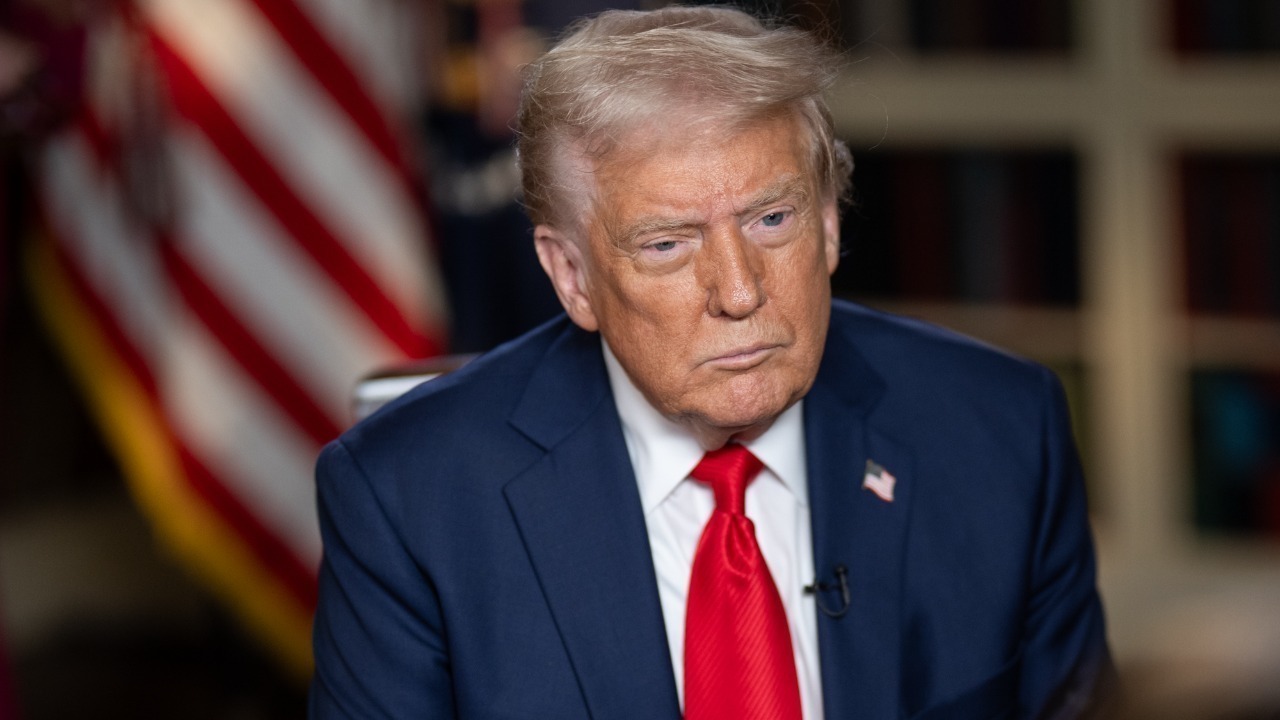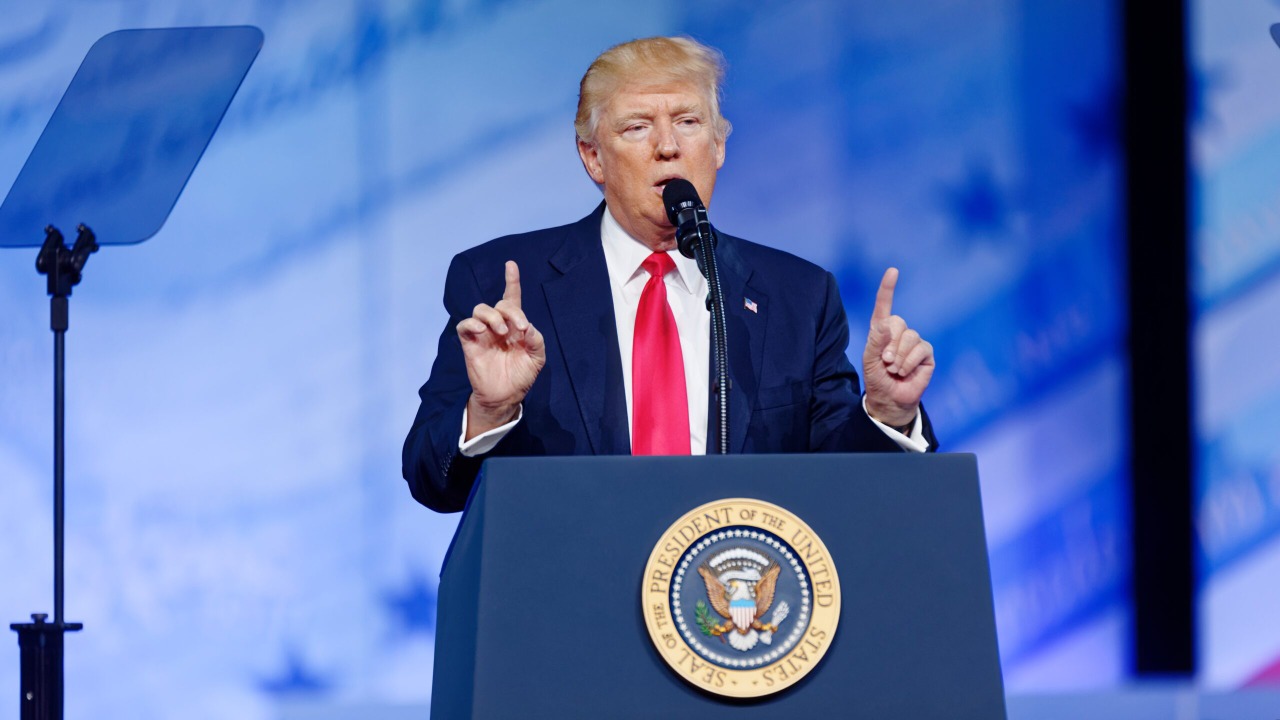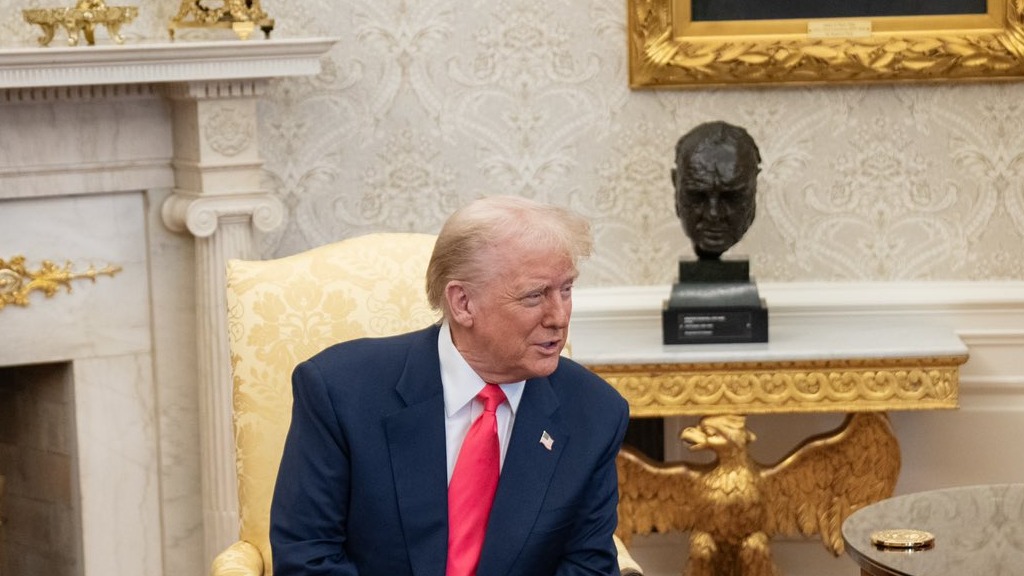
President Donald Trump is suing the Internal Revenue Service and the Treasury Department for at least 10 billion dollars, even as he sits atop the very government he is trying to force to pay him. The case, built around the leak of his tax records, has now collided with basic questions of conflict of interest, separation of powers, and who would actually foot the bill if he wins. That collision is where the story has taken its harshest turn, as officials and lawmakers move to wall off the president from his own demand for a massive payout.
At stake is not only whether Trump and his family can collect a 10 billion dollar judgment, but whether a sitting president can effectively sue himself and then oversee the machinery that would cut the check. The answer will shape how far future presidents can go in turning personal grievances into government liabilities.
How Trump ended up suing the IRS for $10 billion
The lawsuit traces back to the disclosure of Trump’s confidential tax information, which he and his lawyers say was illegally leaked from federal custody. President Donald Trump, his two eldest sons, and the Trump Org have sued the IRS and the Treasury for 10 billion dollars over what they describe as a damaging tax records leak tied to reporting that relied on years of his returns, according to Trump Org. A separate account notes that Trump and sons demand a 10 billion dollar payout in a new lawsuit against the IRS and the Treasury Department, with President Donald Trump and his two eldest sons arguing that federal officials failed to protect their tax records from illegal disclosure to a major newspaper, as described by Trump and.
Trump’s complaint leans on provisions of the Internal Revenue Code and the Privacy Act, arguing that federal agencies had a duty to safeguard his returns and those of his businesses. An amici brief filed in the case bluntly states that the Plaintiffs’ complaint has significant legal flaws and that the claims under the Internal Revenue Code and the Privacy statutes stretch those laws beyond their intended scope, according to Plaintiffs. That critique goes to the heart of whether this is a straightforward privacy case or a novel attempt by a sitting president to convert political and reputational damage into a multibillion dollar personal claim.
The built‑in conflict of a president suing his own government
Legal experts have zeroed in on the extraordinary posture of the case: President Donald Trump is both the plaintiff demanding 10 billion dollars and the head of the executive branch that would be the defendant. One analysis framed the core question as, Is President Trump’s Lawsuit Against The IRS Legitimate Despite Being Both The Plaintiff And The Defendant, noting that on January 29, 2026, President Trump filed the complaint while also controlling the agencies that must defend it and that he will have to navigate recusal and delegation issues before the case ever gets to trial, as outlined in Is President Trump. Another discussion of the same dilemma, under the banner Is President Trump’s Lawsuit Against The IRS Legitimate Despite Being Both The Plaintiff And The Defendant, stresses that Trump will have to show courts that he is not directing the government’s litigation strategy in a case where he personally stands to gain billions, as described in Is President Trump.
Outside observers have not minced words about the ethical stakes. One detailed account of the case says Trump’s demand that the federal government pay him at least 10 billion dollars creates an Enormous Conflict of Interest because the president is effectively asking the public treasury he oversees to compensate him for alleged wrongdoing by his own subordinates, as described in a piece that notes the lawsuit Creates an Enormous Conflict of Interest for the administration, linked through Creates. Another report puts it more bluntly, saying Trump’s 10 billion dollar lawsuit against the IRS raises conflict of interest concerns and quoting Legal experts who argue that President Donald Trump’s dual role as claimant and chief executive undermines public confidence in the fairness of any settlement or judgment, as detailed in Legal.
The “brutal twist”: taxpayers would pay Trump, and Congress is pushing back
The most jarring development is the confirmation that if Trump wins, the money would not come from some abstract pot, but from the public itself. Treasury Secretary Scott Bessent has already tried to distance his department from the litigation, telling reporters that Treasury’s role is limited and that he is deferring to the Justice Department on Trump’s lawsuit against the IRS, as reported in coverage of Treasury Secretary Scott Bessent’s comments linked through Treasury Secretary Scott. In a separate exchange, Bessent confirmed that taxpayers would be paying Trump if he wins the 10 billion dollar lawsuit, explaining that any judgment would come from the agency’s general fund that is used for payments and other purposes, as detailed in Bessent Confirms Taxpayers. A more detailed account of his remarks underscores that Bessent Confirms Taxpayers Would Be Paying Trump If He Wins the Lawsuit and that The Treasury would have to draw from funds that are otherwise used for payments and other purposes, as described in The Treasury.
On Capitol Hill, that prospect has already triggered a legislative counteroffensive. Washington Democrats reacted quickly Following news of President Trump’s unprecedented 10 billion dollar lawsuit against the IRS and the Treasury Departme, with Representative John Larson issuing a statement from Washington, D.C. that framed the case as an attempt to steal 10 billion in taxpayer dollars from the U.S. Treasury and vowing to stop what he called corruption plaguing our nation, as described in Washington. Larson (CT‑01) and his Democratic colleagues on the House Ways and Means Committee have introduced the Prevent Presidential Profiteering Act, a bill designed to bar any president from personally profiting from lawsuits against the federal government while in office, as outlined in a release that notes Larson, his Democratic partners on the Means Committee, and the Prevent Presidential Profiteering proposal, linked through Larson. A separate summary of the legislative fallout notes that Trump’s 10 Billion IRS Lawsuit Spurs Legislative Response, describing how, In the wake of President Trump’s 10 billion dollar lawsuit against Treasury and the IRS, lawmakers are weighing new guardrails on presidential lawsuits while the president is in office, as detailed in Billion IRS Lawsuit.
Chaos for the 2026 tax season and the IRS itself
Trump’s legal offensive is landing in the middle of an Already Chaotic Tax Season, compounding operational strain at an agency that is supposed to be processing returns, issuing refunds, and enforcing the tax code. One detailed look at the 2026 filing period notes that the Trump 10 billion dollar IRS Lawsuit Hits an Already Chaotic 2026 Tax Season, with a tax‑industry watchdog warning that the case is distracting leadership at the very moment the IRS is trying to modernize systems and respond to new compliance mandates, as described in Lawsuit Hits. A broader overview of What Trump’s 10B IRS Lawsuit Means for the 2026 Tax Season adds that, for most taxpayers, the 2026 filing process will look familiar, but the case has already prompted new internal reviews of how the IRS protects tax records from illegal disclosure, as explained in Tax Season.
More From The Daily Overview
*This article was researched with the help of AI, with human editors creating the final content.

Grant Mercer covers market dynamics, business trends, and the economic forces driving growth across industries. His analysis connects macro movements with real-world implications for investors, entrepreneurs, and professionals. Through his work at The Daily Overview, Grant helps readers understand how markets function and where opportunities may emerge.