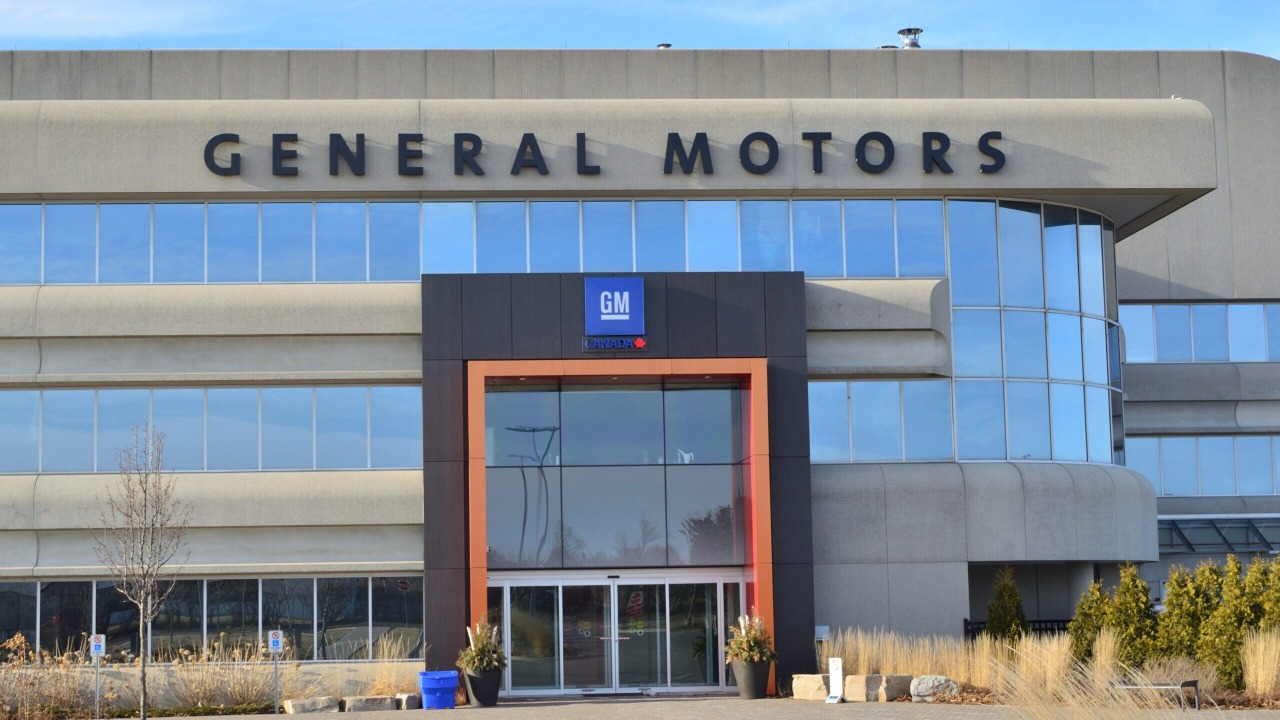
General Motors’ decision to idle a $102 million components plant in the industrial Midwest has landed like a body blow in a region that has already weathered decades of factory closures. The move puts roughly 1,700 union jobs on the line, threatening not only paychecks but also the economic backbone of surrounding communities that depend on GM’s footprint.
As the company reshapes its manufacturing network around electric vehicles and cost-cutting, the shutdown exposes a widening fault line between Wall Street efficiency and the lived reality of workers whose livelihoods are tied to legacy auto production. I see the fight over this plant as a test of how far corporate America is willing to push restructuring in a politically sensitive swing region where organized labor still has leverage.
GM’s restructuring push collides with a union stronghold
GM is pressing ahead with a sweeping restructuring strategy that prioritizes flexible, high-margin production and a faster shift into electric and hybrid platforms, and the targeted Midwest plant has become collateral damage in that pivot. The facility, which received a $102 million investment to support key components, now faces idling as GM consolidates work into newer or more automated sites that can serve both internal combustion and EV programs at lower cost. That calculus reflects a broader push inside the company to streamline its North American footprint and protect profitability as vehicle demand softens and pricing power erodes, a trend documented in recent earnings guidance and restructuring disclosures.
The plant’s unionized workforce sits at the center of this clash between cost discipline and job security. Roughly 1,700 workers represented by the United Auto Workers have been told their positions are at risk as GM rebalances capacity, even after the company committed billions in wage increases and benefits in the wake of last year’s high-profile strike. That tension is evident in filings and local reporting that tie the idling decision to GM’s broader plan to trim fixed costs by several billion dollars while still funding capital-intensive EV and software programs, a strategy the company has outlined in recent cost-cutting updates and plant investment announcements.
What 1,700 at-risk union jobs mean for the local economy
The immediate stakes of the shutdown are stark for the 1,700 workers whose jobs are on the line, but the ripple effects extend far beyond the plant gates. Auto manufacturing jobs in the Midwest typically support a dense web of suppliers, logistics firms, tool-and-die shops, and service businesses, and each union position at a GM facility can translate into multiple additional jobs in the surrounding economy. Local economic impact studies cited in regional coverage of GM plant changes have estimated that a single large assembly or components facility can inject tens of millions of dollars annually into nearby towns through wages, property taxes, and vendor contracts, a pattern echoed in recent analyses of GM’s restructuring in other Midwestern communities such as Lordstown and Orion Township.
For the workers themselves, the risk is not just the loss of a paycheck but the potential erosion of hard-won union standards that have historically lifted wages across the region. The current UAW contract with GM, which followed a six-week strike, secured significant hourly raises, cost-of-living adjustments, and improved retirement benefits, and those gains are now colliding with management’s drive to trim headcount in legacy operations. Reporting on GM’s recent labor talks and plant announcements shows how the company has tried to balance new investments in EV and battery facilities with idling or retooling older sites, often promising some retraining or relocation opportunities but leaving many workers facing uncertain futures, as seen in coverage of the UAW-GM investment commitments and subsequent plant-specific decisions.
Electric vehicles, legacy plants, and the shifting auto map
The looming shutdown underscores how the EV transition is reshaping the industrial map of the American Midwest, often in ways that leave older plants exposed. GM has poured billions into new battery joint ventures and EV-focused assembly lines, including high-profile projects in Michigan, Ohio, and Tennessee, while at the same time scaling back or reconfiguring facilities that primarily serve internal combustion programs. Company statements on its capital plan describe a deliberate shift toward flexible plants that can build both EVs and gasoline models, but the reality on the ground is that not every legacy site can be economically upgraded, a dynamic highlighted in recent coverage of GM’s Orion Assembly revamp and its evolving EV rollout schedule.
That strategic pivot has created a patchwork of winners and losers across the region. Some communities have secured new battery or EV component investments, often with substantial state and local incentives, while others are left to absorb the shock of idled plants and shrinking tax bases. Analysts tracking GM’s EV strategy have noted that the company has already slowed some electric product launches and moderated its near-term EV spending targets in response to softer-than-expected demand, even as it continues to close or consolidate older facilities, a tension reflected in recent EV target revisions and plant investment updates. For workers at the threatened Midwest plant, that means the promised EV future is arriving unevenly, with new jobs often located hundreds of miles away or in different segments of the supply chain.
Political stakes in a swing-region factory fight
The decision to idle a major GM plant in the industrial Midwest lands squarely in the middle of a charged political landscape, where factory jobs and union power are central campaign themes. President Donald Trump has repeatedly framed himself as a defender of American manufacturing and has clashed with automakers over offshoring and plant closures, while also pressuring companies to expand domestic production of vehicles and components. Reporting on recent White House and campaign events shows how plant shutdowns in swing states quickly become fodder for speeches and social media, with both the administration and its critics pointing to specific closures, including prior GM decisions in Ohio and Michigan, as evidence for their broader arguments about trade, industrial policy, and labor rights, as documented in coverage of Trump’s auto jobs push.
Union leadership is equally attuned to the political leverage that comes with a high-profile plant fight. The UAW’s recent endorsement strategies and strike tactics have emphasized swing-state pressure, targeting facilities whose closures or expansions can sway local sentiment and turnout. In past disputes with GM, the union has used plant-specific shutdown threats to rally members and extract investment commitments, a pattern visible in reporting on the 2023 strike settlement and the subsequent list of promised factory upgrades and new product allocations, including the $13 billion in U.S. factory investments GM agreed to. With 1,700 union jobs now at risk in a politically sensitive region, I expect both national politicians and union leaders to treat this plant as a symbol in a larger battle over who benefits from the next phase of the auto industry.
What comes next for workers, suppliers, and the region
The path forward for the threatened workforce will likely hinge on a mix of union negotiations, corporate retrenchment, and public incentives. In previous restructuring waves, GM has sometimes paired plant idlings with commitments to retool facilities for new products, offered transfer options to other plants, or provided enhanced severance and retraining packages, depending on the strength of local bargaining and political pressure. Recent examples include the conversion of certain assembly plants to EV truck production and the integration of battery module work into existing sites, as detailed in GM’s Michigan EV investment plans and follow-up announcements about reallocating product lines.
For the broader region, the stakes go beyond a single facility. State and local officials have increasingly used tax credits, infrastructure upgrades, and workforce grants to compete for new auto and battery investments, hoping to offset the loss of legacy plants with next-generation manufacturing. Coverage of recent incentive packages for GM and its partners shows how governors and mayors have tied public support to job-creation targets and long-term commitments, though not every deal has fully replaced the number or quality of jobs lost in older factories, as seen in reporting on EV-related projects in Ohio and the Upper Midwest, including the Ultium Cells battery plant. As the 1,700 at-risk workers wait for clarity, the region faces a familiar but still painful question: whether the next wave of auto investment will land close enough, and soon enough, to keep a generation of skilled union labor anchored in the communities that built GM’s past profits.
More From TheDailyOverview
- Dave Ramsey says these two simple questions show whether you’re rich or poor
- Retired But Want To Work? Try These 18 Jobs for Seniors That Pay Weekly
- IRS raises capital gains thresholds for 2026 and what’s new
- 12 ways to make $5,000 fast that actually work

Grant Mercer covers market dynamics, business trends, and the economic forces driving growth across industries. His analysis connects macro movements with real-world implications for investors, entrepreneurs, and professionals. Through his work at The Daily Overview, Grant helps readers understand how markets function and where opportunities may emerge.

