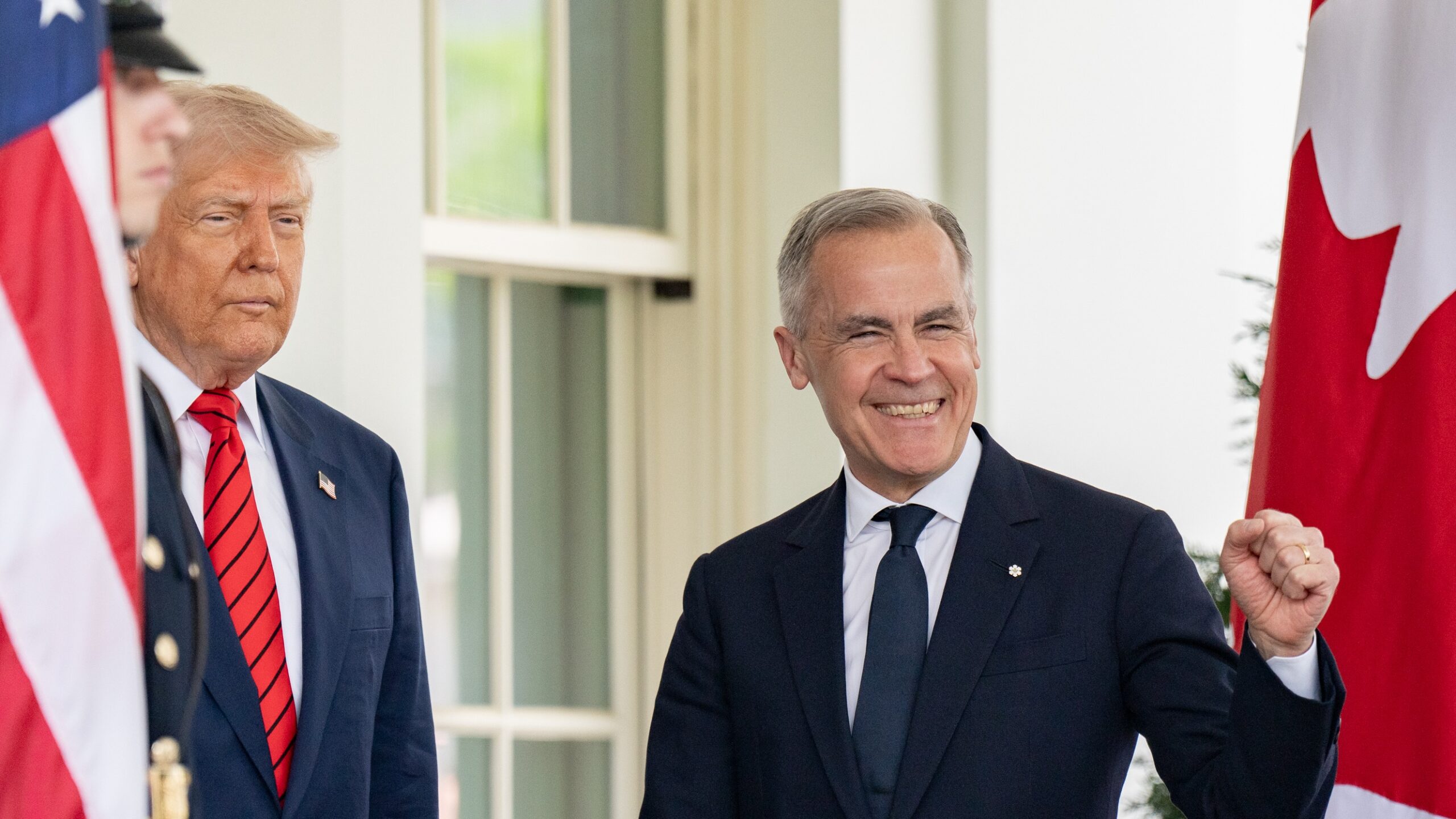
President Donald Trump’s threat to slap sweeping tariffs on Canadian imports is not just another skirmish in a long trade fight. It is a direct shot at the everyday prices Americans pay for cars, appliances, and groceries, with the potential to trigger a fresh burst of inflation just as households are still adjusting to higher living costs. The economic relationship between the two countries is so tightly woven into North American supply chains that even a modest tariff shock could ripple quickly through store shelves and paychecks.
What Trump is toying with, in effect, is a deliberate increase in the cost of living for both sides of the border, framed as leverage in a political negotiation. I see three big questions that matter most for consumers: how exposed the United States is to Canadian trade, what past tariff rounds tell us about the likely fallout, and whether Canada has the fiscal and political room to absorb another hit without passing the pain straight back to American shoppers.
The scale of the U.S.–Canada economic fuse
The starting point is the sheer volume of commerce that moves between the two countries every single day. Nearly $2.7 billion worth of goods and services crosses the border daily, a figure that captures everything from raw materials and auto parts to finished vehicles and household electronics. When tariffs land on that kind of flow, they do not stay confined to a few luxury brands, they seep into the prices of mass‑market items like a Chevrolet Equinox assembled with Canadian components or a Whirlpool refrigerator that depends on cross‑border steel.
Because the integration runs through entire production chains, tariffs on Canadian imports would function less like a targeted tax and more like a broad surcharge on North American manufacturing. The same link that notes the daily trade also underscores that the affected categories include everything from cars to appliances, which are precisely the goods that dominate big‑ticket household budgets. When the cost of a Ford F‑150, a Honda CR‑V built in Ontario, or a mid‑range Samsung washer ticks higher because of tariffs, the result is a mechanical push on inflation indices and a visible squeeze on family finances.
What the last Trump tariff wave already showed
Trump is not operating on a blank slate. Earlier rounds of tariffs, imposed under the International Emergency Economic, already raised the average U.S. tariff rate to its highest level since 1946 according to the Key Findings on the trade war. Those measures, which President Trump used to target several trading partners, showed how quickly higher border taxes filter into domestic prices once importers and retailers adjust their contracts. Even when the tariffs were framed as hitting foreign producers, the practical effect was that American firms and consumers paid more for inputs and finished goods.
Economic modeling of those earlier measures found that Trump’s imposed tariffs will raise consumer prices, reduce employment, and lower economic output, a combination that amounts to a stealth tax on households. When I map that experience onto a new tariff threat aimed squarely at Canada, the implication is clear: the policy would not simply punish foreign exporters, it would recreate the same pattern of higher prices and weaker growth, only this time concentrated in sectors where Canadian inputs are indispensable, such as autos, machinery, and energy‑intensive manufacturing.
Carney’s “bluster” theory and the risk of miscalculation
On the Canadian side, political leaders are trying to project calm. Canadian Prime Minister has publicly suggested that some of President Donald Trump’s tariff threats should be seen as bluster and prepositioning ahead of renewed free trade talks. In his telling, the aggressive rhetoric is part of a negotiating script designed to extract concessions rather than a firm commitment to detonate a trade war with America’s closest partner. That interpretation is politically useful in Ottawa, because it reassures businesses and voters that cooler heads will prevail before any tariffs actually bite.
I am not convinced that markets and households can afford to treat the threats so lightly. Even if Carney is right that some of the language is tactical, the risk is that brinkmanship hardens into policy once it becomes entangled with domestic politics in Washington. The same report that quotes Canadian Prime Minister also notes that he is juggling talks with the United States while pursuing a comprehensive trade deal with Beijing, a reminder that Canada has options to diversify. If Ottawa leans more heavily toward China in response to U.S. pressure, American consumers could end up paying higher prices not only because of tariffs, but also because supply chains are re‑routed in ways that reduce the efficiency of the North American market.
Canada’s fiscal room to cushion the blow is limited
Even if both governments wanted to shield households from the fallout, the fiscal math in Canada is already tight. Ontario, the country’s largest province and a manufacturing hub deeply tied to U.S. demand, is running a $14.6-billion deficit, according to economist Nicolas Chikhani’s analysis of the province’s latest budget. That same budget allocates only $1 billion to counter tariff impacts, a fraction of the $33 billion earmarked for other priorities, which underscores how little room there is to absorb a major escalation in trade tensions. When a government is already stretched, it cannot easily roll out generous subsidies or tax credits to offset higher costs for exporters and consumers.
That constraint matters for Americans because Ontario’s export‑heavy economy is tightly linked to U.S. supply chains, especially in autos and parts. If the province is forced to choose between protecting its fiscal position and propping up trade‑exposed industries, some of the adjustment will inevitably come through higher prices or reduced output. The same analysis that highlights the $14.6 billion figure also emphasizes Ontario’s export reliance, which means any tariff shock from Washington would quickly feed back into the cost of vehicles, machinery, and other goods that American firms and households buy. In that sense, Canada’s limited fiscal buffer is not just a Canadian problem, it is another channel through which Trump’s tariff gambit could amplify a cost‑of‑living spike south of the border.
The inflation hit that lands in American driveways and kitchens
When I put these pieces together, the picture that emerges is not an abstract macroeconomic debate but a very concrete threat to the prices that show up in American driveways and kitchens. Tariffs on a trading partner that sends so much of its output into U.S. markets would raise the sticker price of a 2026 GMC Terrain assembled with Canadian parts, the monthly payment on a leased Toyota RAV4 that depends on cross‑border components, and the cost of outfitting a home with a mid‑range LG washer and dryer. Because these are not niche luxury items, the inflationary effect would be broad based, hitting middle‑income families who have already seen their budgets stretched by higher rents and food bills.
Past experience with the IEEPA tariffs suggests that the pain would not be offset by a surge in domestic jobs or output large enough to compensate. Instead, the likely outcome is a mix of higher prices, modest job dislocation in trade‑exposed sectors, and a drag on growth that leaves households worse off in real terms. Trump’s Canada tariff threat, in other words, is not just a bargaining chip. It is a live test of how much additional inflation American voters are willing to tolerate in the name of leverage, and whether policymakers are prepared to acknowledge that the cost of that strategy will be paid at the checkout counter as much as in the negotiating room.
More From TheDailyOverview
*This article was researched with the help of AI, with human editors creating the final content.

Grant Mercer covers market dynamics, business trends, and the economic forces driving growth across industries. His analysis connects macro movements with real-world implications for investors, entrepreneurs, and professionals. Through his work at The Daily Overview, Grant helps readers understand how markets function and where opportunities may emerge.

