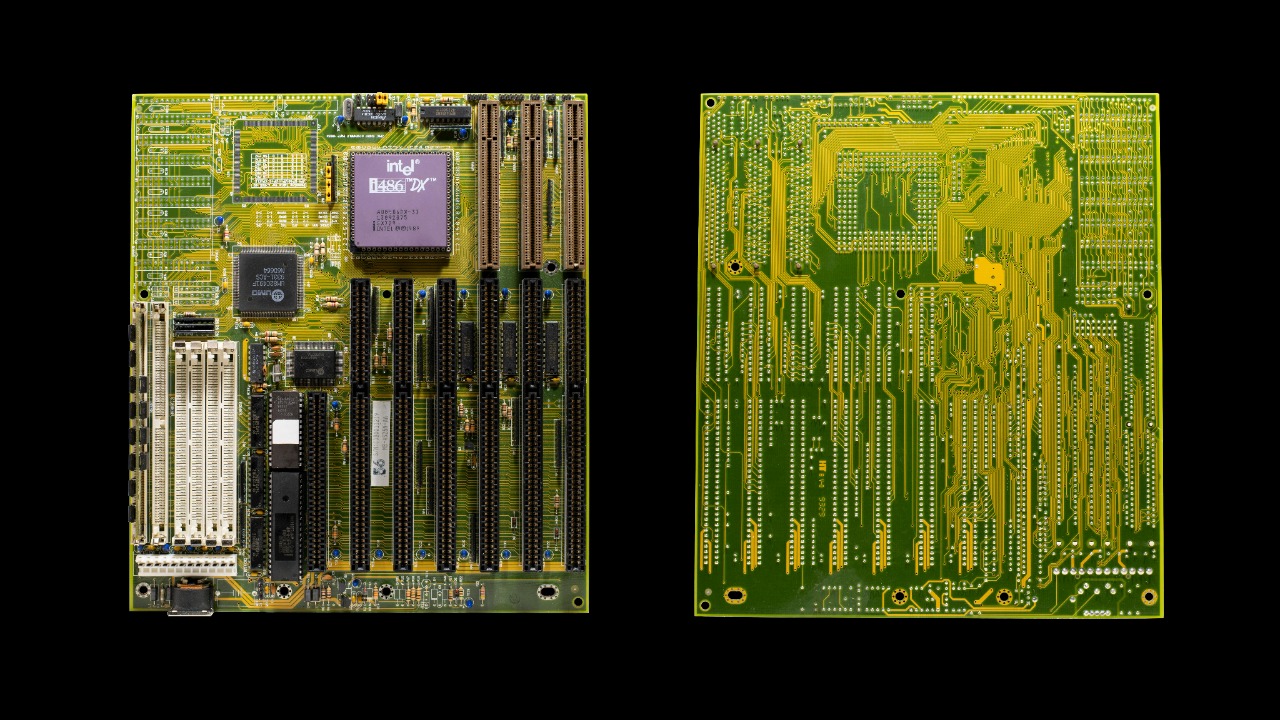
Retail investors are racing out of the tech giants that once powered Wall Street’s rally after President Donald Trump put Washington’s weight squarely behind domestic chips. His latest proclamation on Intel has turned a simmering rotation away from the Magnificent Seven into a visible stampede, as money pours into semiconductors, small caps, and broad exchange traded funds. The shift is reshaping the market’s leadership and testing how much longer a handful of mega caps can dominate U.S. equities.
Trump’s chip bet collides with a tired Magnificent Seven trade
President Donald Trump has made clear that semiconductors now sit at the center of his economic agenda, telling supporters that “The United States Government Is Proud to Be a Shareholder of Intel,” a line that instantly elevated one company into a symbol of industrial policy. That message followed reports that President Trump said he had a “great meeting” with Intel CEO Lip Bu Tan, a remark that helped send the chipmaker’s shares sharply higher as traders tried to front run potential government support. By explicitly aligning the White House with Intel’s 18A manufacturing push, President Donald Trump has given retail investors a simple narrative: chips are where Washington wants capital to go.
That narrative is landing at a moment when the Magnificent Seven were already losing their aura of inevitability. Analysts now describe how the so-called Magnificent Seven have fallen from recent highs and slipped into a bear market after months of outperformance. In parallel, Morgan Stanley Wealth argues that the market is undergoing a healthy rotation away from the narrow leadership of those mega caps and toward a broader group of companies. When a presidential megaphone suddenly amplifies one corner of the market just as the old leaders are stumbling, it is not surprising that retail money bolts for the new story.
From tariffs to proclamations, policy shocks keep hitting Big Tech
The chip proclamation is only the latest in a series of policy jolts that have battered the tech behemoths. Earlier tariff moves from President Trump hit the same group hard, with The Magnificent Seven all falling after Trump unveiled sweeping tariffs one Wednesday evening and Apple shares dropping the most. Those levies fed into a broader slide in Mag 7 names, as investors reassessed how exposed their global supply chains and profit margins were to a more confrontational trade stance.
The damage was not just psychological. For their part, the Mag Seven Big firms shed $1.8 trillion in value in the week after one major tariff announcement, a staggering figure that underscored how concentrated market risk had become. A separate poll of market participants highlighted how those losses rattled confidence in the group’s ability to shrug off political risk. When investors see hundreds of billions erased in days, they become more sensitive to the next presidential comment that might move a sector.
Retail investors bolt from Big Tech into chips, ETFs and small caps
Retail traders have responded to the latest chip push by dumping the familiar mega caps and chasing perceived policy winners. Reporting on the reaction to Trump’s chips proclamation describes how individual investors sold out of the Magnificent Seven while S&P futures were still green, with contracts up 0.36% before the opening bell. However, that index-level resilience masked a sharp internal shift as Traders rotated into chipmakers and away from the old leaders.
The move is part of a broader pattern in which Retail investors are shifting into ETFs as the Mag 7 lose their luster, using broad funds to gain exposure to value and cyclicals instead of betting everything on a few tech names. A pullback in Broadcom after earnings has reinforced the sense that even high quality chip names can be volatile, which makes diversified vehicles more attractive for an app-based investing generation that has already lived through several tech drawdowns.
The Great Rotation gathers pace as indexes wobble
Under the surface, what is happening looks less like a panic and more like an acceleration of a trend that had been building for months. Commentators describe a Rotation from expensive technology stocks to small caps with accelerating earnings growth, a shift that was anticipated as valuations in the mega caps stretched to extremes. That thesis is now playing out in real time as money exits the Magnificent Seven and flows into domestically focused companies that stand to benefit from reshoring, infrastructure spending, and a stronger industrial base.
The change in leadership has been jarring enough that Major U.S. equity indexes have stumbled on days when investors aggressively rotate out of growth and artificial intelligence related stocks. Yet even as headline indices wobble, some strategists argue that a market driven by hundreds of “Impressive 493” names rather than seven giants is healthier and less vulnerable to single stock shocks. For investors who spent the last two years buying every dip in Big Tech, the adjustment is painful, but for the broader market structure it may be a necessary reset.
A fragile new market order built on policy and concentration risk
The deeper risk is that the market’s new leadership is just as dependent on Washington as the old one was on ultra cheap money and global supply chains. When President Donald Trump declares that President Donald Trump recently proclaimed that the government is proud to be a shareholder of Intel and is focused on the Intel 18A process, he is effectively turning a single corporate roadmap into a national project. That can unlock capital and confidence, but it also means any stumble in execution or change in political priorities could reverberate through portfolios that have crowded into the trade.
At the same time, the broader backdrop has shifted from a monolithic rise led by the Magnificent Seven to what one analysis calls a new landscape where the old U.S. dominance narrative is being challenged. A Summary of the describes how the 2025 divergence between Wall Street highs and geopolitical turmoil exposed the fragility of a rally built on a narrow group of tech champions. Now, as Mag 7 stocks enter a bear phase and analysts dissect What the Trump tariffs mean for big tech, the market is being forced to confront a new reality in which policy, politics, and concentration risk are inseparable parts of the investment equation.
More From The Daily Overview

Grant Mercer covers market dynamics, business trends, and the economic forces driving growth across industries. His analysis connects macro movements with real-world implications for investors, entrepreneurs, and professionals. Through his work at The Daily Overview, Grant helps readers understand how markets function and where opportunities may emerge.

