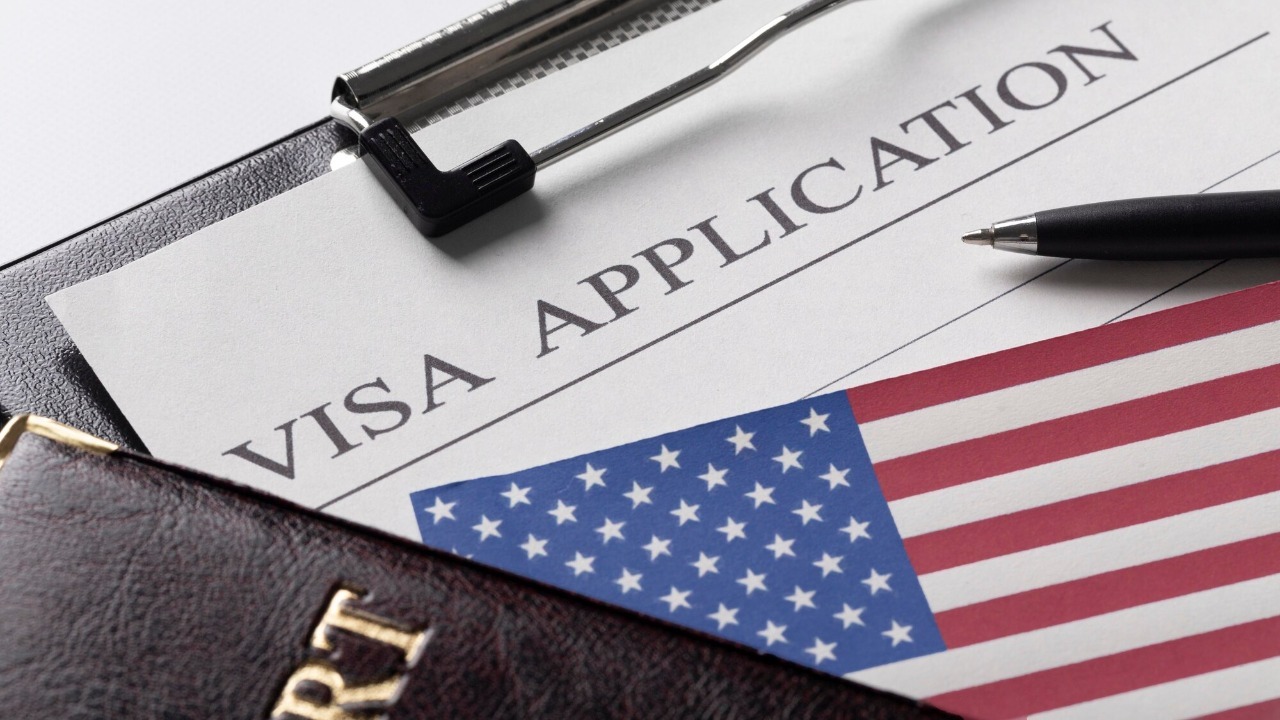
The Trump administration’s decision to impose a six-figure charge on employers seeking new H-1B visas has triggered a sweeping legal backlash from state governments and business groups. At the center of the fight is a proposed $100,000 application fee that critics say would wall off the United States from the very engineers, doctors and researchers its economy depends on. I see a legal and political showdown emerging that will test not only immigration policy, but also how far a president can go in unilaterally rewriting the price of entry to the American labor market.
The multistate lawsuit argues that the administration’s move is both unlawful and economically self-defeating, while the White House frames the fee as a way to protect U.S. workers and recoup costs. With court hearings already scheduled and parallel challenges from the business community, the outcome will shape whether global talent still sees the United States as an accessible destination or a gated market with a $100,000 cover charge.
The $100,000 fee and why it shocked employers
At the heart of the controversy is a new $100,000 fee for each initial H-1B visa petition, a staggering jump from the existing filing costs that employers have long treated as a manageable expense of hiring foreign talent. The administration’s rule would apply to new applications, effectively turning every fresh H-1B hire into a six-figure bet before a worker even sets foot in the country, a shift that state officials and business leaders describe as a direct threat to their ability to recruit specialized workers. In legal filings and public statements, they stress that the fee is not a marginal tweak but a fundamental change to how the United States prices access to high-skilled visas, with the figure of $100,000 repeated as a symbol of what they see as an exclusionary policy.
State attorneys general argue that the administration has not justified why a process that typically costs employers a fraction of that amount suddenly requires a six-figure payment. According to a complaint led by California’s top lawyer, the government has historically calibrated H-1B fees to cover the administrative burden of processing petitions, with existing charges closer to $100 for certain components of the application. By contrast, they say, the new $100,000 fee bears no rational relationship to actual costs and instead functions as a deterrent designed to slash the number of foreign professionals entering the U.S. workforce.
Which states are suing, and what they claim is unlawful
The legal challenge is led by California, which has emerged as the central plaintiff in a coalition that ultimately includes 20 jurisdictions accusing President Trump’s administration of overstepping its authority. Reports describe a group of 19 or 20 States that have joined the lawsuit, reflecting a broad swath of the country that relies heavily on high-skilled immigration. One account notes that the administration is being sued by 19 States over a $100,000 H-1B fee, while another describes 20 US States suing Trump over the same $100,000 charge, a discrepancy that underscores how quickly the coalition has expanded as additional attorneys general sign on to the case.
The complaint accuses the Trump administration of imposing the fee without the legal authority or due process required for such a sweeping change. In one detailed account, the States argue that the new $100,000 charge violates the statutory framework that governs immigration fees, which they say reserves major pricing decisions for Congress rather than the executive branch. Another report describes how California and 18 other jurisdictions contend that Trump has effectively created a new tax on employers, intruding on fee-setting authority that Congress alone is supposed to wield, a claim that goes to the core of the separation-of-powers argument in the case.
A coast-to-coast coalition, from tech hubs to heartland states
What stands out in this lawsuit is how geographically broad the coalition has become, stretching from the Pacific to the Atlantic and deep into the interior. California’s leadership role is matched by participation from other innovation-heavy states such as Washington and Oregon, where tech giants and startups alike depend on H-1B workers to fill roles in software engineering, cloud computing and artificial intelligence. Reporting on the case notes that the states joining California in the lawsuit include New York, a reminder that both West Coast and East Coast tech corridors see the fee as a direct threat to their talent pipelines.
The coalition also includes smaller and mid-sized states that may not dominate headlines but have quietly built their own high-skilled economies. Legal filings and coverage reference participation from Arizona, Colorado, Connecticut, Delaware, Hawaii and Illinois, as well as Maryland, Massachusetts, Michigan and Minnesota. Other members of the group include Nevada, New Jersey, North Carolina, Rhode Island, Vermont and Wisconsin, a lineup that illustrates how the H-1B program touches everything from biotech clusters in New England to semiconductor plants in the Southwest.
Economic stakes: schools, hospitals and the broader labor market
State officials are not just arguing about legal authority, they are warning about concrete damage to their economies and public services if the fee survives. One widely cited figure comes from the 2024–2025 school year, when During the 74 per cent of US school districts reported difficulty filling open positions, especially in math, science and special education. Attorneys general argue that many of those districts rely on H-1B teachers to plug gaps, and that a $100,000 fee would make it nearly impossible for cash-strapped school systems to sponsor foreign educators, worsening shortages that already leave students without qualified instructors.
Hospitals and research institutions tell a similar story, warning that the fee would choke off access to doctors, nurses and scientists who are already in short supply. Coverage of the lawsuit notes that the States emphasize their dependence on H-1B physicians in rural clinics and urban trauma centers, as well as researchers and other skilled labor in university labs and biotech firms, all of whom could be priced out if each new hire carries a $100 thousand surcharge. In their telling, the fee is not just an immigration measure but a direct hit to the capacity of schools, hospitals and labs to function at full strength.
Business groups join the fight against Trump’s fee
While the multistate lawsuit has grabbed headlines, the business community has launched its own offensive against the H-1B fee hike. The Chamber of Commerce has filed a separate lawsuit challenging the $100,000 H-1B visa fee, arguing that it will undermine American competitiveness by making it prohibitively expensive for companies to recruit global talent. Business groups stress that H-1B workers are not a luxury but a core part of how U.S. firms fill specialized roles in software engineering, chip design and advanced manufacturing, and they warn that the fee will push employers to move jobs overseas rather than pay a six-figure premium to bring workers to the United States.
Corporate leaders also point out that the H-1B program already includes wage requirements and caps designed to prevent abuse, and they argue that the new fee is a blunt instrument that punishes legitimate employers without addressing bad actors. One analysis notes that business groups and major companies have maintained that workers on H-1B visas are a critical means to address a shortage of high-skilled labor, a view that underpins the Chamber’s broader campaign to support businesses’ use of H-1B visas. In their court filings, they frame the fee as a de facto ban on smaller firms and startups that cannot afford to pay $100,000 per hire, tilting the playing field toward the largest corporations that can absorb the cost.
The courtroom path ahead and what Judge Howell will decide
All of these arguments are now converging in federal court, where a judge will decide whether the Trump administration can move forward with the fee or must go back to the drawing board. According to one detailed report, Judge Howell is set to hear arguments on whether the administration can legally charge $100,000 for H-1B visas, a hearing that will focus on both the statutory basis for the fee and the process the government used to adopt it. The States and business groups are expected to argue that the administration skipped key procedural steps, failed to justify the size of the fee and intruded on Congress’s authority, while government lawyers will likely contend that existing law gives the executive branch broad discretion to set immigration-related charges in LOS ANGELES and beyond.
The outcome will ripple far beyond the courtroom, shaping how companies and universities plan their hiring and research strategies for years to come. If the fee is upheld, employers may shift more work abroad or rely more heavily on remote teams, while if it is struck down, Trump may seek other ways to tighten the H-1B program, potentially through stricter eligibility rules or lower annual caps. For now, the legal fight has already galvanized a diverse coalition that includes California and other states, business groups and immigrant advocates, all of whom see the $100,000 fee as a defining test of how open the United States will remain to global talent in an era of rising economic nationalism.
Politics, public opinion and the broader immigration debate
Behind the legal briefs and economic forecasts lies a fierce political argument over who benefits from high-skilled immigration. Trump and his allies have long framed the H-1B program as a tool that some companies use to undercut American workers, a narrative that resonates with voters who feel left behind by globalization. One account of the controversy notes that critics of the program argue it can be used to replace U.S. employees with cheaper foreign labor, driving down American wages, a claim highlighted in coverage that references a Media Error but captures the core of the political messaging. Supporters of the fee say that if companies truly need foreign workers, they should be willing to pay a premium that reflects the value of those visas and the potential impact on domestic employment.
Opponents counter that this framing ignores how deeply H-1B workers are woven into sectors that are already struggling to find enough qualified people, from public schools to rural hospitals to cutting-edge research labs. They point to reporting that describes how California and 19 other jurisdictions are suing the administration of U.S. President Trump over the fee, with California and its partners arguing that the policy will make it harder to attract the very talent that drives innovation and economic growth. In one detailed piece, the new New $100,000 fee is explicitly called unlawful in a multi-state lawsuit, with commentators like Pramod Thomas dissecting how it could reshape the labor market. As the case moves forward, I expect the debate to sharpen, with each side using data, anecdotes and even the occasional poll to claim public support for either tightening or preserving access to high-skilled visas.
More From TheDailyOverview

Julian Harrow specializes in taxation, IRS rules, and compliance strategy. His work helps readers navigate complex tax codes, deadlines, and reporting requirements while identifying opportunities for efficiency and risk reduction. At The Daily Overview, Julian breaks down tax-related topics with precision and clarity, making a traditionally dense subject easier to understand.

