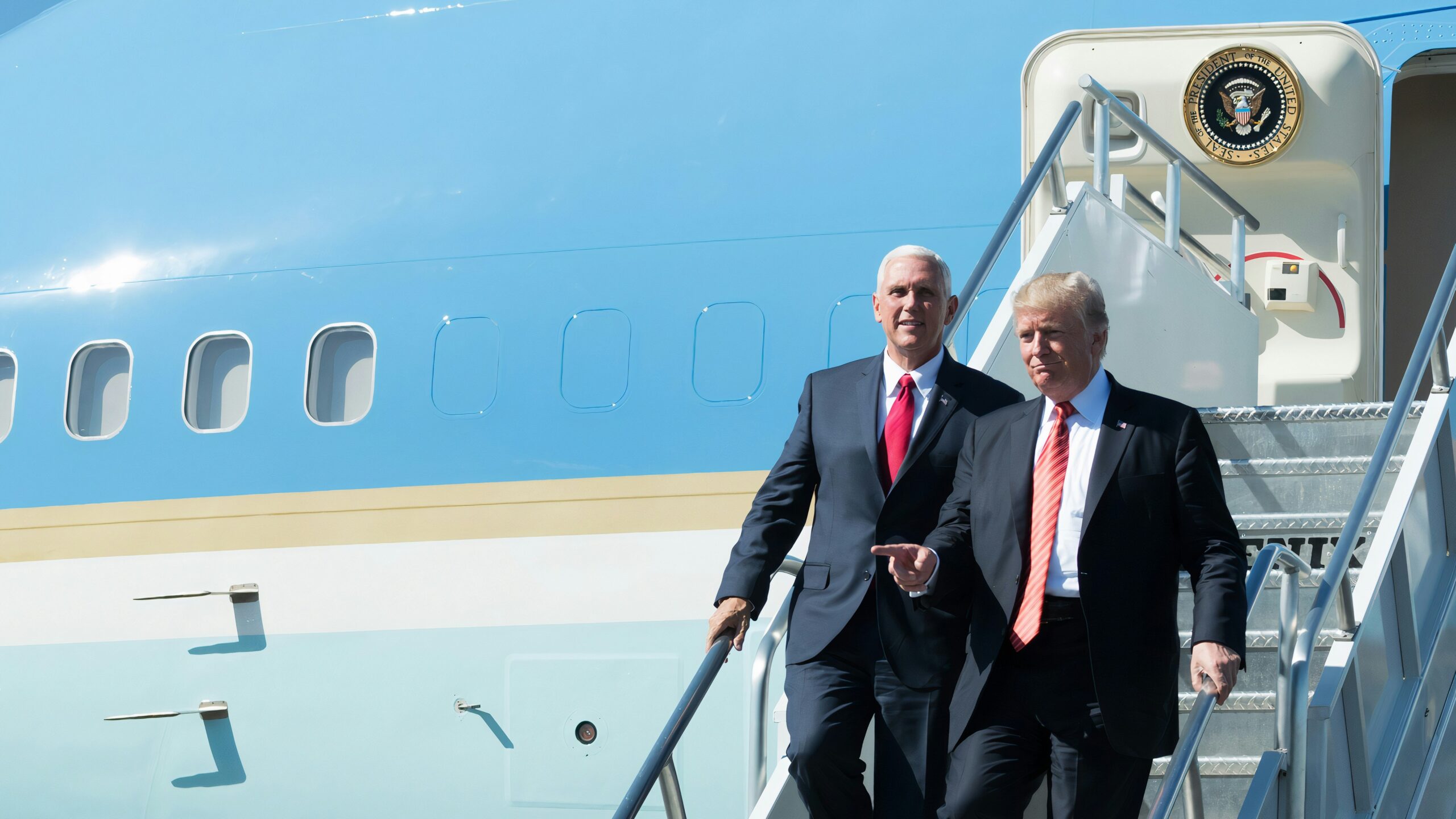
President Donald Trump’s latest financial disclosure shows he has placed up to $2 million into bonds tied to Netflix and Warner Bros. Discovery, just as a potential merger between the two media giants lands on his regulatory agenda. The timing and scale of those moves have revived long‑running worries that his personal portfolio could collide with his public duties in ways that are difficult for any ethics system to police. I see those concerns as less about proving a specific quid pro quo and more about the structural risk that the president’s investments will shape, or appear to shape, decisions that affect entire industries.
At the center of the debate is a familiar question from Trump’s first term: when the president is also an active investor and brand owner, where does private interest end and public responsibility begin. The Netflix and Warner Bros. Discovery trades, layered on top of his cryptocurrency ventures and the enduring reach of the Trump Organization, suggest that the conflict‑of‑interest problem has not faded with time, it has simply migrated into new markets.
The Netflix and Warner Bros. Discovery trades
According to his new disclosure, President Donald Trump purchased up to $2 million in bonds tied to Netflix and Warner Bros. Discovery shortly after a proposed acquisition involving those companies became public. The filing describes the holdings as investments in “Netflix and Warner Bros. Discovery,” and outside reporting indicates that Trump made two separate purchases from Netflix and two from Warner Bros. Discovery on a single Friday, concentrating roughly $1 million in each media giant as the merger story gathered steam. One account notes that Trump made those Friday trades in Netflix and Warner Bros. Discovery after publicly signaling that he intended to “be involved” in the merger process, a sequence that makes the overlap between his role as investor and regulator impossible to ignore.
The White House has stressed that these are ordinary, publicly traded bonds and that the president is entitled to invest like any other citizen. In its explanation of the disclosure, the administration said President Donald Trump purchased up to $2 million in Netflix and Warner Bros. Discovery investments and framed the move as part of a broader portfolio strategy rather than a targeted bet on a single deal. A separate summary of the same filing described President Donald Trump’s latest financial disclosure as revealing “jaw‑dropping investments” of up to $2 million in Netflix and Warner Bros., underscoring how unusual it is for a sitting president to take such a large position in companies that are about to seek government approval for a transformative transaction.
Regulatory power and the appearance of self‑dealing
The conflict‑of‑interest concern does not rest on proving that Trump will personally sign off on a specific merger document. It stems from the reality that the executive branch, under his leadership, will shape the regulatory climate that determines whether a Netflix and Warner Bros. Discovery combination can proceed and on what terms. One analysis of the situation warned that Trump’s purchase of Netflix and Warner Bros. bonds “sets up the potential for a conflict of interest” because of his involvement in regulatory oversight of a possible acquisition that would include Warner Bros., a warning that goes to the heart of modern ethics standards. When the same person who influences antitrust enforcement also stands to gain or lose as a bondholder, even routine decisions can look like self‑dealing.
Officials around Trump have tried to defuse that perception by emphasizing distance between the president and the day‑to‑day management of his holdings. In a statement responding to questions about the trades, aides insisted that “Neither President Trump nor any member of his family has any ability to direct, influence, or provide input regarding how the portfolio is managed,” and suggested that he would recuse himself from any matters that directly implicated those specific securities. Yet another account of the Netflix and Warner Bros. Discovery investments, which described the same purchases as part of “Recent Trump investments” that reignited conflict‑of‑interest concerns, shows how limited those assurances are in practice. Even if Trump does not personally pick the bonds, the public sees the headline numbers, and the risk to public trust lies in that perception.
A pattern that predates the streaming bets
The Netflix and Warner Bros. Discovery positions are landing in a political environment already primed to see Trump’s finances as a source of ethical strain. A running list of his past entanglements has highlighted how the Trump Organization continued to pursue hotel and licensing deals while he was in office, prompting watchdogs such as Citizens for Responsibility and Ethics in Washington to argue that the presidency had been used to boost private revenue. In that same context, Senator Susan Collins of Maine told CNBC that she was troubled by the way Trump’s business interests intersected with policy debates, including his public commentary on Cryptocurrency markets that he could influence as president. Those earlier episodes created a template for how new investments will be interpreted, especially when they touch industries that depend on federal regulators.
The pattern extends beyond real estate and media into newer asset classes that are even harder to monitor. Reporting on Trump’s business ventures has noted that he launched two cryptocurrency tokens called $TRUMP and $MELANIA shortly before taking office in January of his current term, attracting billions of dollars in speculative trading volume that flowed directly into wallets associated with his brand. One detailed account of those ventures argued that the tokens had “put money in his pockets” at the same time his administration was shaping the rules for digital assets, a dual role that raised alarms among ethics lawyers. When that history is combined with the fresh Netflix and Warner Bros. Discovery trades, it becomes difficult to treat any single investment as an isolated event rather than part of a broader approach to the presidency as a platform for financial risk‑taking.
Crypto regulation, The SEC, and a widening ethics gap
The cryptocurrency chapter of Trump’s portfolio is especially revealing because it collides directly with an area where federal regulators are under pressure to act. In a recent letter to Mr. Paul S. Atkins, the chairman of a crypto‑focused advisory group, lawmakers criticized what they described on Page 3 as “The SEC’s declination of its responsibility to enforce the securities laws against crypto companies and their leaders,” a rebuke that underscores how unsettled the rules remain. When the president has personally branded tokens like $TRUMP and $MELANIA and benefits from trading in those assets, any decision by The SEC to crack down, or to hold back, will inevitably be read through the lens of his financial exposure.
That is why some ethics experts argue that the Netflix and Warner Bros. Discovery bonds are not just a media story but part of a larger governance problem. One analysis of recent Trump investments warned of “Potential conflicts of interest” arising from his role in regulatory oversight, and another, focused on the same Netflix and Warner Bros. Discovery trades, framed them as “Recent Trump investments” that had already reignited concerns about conflicts. A separate financial commentary, citing a White House disclosure, noted that, according to the document, President Trump made investments totaling up to $2 million in Netflix and Warner bonds, and placed those trades in the context of a broader pattern of presidential investments in publicly traded entities in 2026. When the same presidency is simultaneously shaping crypto enforcement, media consolidation, and securities regulation, the ethics gap widens with each new asset class that touches the Oval Office.
More From TheDailyOverview

Grant Mercer covers market dynamics, business trends, and the economic forces driving growth across industries. His analysis connects macro movements with real-world implications for investors, entrepreneurs, and professionals. Through his work at The Daily Overview, Grant helps readers understand how markets function and where opportunities may emerge.