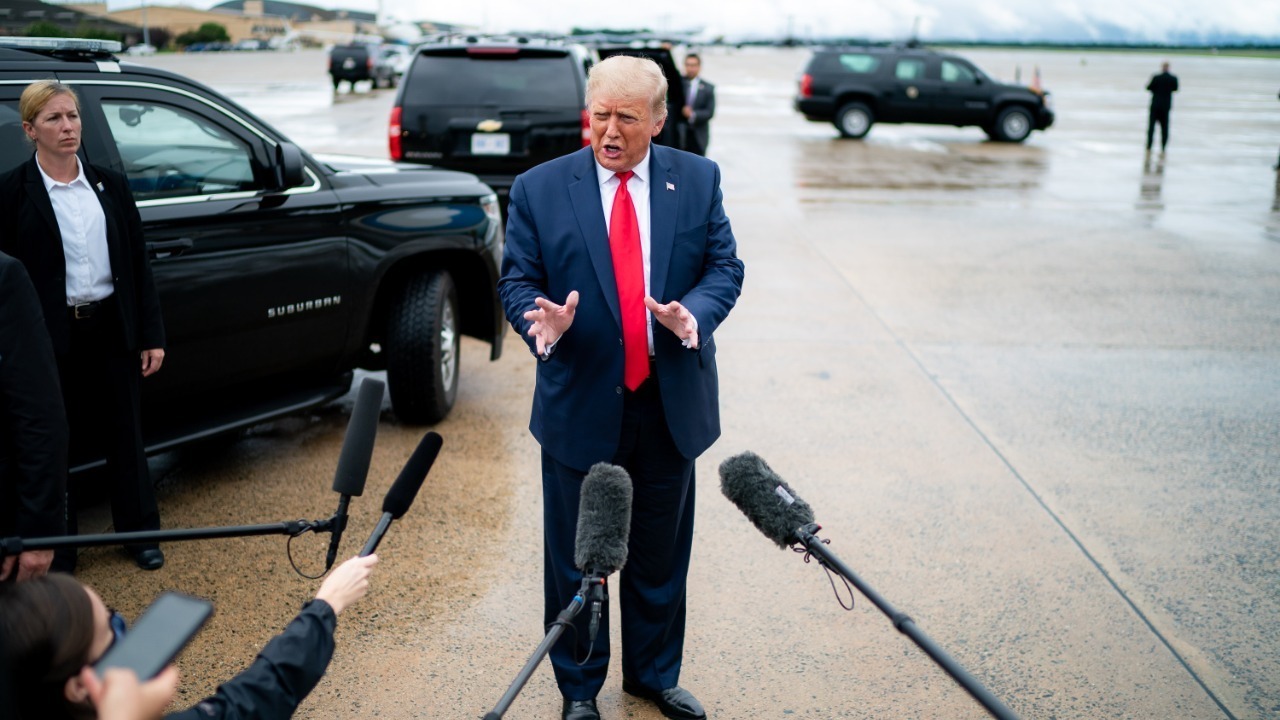
President Donald Trump is racing to rebrand himself as a cost-of-living crusader, rolling out a fresh “affordability” playbook just as frustration over high prices hardens into a defining political threat. The agenda promises cheaper housing, lighter credit-card bills, and relief from everyday debt, but its mix of populist targets and Wall Street-friendly tweaks is already prompting questions about who really benefits. As the details come into focus, the gap between the rhetoric and the likely real-world impact is what is raising the most eyebrows.
Trump is leaning on executive action, regulatory rewrites, and headline-grabbing ideas to show he is attacking the affordability crisis from every angle. Yet experts warn that some of the same policies he champions, from tariffs to financial deregulation, could quietly push costs higher even as he vows to bring them down. That tension sits at the heart of his new strategy.
Trump’s affordability blitz meets a skeptical public
The political urgency behind Trump’s new posture is unmistakable. About six in 10 U.S. adults now say that Trump has hurt the cost of living, according to a nationwide survey that underscores how central prices have become for voters. That perception has turned affordability into a liability for a president who once campaigned on making everything from health care to housing cheaper, and it explains why the White House is now treating the issue as a daily messaging priority rather than a background concern.
Trump’s team is trying to flip the script by casting him as the only leader willing to confront powerful interests that profit from high costs. Advisers have framed the new agenda as a direct response to what they describe as a rigged system that leaves the typical American juggling rent, car payments, and credit-card balances with little left over. Yet early expert reviews of Trump’s affordability proposals, including a high-profile package discussed by Jan in a widely shared video, argue that the plans are long on political theater and short on measures that would meaningfully close a housing shortage of roughly 4 million homes, a shortfall highlighted in that analysis.
A Davos-stage promise on housing costs
The most visible piece of Trump’s new playbook is his pledge to tackle housing costs from the global stage. Surrounded by billionaires in Davos, Trump has been preparing to spell out how he will make housing more affordable, even as he mingles at a gathering where a single luxury suite can cost a cool $4.4 million, a detail that underscores the optics problem baked into his message. The Davos setting, described in one report as “Surrounded” by the world’s wealthiest, highlights the contrast between Trump’s populist language and the rarefied environment in which he is pitching it, a tension captured in coverage of his Davos appearance.
Trump has previewed a series of moves aimed at homebuyers, including efforts to curb institutional investors in single-family housing and to ease some regulatory barriers to new construction. Earlier initiatives from the Trump administration, detailed in a report on a new strategy unveiled in Mar, framed the housing affordability crisis as something that “could soon wind down” if a federal plan rolled out as intended, with officials touting the approach on “Mornings with Maria” as a turning point. That earlier plan is now being folded into the broader affordability push, even as housing economists caution that the structural shortage of homes will not be solved by speeches in the Alps.
Inside the housing “playbook” and its limits
Behind the slogans, Trump’s housing affordability playbook rests on a familiar economic reality. A detailed assessment of his approach notes that the only actions, aside from income growth, that would absolutely increase home affordability would be to increase the supply of housing or to reduce demand in the highest cost neighborhoods of certain cities. That conclusion, laid out in a technical analysis, effectively sets a benchmark for judging Trump’s promises: do they meaningfully expand supply or change demand, or do they simply reshuffle who gets squeezed.
So far, Trump has leaned heavily on ideas that sound aggressive but may be difficult to execute or limited in scope. One of the most talked-about concepts is a crackdown on large institutional investors that buy up single-family homes, a move that appeals to renters and first-time buyers who feel outbid by Wall Street. Yet even allies acknowledge the legal and practical hurdles. In one account of internal debates, Senator Josh Hawley is quoted asking, “Can the president do the institutional investor thing entirely by executive order? … Maybe, but we should put it into law,” a line that captures both the ambition and the uncertainty around the plan. That tension is central to reporting on how Trump’s new affordability agenda has already encountered friction, with aides weighing how far they can go through unilateral action and how much will require Congress, as described in a piece that quotes Hawley’s “Can the” and “Maybe” comments in detail Haw.
A bold promise: cutting lifetime debt burdens
Trump is not limiting his affordability pitch to housing. He is also tying his brand to a broader promise to lighten the lifetime debt load that shadows the typical household. A new analysis suggests the average American will spend about $1.8 million repaying debt from adulthood through retirement, a staggering figure that the study also describes as $1.8 m in total obligations over a lifetime. That analysis, highlighted in an unbranded Lifestyle report, frames Trump’s new focus on credit-card rates, auto loans, and student debt as a response to a system where interest payments quietly devour decades of earnings.
Trump has floated a mix of regulatory pressure on lenders and targeted tax incentives as ways to chip away at that $1.8 million burden, arguing that even modest reductions in interest costs could free up thousands of dollars a year for families. Yet financial experts caution that some of his other priorities, including higher tariffs that can feed inflation and looser oversight of certain lending practices, risk pushing borrowing costs back up. That contradiction is at the heart of a broader examination of Trump’s affordability scramble, which notes that it is not clear how much of the agenda is serious or achievable and warns that some items, particularly tariffs, could undercut the goal of appeasing the financially frustrated masses, a point underscored in a detailed review of the plan.
Markets, Wall Street, and the politics of “relief”
Even as Trump casts his affordability agenda as a populist crusade, parts of Wall Street are treating it as a potential windfall. Investors are already gaming out which sectors could benefit if the White House follows through on proposals to ease capital rules and tweak housing finance. One strategist described how the industry still expects to lock in a “Capital win” from regulatory relief, with at least one bank CEO, who declined to be identified, signaling that looser requirements could free up more lending capacity. That expectation has turned Trump’s attack on the affordability crisis into a buying opportunity for certain stocks, as detailed in a market-focused Capital breakdown that highlights how banks and real-estate firms are positioning themselves.
For ordinary borrowers, the risk is that policies sold as relief end up reinforcing the same financial structures that helped create the affordability crunch. If capital relief for lenders is not paired with strong consumer protections, cheaper funding for banks may not translate into lower rates for families trying to buy a starter home or pay down a credit-card balance. That is why some analysts argue that Trump’s affordability rhetoric needs to be judged not only by headline promises but by whether the benefits flow to households or remain concentrated among shareholders and executives like the unnamed CEO who is already counting on a regulatory payoff.
More From TheDailyOverview
*This article was researched with the help of AI, with human editors creating the final content.

Grant Mercer covers market dynamics, business trends, and the economic forces driving growth across industries. His analysis connects macro movements with real-world implications for investors, entrepreneurs, and professionals. Through his work at The Daily Overview, Grant helps readers understand how markets function and where opportunities may emerge.