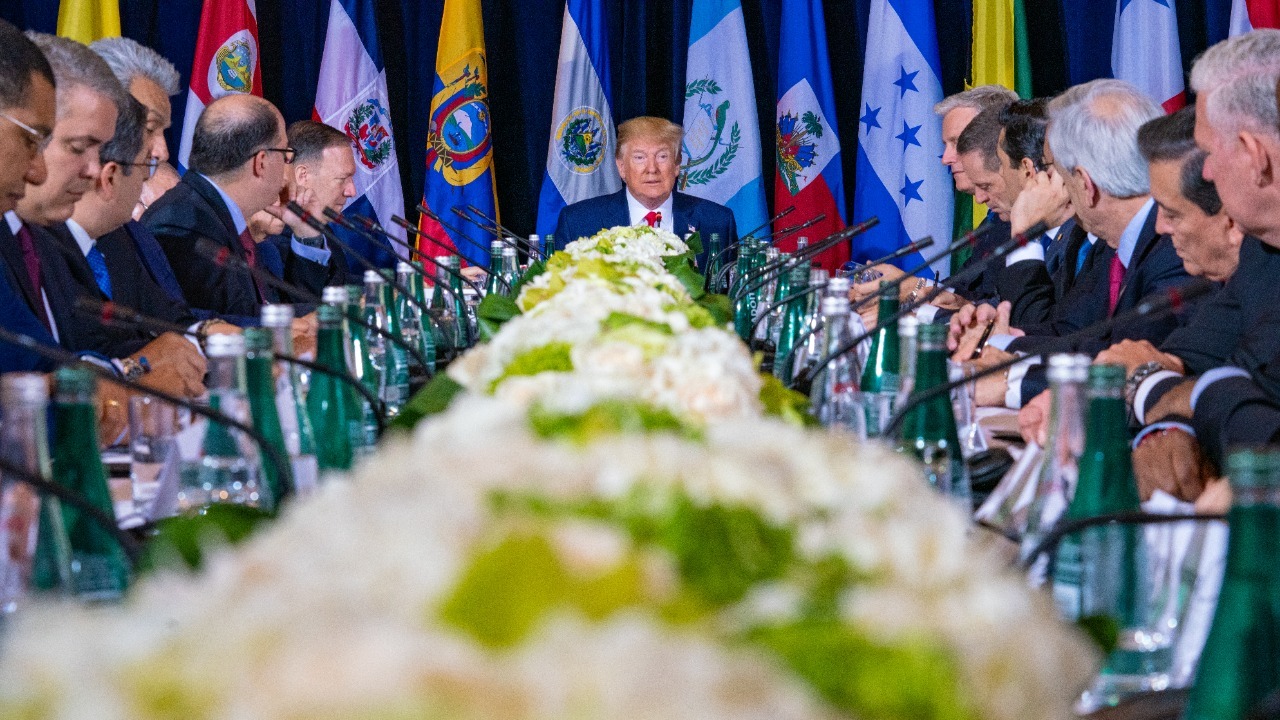
President Donald Trump is treating Venezuela less like a sovereign country and more like a distressed asset to be restructured for profit. His own language about “taking a tremendous amount of wealth out of the ground” and rebuilding the oil sector in record time sounds closer to a buyout pitch than a foreign policy doctrine. I see a pattern that mirrors a classic private equity deal: seize control, install new managers, squeeze value from oil and minerals, and decide later how long the arrangement will last.
At the center of this strategy is Venezuela’s vast but battered energy industry, from the state oil company PDVSA to refineries and export terminals tied to Citgo in the United States. Trump has signaled that The US will dictate how Venezuelan oil is sold and how the proceeds are used, and he has personally claimed authority over those profits. The result is a geopolitical experiment that looks less like humanitarian intervention and more like a leveraged takeover of a weakened petrostate.
The takeover mindset behind Trump’s Venezuela push
The clearest window into Trump’s thinking came when he described Venezuela’s resources as a pool of buried riches waiting to be extracted. In a conversation recounted by Jan Scarborough, he said, “We are going to be taking a tremendous amount of wealth out of the ground,” a phrase that treats the country’s subsoil as a balance sheet rather than a national patrimony, and that Jan later framed as part of a broader pattern. That same account noted that Trump appears to view Ven and its oil fields the way a buyout specialist would view an underperforming company, with the goal of unlocking value for outside investors rather than for Venezuelan citizens, a mindset that aligns closely with a private equity playbook built on aggressive asset harvesting.
In that framing, Venezuela is not primarily a diplomatic problem or a humanitarian crisis, it is a turnaround project. Trump has repeatedly emphasized that the country’s oil sector is “decimated” but fixable, and he has cast himself as the dealmaker who can bring in capital, technology, and management expertise to restore production. Analysts who have examined his comments argue that One way to make sense of President Donald Trump’s Venezuela actions is to see them as a search for “upside” in a distressed asset, with the United States positioned as the controlling shareholder that decides when and how to cash out, a logic that fits more naturally in a boardroom than in traditional statecraft.
Controlling the cash flows like a fund manager
Control of revenue is the first thing any private equity owner grabs, and Trump’s Venezuela policy follows that script. The US has said it will control sales of Venezuelan oil “indefinitely” and will decide how the proceeds of those sales are used, effectively placing the country’s main export lifeline under Washington’s stewardship. That arrangement gives American officials the power to route cash toward favored projects, creditors, or political allies, much as a general partner in a fund decides how portfolio company earnings are allocated, and it sidelines Venezuelan institutions that would normally manage those flows.
Trump has gone even further in personalizing that control. In an interview described on social media, he said “only time will tell” when asked how long the United States would want oversight of Venezuela, then added that he expected it to last “much longer” than a few months or a year. The same account reported that he also announced that he alone will control all of Venezuelan oil and that the profits would be “returned to the US,” language that casts him less as a head of state and more as a managing partner promising distributions to investors back home, and that underscores how tightly he wants to grip the country’s cash register.
Resetting the oil sector as a classic restructuring
Any turnaround specialist starts by “resetting” the core business, and in Venezuela that means oil and critical minerals. A central motivation behind the Trump administration’s seizure of Maduro appears to be an effort to reset Venezuela’s oil and mining sectors, with a focus on improving production and security conditions inside Venezuela so that exports can ramp up again. That analysis describes a strategy in which political change and security operations are not ends in themselves but tools to stabilize the operating environment for energy and minerals projects, much as a private equity firm might overhaul management and governance at a troubled subsidiary to make it investable.
Trump has been explicit about the speed and scale of the rebuild he envisions. He has said he thinks Venezuela’s decimated oil industry could be rebuilt in less than 18 months with U.S. support, presenting a timeline that would be ambitious even for a well-capitalized corporate restructuring. In the same discussion, Trump emphasized that Venezuela has enormous reserves that could be tapped once infrastructure and management are overhauled, a view that aligns with the idea of buying a broken asset cheaply, investing in repairs, and then enjoying a surge in output and revenue that justifies the initial risk.
“Wealth out of the ground”: the extraction thesis
Trump’s own words about “wealth out of the ground” reveal an extraction thesis that is central to private equity style investing in natural resources. In a phone call with Morning Joe recounted by Jan Scarborough, Trump doubled down on his oil-based justification for attacking a sovereign nation, arguing that the real prize was the hydrocarbons and minerals that could be monetized once political obstacles were cleared. That conversation, which Jan linked to a broader pattern of rhetoric, shows Trump treating Venezuelan territory as a resource base whose value can be unlocked through force and financial engineering, rather than as a society with its own priorities.
Energy analysts have noted that Venezuelan oil is considered relatively low quality, making it expensive to extract and refine, which historically has made it a tough sell for many refiners. Yet those same experts point out that Trump is right that there is a lot of it, and that with the right investments and long term contracts, even heavy, sour crude can become a profitable niche, especially for refineries configured to handle it. That combination of technical challenge and latent value is exactly the kind of puzzle that attracts private equity investors who specialize in complex, capital intensive assets, and it helps explain why Trump and his allies see an opportunity where others see only risk.
From PDVSA to Citgo: carving up the corporate structure
Behind the geopolitical drama sits a web of corporate entities that look like a target list for financial engineers. Trump has reportedly eyed control of Venezuela’s PDVSA to slash oil prices, with a plan under consideration that involves the United States acquiring and restructuring a majority of PDVSA’s oil production. That scenario would give Washington influence over output decisions that affect global prices, and it would mirror the way a buyout firm might take a controlling stake in a vertically integrated producer in order to rationalize operations and capture margins across the supply chain.
The downstream side of that chain is already shifting into friendly hands. In November, Singer acquired Citgo, the US based subsidiary of Venezuela’s state run oil company, giving his vehicles control over refineries and pipelines that are tailored to handle heavy grade Venezuelan “sour” crude. Reporting on that deal notes that Singer, through his hedge fund structures, positioned himself to benefit if Venezuelan production is revived and redirected toward Citgo’s system, a setup that looks strikingly similar to a private equity sponsor buying a key customer or distributor ahead of a broader sector shakeup.
The role of MAGA aligned financiers
Trump’s Venezuela strategy does not exist in a vacuum, it sits alongside the interests of financiers who have long backed his political movement. Profiles of Paul Singer describe him as an American hedge fund manager whose company, Elliot Investment Management, acquired Citgo after a period of legal and financial maneuvering that pried the asset away from the control of Maduro’s government. One widely shared OCR transcript that circulated under the heading “Rock Rock~away Meet” introduced Paul Singer to readers as a key player in this saga, highlighting how Singer’s acquisition positioned him to profit from any U.S. led restructuring of Venezuelan oil flows, and suggesting that this was still about drugs and crime only on the surface while deeper financial motives were in play.
Those connections matter because they show how political decisions in Washington can intersect with the portfolios of specific donors and ideological allies. When Trump talks about slashing oil prices or boosting U.S. refining jobs through greater access to Venezuelan crude, he is also talking about feeding barrels into infrastructure that people like Singer now control. The alignment between a president who promises to “take wealth out of the ground” and a set of MAGA aligned financiers who have already bought the pipes and plants that will handle that wealth looks less like coincidence and more like a coordinated investment thesis.
Geopolitics framed as a value creation plan
Supporters of Trump’s approach argue that reshaping Venezuela’s energy sector will stabilize the region and secure critical minerals for Western supply chains. Legal and policy analysis has emphasized that a central motivation behind the Trump administration’s seizure of Maduro is to reset Venezuela’s oil and mining sectors in ways that improve production and security conditions inside Venezuela, with an eye toward long term access to energy and critical minerals. In that telling, the intervention is a strategic bet on supply security, similar to how a private equity firm might buy into a key supplier to reduce risk for its broader portfolio.
Critics, however, see something closer to plain and simple plunder. One detailed business analysis argued that One way to make sense of President Donald Trump’s Venezuela actions is to view them as a private equity style raid on a weakened petrostate, with talk of democracy and human rights serving as a thin cover for a resource grab. From this perspective, the focus on cash flows, asset control, and investor aligned timelines suggests that geopolitical rhetoric is being used to sell what is essentially a value creation plan for a small circle of beneficiaries, rather than a reconstruction blueprint for Venezuelans themselves.
Indefinite timelines and open ended control
Another hallmark of private equity is the flexible exit horizon, and Trump’s comments about how long the United States will oversee Venezuela fit that pattern. When he told an interviewer that “only time will tell” how long U.S. oversight would last, then added that he expected it to be “much longer” than a few months or a year, he was signaling an open ended commitment that could stretch well beyond a typical military or humanitarian mission. That stance gives Washington the option to hold on to control of Venezuelan assets until it judges that the political and financial returns justify a partial handoff, much as a fund manager might delay an IPO or sale until market conditions are ideal.
On the ground, officials have already framed this as an indefinite arrangement. The US has stated that it will dictate decisions to Venezuela and control oil sales “indefinitely,” including how the proceeds are allocated, a formulation that leaves little room for local autonomy. For Venezuelans, that means their main source of national income is effectively under foreign trusteeship with no clear end date, while for investors and policymakers in Washington, it means a long runway to implement restructuring plans, renegotiate contracts, and shape the country’s economic model in ways that align with U.S. interests.
What a private equity style future means for Venezuelans
If Trump’s Venezuela move continues to follow a private equity template, the next phase will likely involve aggressive cost cutting, asset sales, and new contracts that lock in favorable terms for foreign partners. Analysts who track PDVSA and related entities have already warned that the plan under consideration, in which the United States acquires and restructures a majority of PDVSA’s oil production, could lead to a wave of privatizations and joint ventures that shift control away from Venezuelan public institutions. In that scenario, local workers and communities might see some short term gains from revived operations, but the bulk of the upside would flow to external stakeholders who financed the turnaround.
At the same time, Trump’s promise to rebuild Venezuela’s oil industry in less than 18 months with U.S. support raises questions about environmental standards, labor protections, and community consultation. Rapid ramp ups in heavy oil production have historically brought pollution, social conflict, and boom bust cycles, especially when driven by outside capital focused on quick returns. If the guiding logic remains “taking a tremendous amount of wealth out of the ground” for the benefit of The US and its partners, then Venezuelans may find that their country has been treated not as a recovering democracy, but as a portfolio company whose fate was decided in distant boardrooms.
More From TheDailyOverview

Grant Mercer covers market dynamics, business trends, and the economic forces driving growth across industries. His analysis connects macro movements with real-world implications for investors, entrepreneurs, and professionals. Through his work at The Daily Overview, Grant helps readers understand how markets function and where opportunities may emerge.